Basmati Rice: The Complete Buyer's Guide for India (2026)
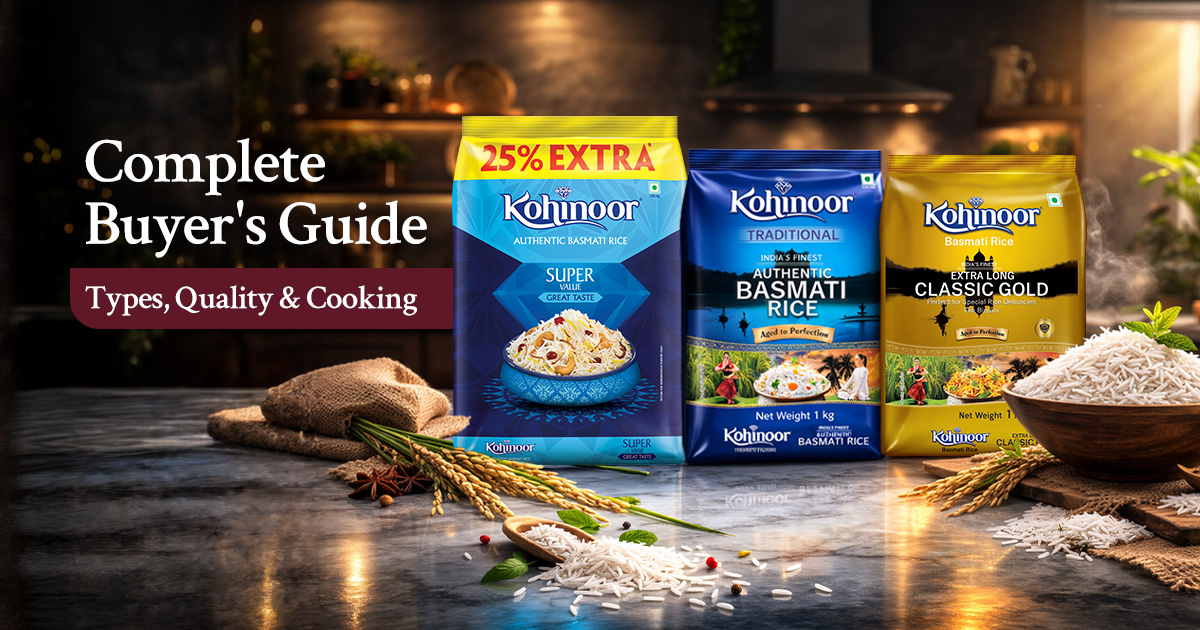
Walk into any Indian kitchen, and you will find one thing that never changes - the comforting aroma of basmati rice cooking slowly on the stove. But here is something most buyers do not realise: the real difference between average rice and premium basmati starts long before you even look at the brand name.
True Basmati is not just long grain rice but is a protected heritage product with a Geographical Indication (GI) tag, grown only in specific regions of India. Its naturally occurring aroma, remarkable grain elongation, and light texture after cooking make it a favourite for everything from everyday dal-chawal to festive biryani.
Whether you are a home cook, a food enthusiast, or someone setting up a modern kitchen, this guide will help you choose the best basmati rice in India for your needs in 2026.
Not every long, slender grain of rice deserves the name 'basmati.' There's a legal and geographical definition for it, and it matters enormously when you're spending your money. Basmati rice holds a Geographical Indication (GI) tag granted by the Indian government, meaning only rice grown in specific regions of India can legally carry that name. Currently, just 8 Indian states qualify: Jammu & Kashmir, Himachal Pradesh, Punjab, Haryana, Uttarakhand, Delhi, Uttar Pradesh, and parts of Madhya Pradesh. The soil, water, and climate of these regions create conditions that no other geography can replicate.
What makes Basmati so distinct at a chemical level? It comes down to a compound called 2-acetyl-1-pyrroline (2-AP) - the very molecule responsible for that signature popcorn-like, nutty fragrance that fills your kitchen the moment the lid comes off. This compound is found in far higher concentrations in true Basmati than in any other rice variety in the world.
Then there's the grain. Raw Basmati averages 6.61-7.5mm in length. Still, the real test is the elongation ratio: how much the grain stretches when cooked. A genuine basmati grain elongates to at least 1.7 times its raw size, sometimes more. It stays separate, fluffy, firm, and never mushy. Why does all this matter when buying? Because without checking for the GI mark or buying from a trusted source, you may be paying a premium price for standard long-grain rice that shares only the shape, not the soul, of true Basmati.
This is the original, the heirloom variety that's been cultivated in the foothills of the Himalayas for centuries. Traditional Basmati has a raw grain length of approximately 6.8–7.0mm, and it elongates magnificently when cooked, nearly doubling in length while staying beautifully separate. The aroma is rich, complex, and deeply floral, almost perfumed.
Best for: slow-cooked biryani, aromatic pulaos, and festive meals.
1121 boasts one of the longest raw grain lengths of any basmati variety: up to 8.30mm, and, when cooked, it stretches to a remarkable length, giving every plate a restaurant-quality visual appeal. The aroma is present but slightly milder than traditional varieties.
Best for: restaurant-style biryani, special gatherings, and everyday premium cooking.
Developed at the Indian Agricultural Research Institute in New Delhi, Pusa Basmati 1 was designed to offer the classic basmati experience at a more accessible price. Grain length runs approximately 6.5-7.0mm, with good elongation and a pleasant, mild aroma - not as intense as Traditional Basmati, but unmistakably there.
Best for: everyday meals, khichdi, plain steamed rice, weekday cooking. Price tier: mid-range.
Even though it's technically not a GI-certified basmati, Sharbati is often labelled as 'Sharbati Basmati' to capitalise on the name. It has shorter grains (around 5.5-6.0mm), lower aroma, and greater stickiness after cooking.
Best for: plain rice, tadka rice, quick meals.
Dehraduni Basmati is grown specifically in the Doon Valley of Uttarakhand. It has a raw grain of about 6.5 mm but punches well above its weight in aroma. This variety carries a distinctly nutty, pandan-like fragrance that's considered among the most authentic.
Best for: special-occasion pulaos, traditional kormas, and anytime you want the rice to be the centerpiece.
Originally from Pakistan's Punjab region, Super Kernel is now widely grown in Indian border states as well. Grain length is impressive - around 7.0-7.5mm - and it has a clean, soft texture when cooked. The aroma is moderate.
Best for: everyday premium cooking, meal prep, and mixed-rice dishes. Price tier: mid-range.
| Variety | Raw grain length | Cooked length | Aroma | Stickiness | Best for | Price range |
|---|---|---|---|---|---|---|
| Traditional | 6.5-7 mm | Medium long | High | Low | Pulao | Premium |
| 1121 | 8+ mm | Very long | Medium-high | Very low | Biryani | Mid-premium |
| Pusa | 7.5 mm | Long | Medium | Low | Daily meals | Mid |
| Sharbati | 6-6.8 mm | Medium | Mild | Medium | Daily cooking | Budget |
| Dehraduni | ~7 mm | Long | Very high | Low | Special dishes | Premium |
| Super Kernel | 7.8-8 mm | Very long | High | Very low | Festive meals | Premium |
No! This is one of the most common misconceptions. 'Long grain' refers to the shape of the grain. True Basmati must originate from one of the 8 GI-designated states in India, carry that signature 2-AP aroma compound, and have a specific elongation ratio.
For biryani, the best basmati rice in India is one that elongates well and stays separated after a long dum cook. Kohinoor's biryani-specific rice variants are designed exactly for this: long grains, low stickiness, and a strong aroma that holds up during slow cooking.
You can, but it requires a small adjustment. Basmati rice specifically cooked for fried rice should be slightly undercooked, then refrigerated overnight. This firms the grains and removes excess moisture, giving you the non-sticky, easy-to-toss texture that wok-fried rice needs.
Raw basmati rice, if stored in an airtight container away from moisture and heat, will stay good for 2–5 years. In fact, properly aged Basmati only gets better over 1-2 years of correct storage. Cooked Basmati should be refrigerated and consumed within 3-4 days.
Standard white Basmati has a lower glycaemic index (GI) than most short-grain white rices, which means it causes a more gradual rise in blood sugar. Kohinoor's Brown Basmati range offers all the aromatic qualities of premium basmati with the added nutritional benefits of whole grain.
The perfect way to stay up-to-date with all the latest news and offers. By signing up, you'll receive regular updates about new product launches, exclusive promotions, and delicious recipe ideas to try at home. Our newsletter is a great way to get inspired in the kitchen. So why not sign up today and join the Kohinoor community?
We look forward to sharing our passion for rice and biryani with you!
