Brown Basmati Rice vs White Basmati Rice
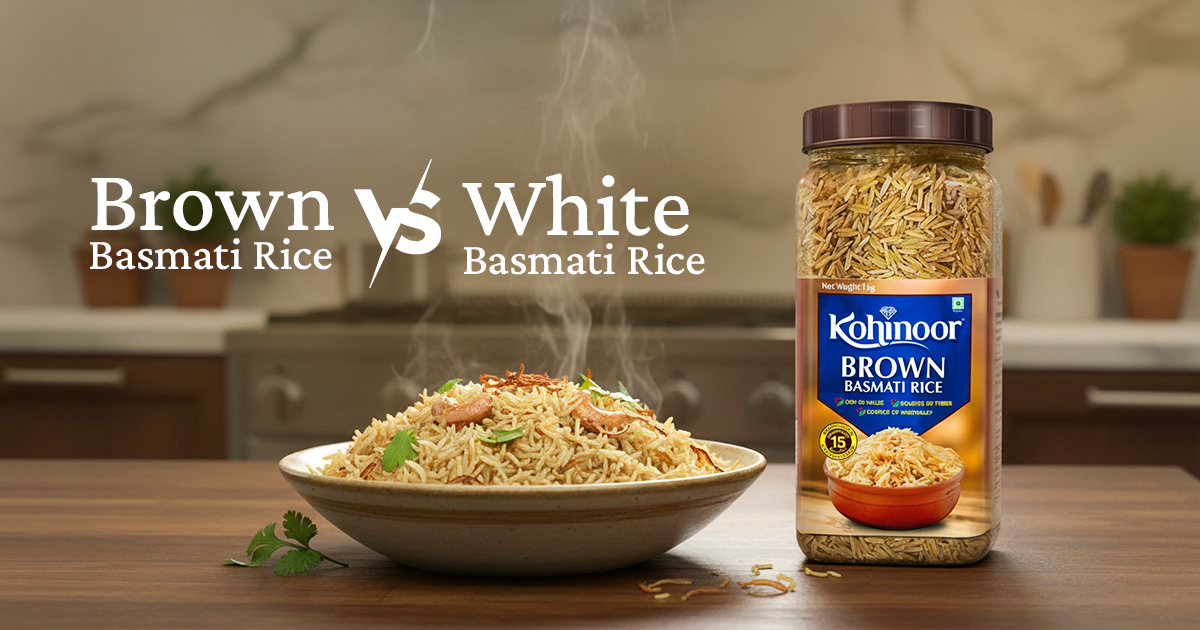
If you have ever searched "brown rice vs. white rice", you probably noticed how often people say brown rice is healthier. But is it really that simple?
Many people are told to switch to brown basmati rice without fully understanding what changes — from nutrition and taste to how it fits into everyday routines like gym diets, office lunches, or healthier family meals.
The truth is, both brown and white rice have their place depending on your lifestyle, taste preferences, and health goals.
This guide explains the real differences in nutrition, taste, cooking style, and who should consider making the switch.
Before deciding which rice to choose, it helps to understand what changes during processing and cooking.
If you are choosing rice based on health, these are the most important differences.
Brown rice may be useful for:
Nutrition matters, but taste is what decides what you will actually eat every day.
Cooking brown rice is easy once you understand the small adjustments needed.
You do not need to completely change your food routine overnight.
Choosing between brown vs white basmati rice depends on your lifestyle and personal preferences. White rice offers softness and familiarity, while brown rice provides more fiber and slower digestion benefits. The best approach is balance. Many households use both depending on the dish and occasion. If you want to try brown rice, start gradually, adjust cooking methods, and choose quality grains that make daily meals enjoyable.
Brown basmati rice contains more fiber and nutrients because it retains the bran layer, making it a practical choice for routines like gym diets, office lunches, or healthy family meals. However, both can be part of a healthy diet depending on your nutritional needs and portion size.
Brown rice has a slightly nutty taste and a chewier texture compared to soft white rice. Most people get used to the difference after a few meals.
Soaking the rice for 30-45 minutes and using extra water helps soften the grains. Cooking it slightly longer than white rice also improves texture.
Many brands offer brown basmati rice suitable for everyday use. Choosing a trusted brand, like Kohinoor, helps ensure better grain quality and consistent cooking results.
Brown rice is a better option for people with diabetes because its higher fiber content can support slower digestion and steadier blood sugar levels. Portion size and overall meal balance still matter.
Brown rice can support weight loss as part of a balanced diet because the fiber helps you feel full for longer. It can be a practical choice for gym meals, office lunches, or healthier everyday eating.
The perfect way to stay up-to-date with all the latest news and offers. By signing up, you'll receive regular updates about new product launches, exclusive promotions, and delicious recipe ideas to try at home. Our newsletter is a great way to get inspired in the kitchen. So why not sign up today and join the Kohinoor community?
We look forward to sharing our passion for rice and biryani with you!
