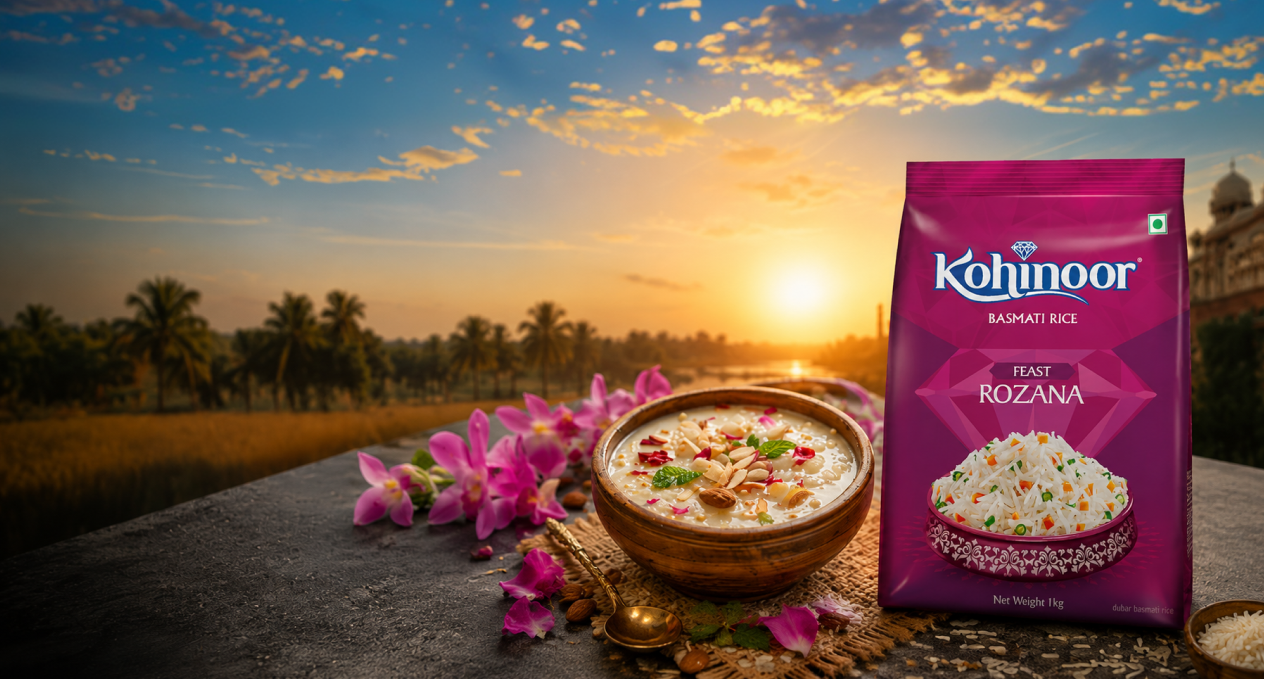
Kohinoor Feast Rozana Basmati Rice
Product Used
Kohinoor Feast Rozana Basmati Rice

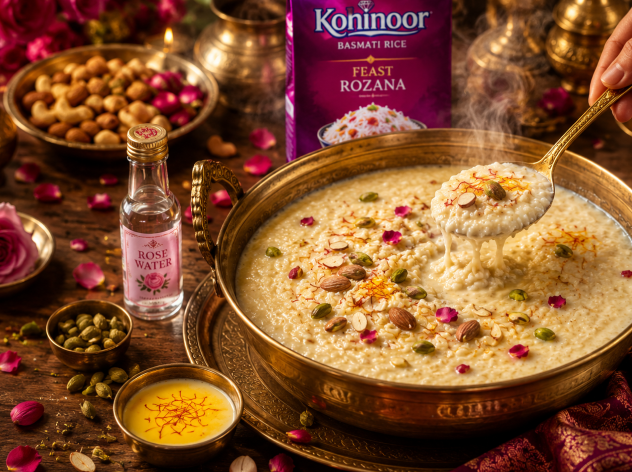
Kheer is loved for its creamy texture, gentle sweetness, and warm aroma of cardamom and saffron. It is one of the most cherished Indian desserts, made at festivals, poojas, and family gatherings. Yet the home version does not always turn out as silky as expected.

This guide explains the full kheer recipe in a simple way. It covers how to choose the right rice, prepare the milk, simmer slowly to a creamy finish, and flavour it with cardamom, saffron, and nuts. Follow each step, and you can make rich, restaurant-style rice pudding at home with better results.

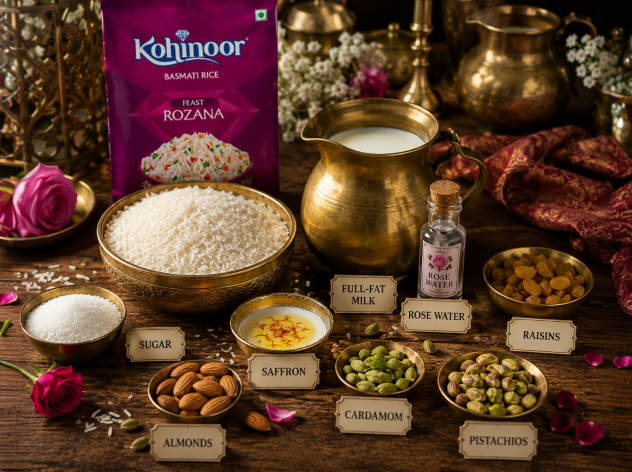
Ingredients You Need

  • ½ cup basmati rice (Kohinoor Feast Rozana works well)
  • 1 litre full-fat milk
  • ½ cup sugar (adjust to taste)
  • ¼ tsp cardamom powder
  • A pinch of saffron strands
  • 2 tbsp warm milk (to soak the saffron)
  • 2 tbsp chopped almonds
  • 2 tbsp chopped pistachios
  • 1 tbsp raisins
  • 1 tbsp ghee (for roasting the nuts)
  • 2–3 drops rose water or kewra (optional)
Kheer (Rice Pudding)

How to Prepare the Rice and Milk

The base decides the final texture of your kheer. Do not rush this step.

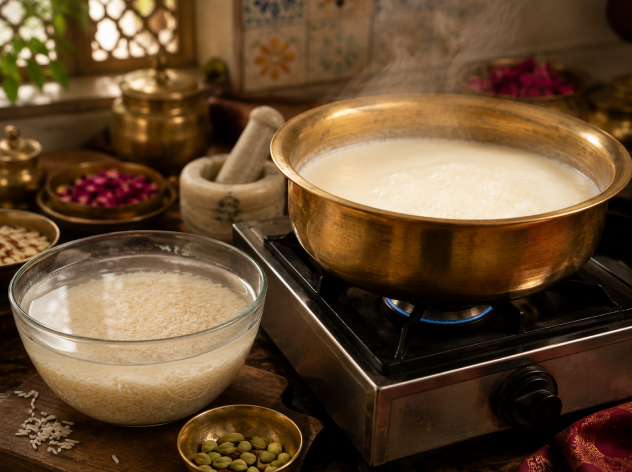
  • Wash the rice gently and soak it for 15–20 minutes to soften the grains.
  • Lightly crush the soaked rice for a creamier, faster-cooking kheer.
  • Bring the milk to a boil first, then lower the heat before adding the rice.
  • Stir often and scrape the sides so the milk does not catch or scorch.
  • Soak the saffron in warm milk so its colour and aroma release fully.

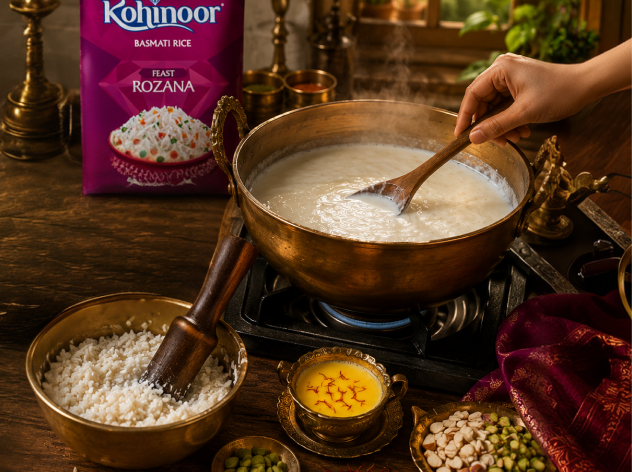
Patience is the real ingredient in kheer. Once the rice goes into the simmering milk, keep the heat low and let it cook gently. As the rice softens, it releases starch that thickens the milk naturally, giving the pudding its signature body without any shortcuts.

Keep stirring through this stage and scrape the cream that clings to the sides back into the pot. This slow reduction is what concentrates the flavour and turns plain milk and rice into something rich. Add the sugar only after the rice is fully soft, or it will slow down the cooking.

Common Mistakes to Avoid

Cooking on high heat    Not stirring enough    Adding sugar too early    Using low-fat milk

A slow, well-stirred base over low heat is what makes a true kheer turn rich, thick, and creamy.

Cooking the Kheer — Step by Step

Low heat and slow stirring are what give kheer its creamy finish. Follow the order carefully.

  • Bring the milk to a boil, then reduce to a gentle simmer.
  • Add the soaked, lightly crushed rice and stir well.
  • Cook on low, stirring often, until the rice is soft and the milk thickens.
  • Add sugar, cardamom, and the saffron milk; simmer until dissolved.
  • Stir in ghee-roasted nuts and raisins, then finish with rose water.

Remember that kheer thickens further as it cools, so switch off the heat while it is still slightly looser than you want. If it gets too thick, a splash of warm milk loosens it again. This slow, gentle finish is the key to silky, restaurant-style rice pudding.

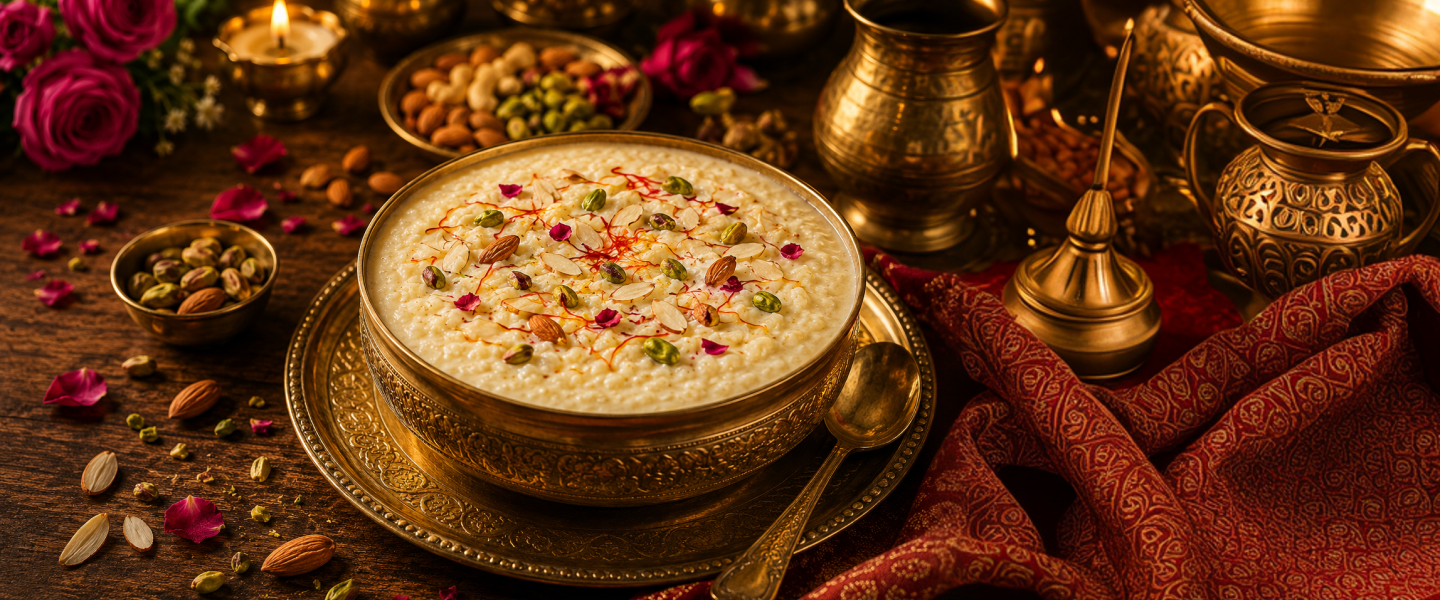
Kheer (Rice Pudding)

Flavouring and Finishing

The final touches bring warmth and aroma, turning a simple pudding into a festive dessert.

  • Roast the nuts in a little ghee for a deeper, toasty flavour.
  • Add cardamom and saffron towards the end so their aroma stays fresh.
  • A few drops of rose or kewra water lift the whole dish, use sparingly.
  • Garnish with extra nuts and a few saffron strands before serving.

You can tell kheer is ready by its look and aroma, a pale golden colour, a creamy coating on the spoon, and the warm scent of cardamom and saffron. Do not over-reduce it on the stove, as it will set too firm once cooled. Let it rest for a few minutes so the flavours settle. This gentle finish is the final stage of how to make kheer properly.

Serving and Common Mistakes to Avoid

Serve kheer warm for a cosy, comforting dessert, or chill it for a few hours for a thicker, richer treat. Stir gently before serving and top with a few extra nuts and saffron strands. Do not boil it hard to thicken, slow and gentle is what keeps every spoonful creamy and smooth.

Kheer (Rice Pudding)

Explore Our Product

Discover the Finest Range of Kohinoor Basmati Rice Products

Frequently Asked Questions

What are some sweet rice recipes for festivals?

Classic favourites are creamy kheer and fragrant zarda made with aromatic Kohinoor Basmati, milk, saffron, cardamom, and nuts. These comforting, celebratory dishes bring families together.

Can I use Kohinoor Basmati Rice for desserts like kheer and phirni?

Yes. Kohinoor Extra Long Basmati works wonderfully for kheer and similar milk-based desserts, giving fragrant, creamy results. For phirni, use coarsely ground basmati for a silky finish.

Can I use Kohinoor Basmati Rice for desserts like kheer and phirni?

Yes. Kohinoor Extra Long Basmati works wonderfully for kheer and similar milk-based desserts, giving fragrant, creamy results. For phirni, use coarsely ground basmati for a silky finish.

Why is my kheer thin and watery?

It likely needs more time on low heat. As the Kohinoor Basmati simmers slowly, it releases starch that naturally thickens the milk, so patience and slow reduction give kheer its body.

When should I add the sugar?

Only after the rice is fully soft. Adding sugar early slows down the cooking and can stop the rice from softening properly.

Can I make kheer with low-fat milk?

Full-fat milk gives the richest, creamiest result. Low-fat milk makes a thinner kheer, so you may need to reduce it longer or add a little condensed milk.

CLOSE

ENQUIRE FORM