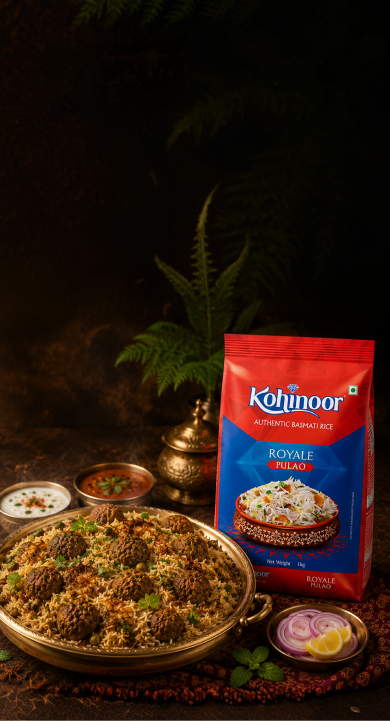
Royale Pulao Basmati Rice
Product Used
Royale Pulao Basmati Rice

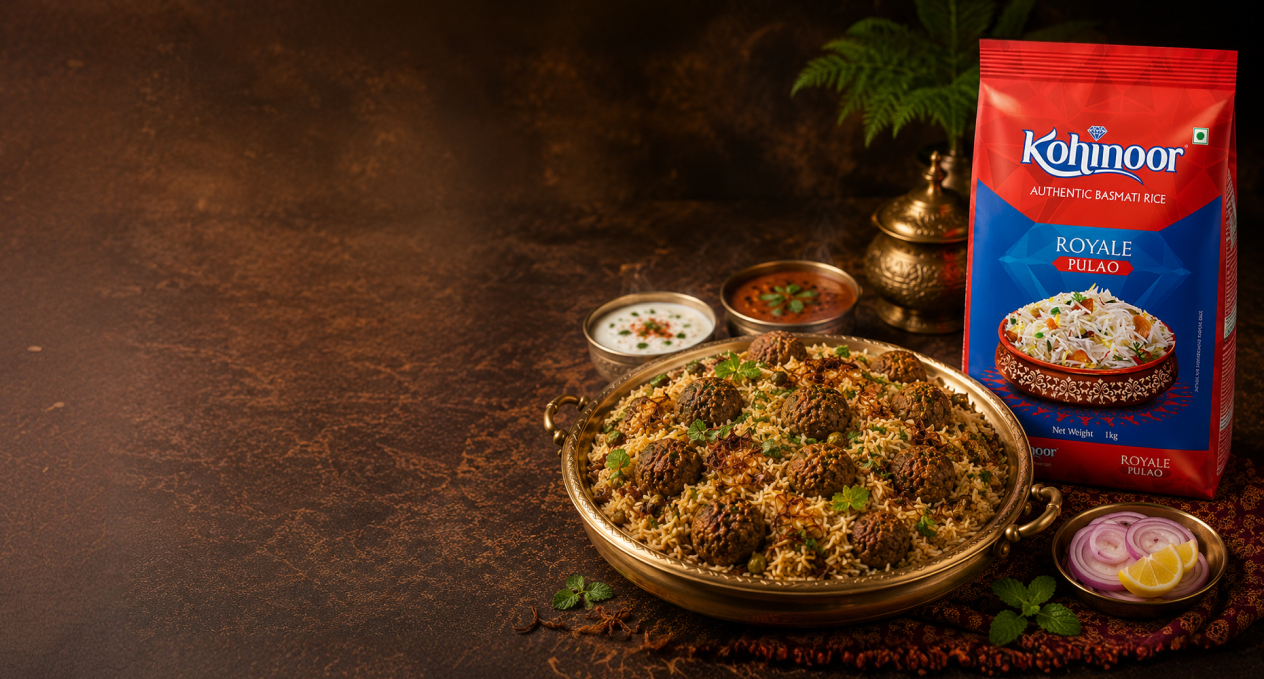
Kofta pulao is one of those dishes that feels grand without being complicated. Tender, spiced meatballs are gently simmered and then folded into fragrant basmati rice cooked in their own flavourful stock, so every grain carries the warmth of the koftas. It sits beautifully between an everyday pulao and a celebration biryani, lighter than the latter, but far richer than plain rice.

The dish has two distinct halves, and most home cooks stumble on one of them. Either the koftas break apart and turn rubbery in the pot, or the rice ends up bland because the cooking liquid was never properly flavoured. The secret is to treat the koftas and the rice as two careful processes that come together at the very end.

This guide walks you through both in detail—how to bind and shape koftas that stay soft and intact, how to build a fragrant base, and how to cook the rice by absorption so it stays separate and aromatic. With a few small techniques, you can turn out a kofta pulao that looks and tastes like it came from a royal kitchen.

Ingredients You Need

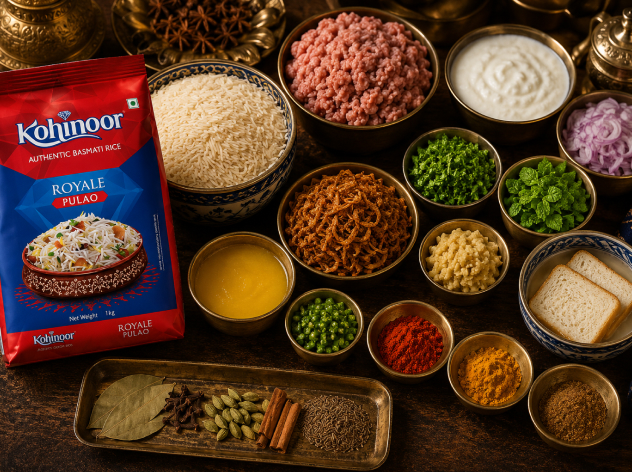
Good koftas and good rice both start with good ingredients. Here is everything you need for the two parts of the dish.

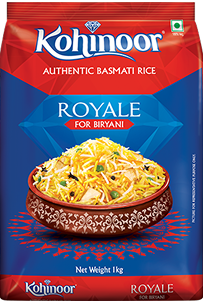
  • 2 cups basmati rice (Kohinoor Royale Pulao Basmati Rice works well)
  • 400 g minced meat (mutton or chicken keema)
  • 1 slice bread (soaked) or 1 tbsp roasted gram flour, to bind
  • 1 egg (optional, for firmer koftas)
  • 1 cup thick yoghurt (whisked)
  • 3 onions (2 sliced and fried, 1 finely chopped)
  • 2 tbsp ginger-garlic paste
  • 3–4 green chillies
  • Whole spices (bay leaf, cloves, cardamom, cinnamon, shahi jeera)
  • 1 tsp red chilli powder, ½ tsp turmeric, 1 tsp garam masala
  • Fresh coriander and mint leaves
  • 4 tbsp ghee + oil for frying
  • Salt as required

Tip: Use mince with a little fat in it, completely lean meat makes dry, tough koftas. A spoonful of ghee worked into the mix keeps them moist.
Kofta pulao
Kofta pulao

How to Make the Koftas

The koftas are the heart of this pulao, and getting them right is mostly about binding and handling. Take your time here and they will reward you.

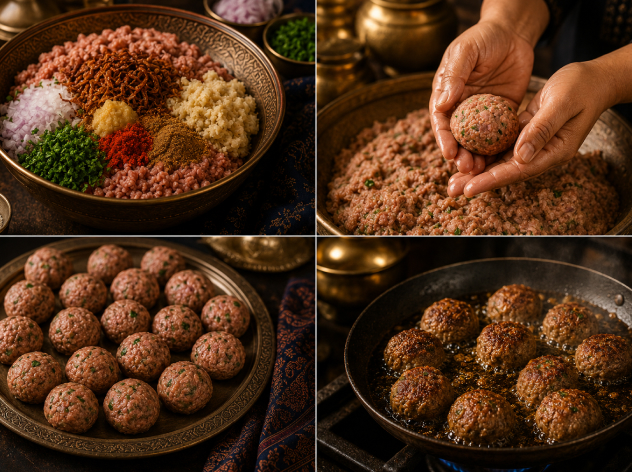
  • Knead the mince well: Mix the keema with ginger-garlic paste, spices, fried onions, and a binder until slightly sticky; this develops the protein so the koftas hold together.
  • Add a binder: Soaked bread or roasted gram flour absorbs moisture and stops the koftas falling apart, while an egg gives extra firmness if you like.
  • Chill before shaping: Resting the mixture in the fridge for 20 minutes firms it up and makes rolling smooth, even balls much easier.
  • Roll tight and even: Compact, equal-sized koftas cook evenly and are less likely to crack in the pot.
  • Sear, don't boil first: Lightly frying the koftas before they go into the liquid forms a protective outer layer that locks in juices and helps them keep their shape.

Common Mistakes to Avoid

  • Skipping the binder
  • Using lean, dry mince
  • Overcrowding the pan
  • Stirring the koftas roughly

Well-bound, gently handled koftas that keep their shape are what make a true kofta pulao feel rich and refined.

With the koftas seared and set aside, turn your attention to the rice and the base. Wash the basmati two or three times until the water runs clear, then soak it for 30 minutes. Soaking lets the grains absorb water gently so they lengthen as they cook rather than snapping, a small step that makes a big difference to the final look of the pulao.

For the base, fry the chopped onion until golden, add ginger-garlic paste and whole spices, then stir in the whisked yoghurt off the heat so it does not split. This fragrant masala becomes the foundation the rice cooks in. A good trick is to use the same pan you fried the koftas in, so all the browned, savoury bits get folded back into the flavour.

Cooking the Pulao — Step by Step

This is where the two halves come together. Work gently so the koftas stay whole and the rice stays separate.

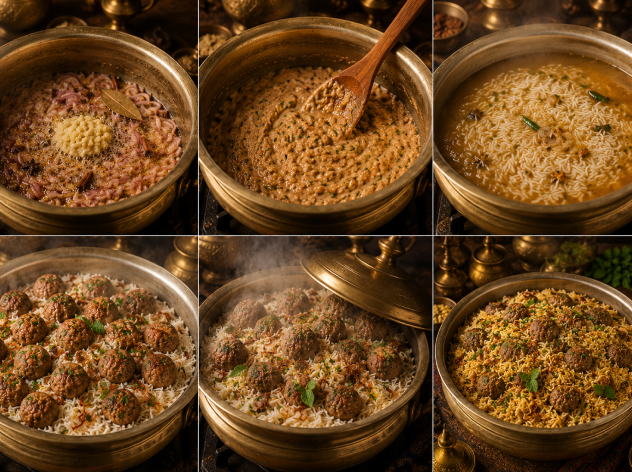
  • Build the base: Fry the onions until golden, add the ginger-garlic paste and whole spices, then stir in the whisked yoghurt and ground spices.
  • Add the liquid: Pour in measured hot water or stock (about a 1:1.5 rice-to-liquid ratio) and bring it to a gentle boil. Taste and adjust the salt at this stage.
  • Add the rice: Stir in the drained, soaked rice and cook uncovered until most of the liquid has been absorbed.
  • Nestle the koftas: Gently place the seared koftas on top of the rice — do not stir them in — so they steam without breaking..
  • Finish on dum: Cover the pot, reduce the heat to the lowest setting, and let it steam for 12–15 minutes until the rice and koftas are perfectly cooked.

The golden rule is the liquid ratio: because pulao cooks by absorption, measuring the liquid accurately removes all the guesswork.

Chef's Tip: Lay the koftas on top rather than burying them, and never stir after they go in. A gentle fluff with a fork at the end keeps both the koftas and the long grains intact.

Quick Trick: Slip a hot tava (griddle) under the pot during the dum stage. It spreads the heat evenly and prevents the rice at the bottom from catching or burning.

Kofta pulao
Kofta pulao

Resting, Fluffing, and Garnishing

The last few minutes are where a good pulao becomes a great one. Resist the urge to dig in straight away.

  • Rest before opening: Leave the lid on for 10 minutes off the heat so the steam settles and the grains firm up.
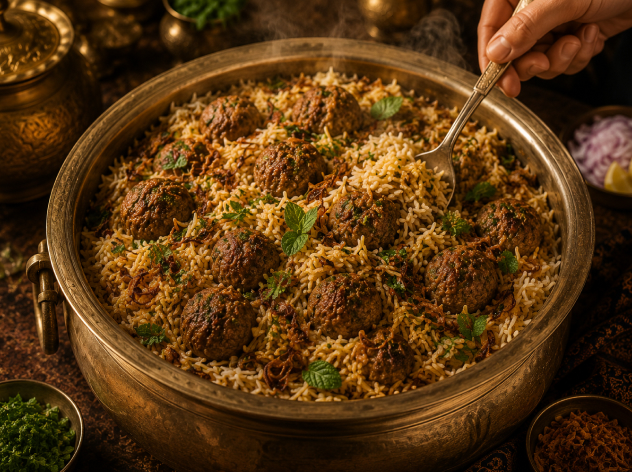
  • Fluff with a fork: Lift gently from the base. A spoon can mash the grains, while a fork keeps them long and separate.
  • Layer the garnish: Scatter fried onions, fresh coriander, and mint for aroma, colour, and that signature finishing touch.
  • Serve from the side: Lift portions carefully so each serving includes both tender koftas and fragrant rice.

You will know the pulao is ready by its look and scent—separate golden grains, whole tender koftas, and the warm aroma of whole spices and fried onions. Do not overmix at this stage, as it dulls both the texture and the appearance. A short resting time allows the flavours to settle into the rice, which is the final secret to a beautifully finished kofta pulao.

Serving and Common Mistakes to Avoid

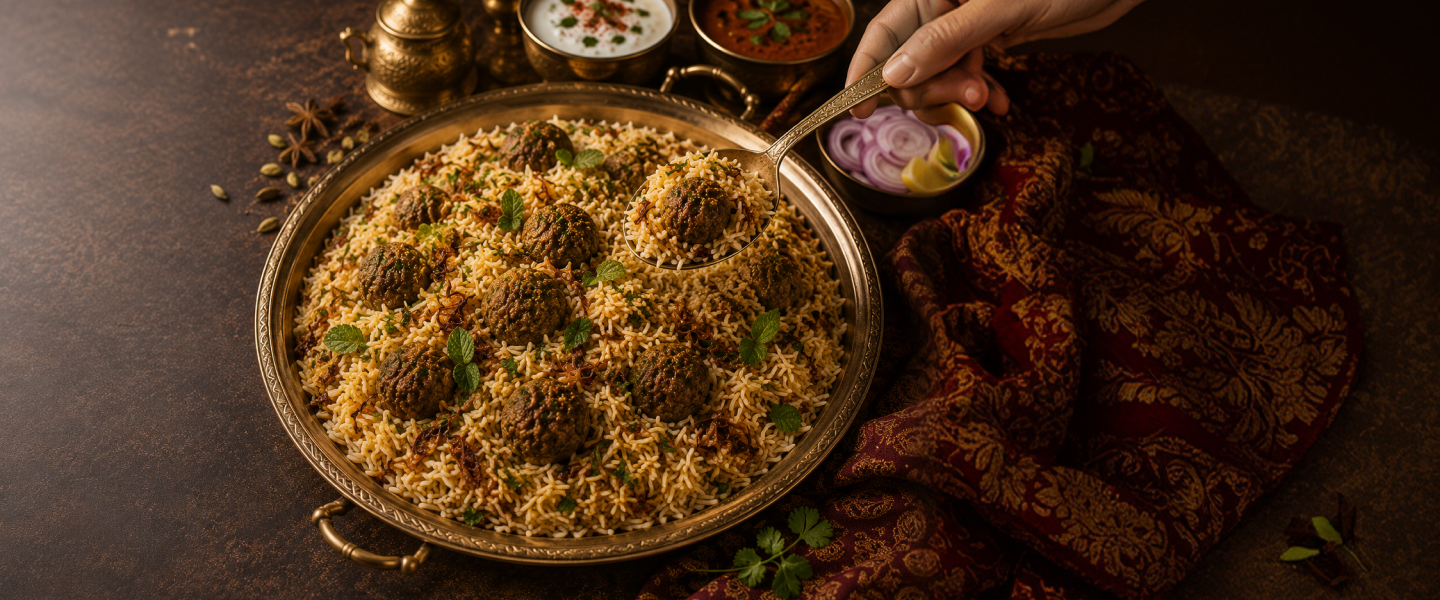
Serve kofta pulao hot with a cooling raita, a tangy salan, or simple sliced onions with lemon. Lift gently from the side to keep the koftas whole and the grains separate, and avoid overmixing while serving.

The most common slip-ups are dry koftas made from lean mince, broken koftas caused by rough stirring, and sticky rice from using too much water. Fix these three mistakes, and your kofta pulao will turn out beautifully every time.

Kofta pulao

Explore Our Product

Discover the Finest Range of Kohinoor Basmati Rice Products

Frequently Asked Questions

How do I stop my koftas from breaking in the pot?

▲

Bind the mince well with soaked bread or roasted gram flour, chill the mix before shaping, and sear the koftas before they go into liquid. Then nestle them on top of the rice rather than stirring them in.

What mince is best for koftas?

▼

Use mince with a little fat in it, as completely lean meat makes dry, tough koftas. A spoon of ghee worked into the mix also keeps them moist.

Can I make vegetarian koftas?

▼

Yes. Koftas made from paneer, potato, or mixed vegetables bound with gram flour work well. Fry them gently and handle them carefully, as they are softer than meat koftas.

What is the right rice-to-liquid ratio?

▼

Since the pulao cooks by absorption, about one part soaked Kohinoor Basmati to one and a half parts water or stock gives separate, fragrant grains.

Which rice works best for kofta pulao?

▼

A premium long grain like Kohinoor Royale Pulav Basmati Rice keeps the grains long and separate, giving the pulao its elegant, feast-worthy look.

CLOSE

ENQUIRE FORM