Why Long Grain Basmati is the Secret to Perfect Biryani
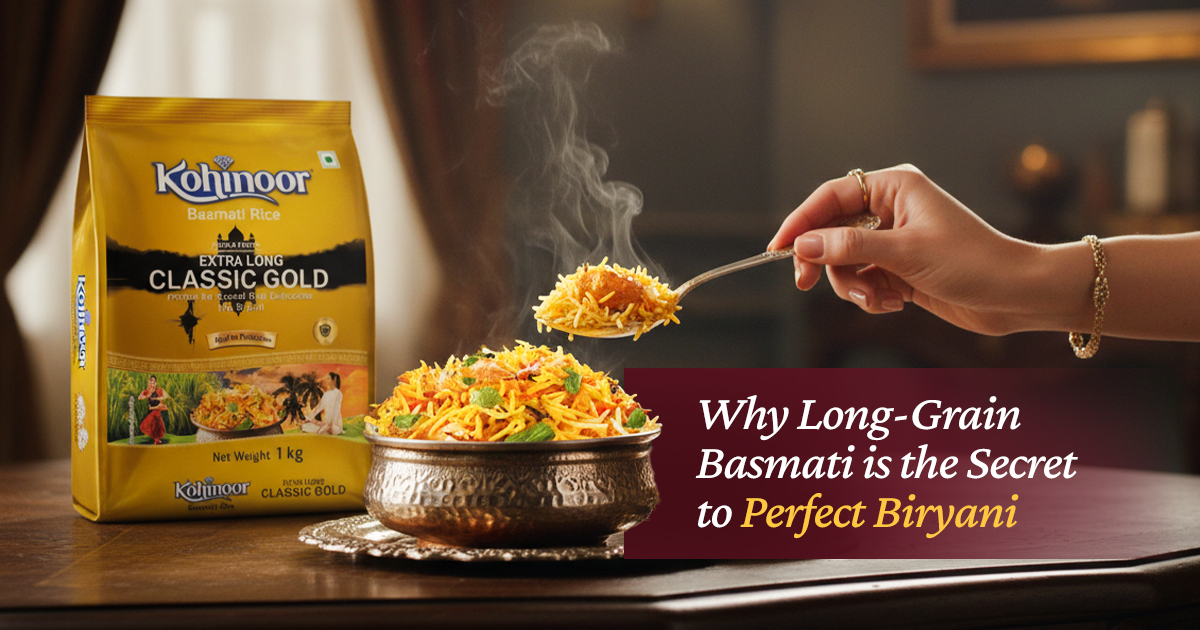
We all have blamed the masala when biryani goes wrong, but the rice is usually the real reason. If you want the best rice for biryani, you must pick a grain that elongates, holds its shape, and carries aroma without going gluey. Grain type, grain length, and how rice was stored before cooking all change the final dish. This blog explains what long-grain basmati is, why it is ideal for layered dum cooking, how ageing improves performance, and exactly what to look for on the pack when you buy, so your home biryani smells and looks like a celebration.
Long-grain means the uncooked kernel is narrow and noticeably longer than it is wide. When heated and steamed, true long-grain basmati elongates lengthwise rather than puffing sideways, so each grain becomes a slim, elegant strand. That elongation happens because the kernel’s internal structure directs expansion along its length when moisture heats the starch. In practice, this means that long-grain rice yields separate strands rather than a single sticky mass. Compared with medium and short-grain types, long-grain rice has less surface starch and a firmer bite; medium and short grains release more starch and tend to clump. This difference is why chefs choose long, slender basmati for dishes that need definition and lift.
Long, glossy strands lift saffron streaks and fried onions; they catch light and look celebratory. Presentation becomes part of the appetite.
A few small habits can make a big difference to the way your biryani turns out. These simple tips help you keep the grains separate, fragrant, and full of flavour.
Ageing reduces kernel moisture, firms the grain and concentrates aroma; these changes help rice survive dum cooking without splitting or becoming sticky. Look for labels that state natural ageing and the duration. For example, Kohinoor Classic Gold is described as naturally aged for two years and as an extra-long grain that elongates strongly after cooking, traits that make it especially suited to biryani.
Hyderabadi biryani is bold and dum cooked longer; it benefits from aged extra-long-grain rice that can withstand that finish, and Kohinoor’s Hyderabadi biryani kit is positioned to help you get restaurant-style results at home.
Kolkata biryani is lighter and fragrant; a thin long grain basmati rice that keeps the dish delicate and aromatic. Lucknowi dum pukht biryani needs perfectly parboiled, separate grains so the subtler gravies shine. Let the regional style guide your rice choice: richer, longer-cooked biryanis need robust aged grains; lighter versions prefer slim, fragrant grains. Kohinoor’s product pages and guides explain these distinctions and recommend varieties for different styles.
When you want a biryani that feels a little more special, a few clever touches can lift the whole dish. These easy chef-style hacks add better aroma, richer taste and a more polished finish.
Check the pack for claims such as aged, extra long grain, and stated grain length. Sealed packaging preserves the natural aroma better than loose bags. Smell the rice if possible: natural basmati aroma is subtle, floral and nutty, not harsh or perfumed. Prefer brands that list ageing duration and product details so you can trust hygiene and consistency. Kohinoor Classic Gold appears on multiple retail pages as a naturally aged, extra long basmati recommended for special meals and biryani, making it a safe, everyday go-to for both home feasts and quick family dinners.
Cooking hacks you can use: soak rice for 20–30 minutes to improve elongation; parboil to just shy of done; layer with hot meat, sprinkle with saffron milk, and seal the pot for a gentle simmer of 20–25 minutes. Fry the onions until deep golden, then tuck them into the layers for crunch and aroma.
When you choose the right long grain, aged basmati, you are choosing structure, aroma and visual beauty. The rice is the silent partner that lifts your masala and meat into a dish you will want to share. Pick a trusted aged extra-long-grain rice, follow simple parboiling and dum steps, and your home biryani will smell, look, and taste like a celebration.
Long grain basmati rice stays separate and fluffy even after dum cooking. It has less starch, so the grains do not stick together. This gives your biryani that light, layered texture instead of a sticky finish.
Aged basmati rice is stored for a period of time after harvesting. This reduces moisture in the grain and improves both aroma and texture. When you cook it, the grains become firmer, longer and more fragrant, which is ideal for biryani.
You should look for rice that is labelled aged and extra long grain. Options like Kohinoor Classic Gold are designed for dishes like biryani, as they elongate well and maintain a rich aroma during cooking.
Soak the rice for about 20 to 30 minutes before cooking. Parboil it until it is almost done, then finish it on dum. Avoid overcooking during boiling, as that can make the grains soft and sticky.
You can, but the result may differ slightly. Hyderabadi biryani works best with aged extra long grain rice that can handle longer cooking. Kolkata biryani is lighter, so a thinner, more delicate long-grain basmati gives a better texture and aroma.
The perfect way to stay up-to-date with all the latest news and offers. By signing up, you'll receive regular updates about new product launches, exclusive promotions, and delicious recipe ideas to try at home. Our newsletter is a great way to get inspired in the kitchen. So why not sign up today and join the Kohinoor community?
We look forward to sharing our passion for rice and biryani with you!
