Kohinoor Traditional Authentic Basmati Rice
Product Used
Kohinoor Traditional Authentic Basmati Rice

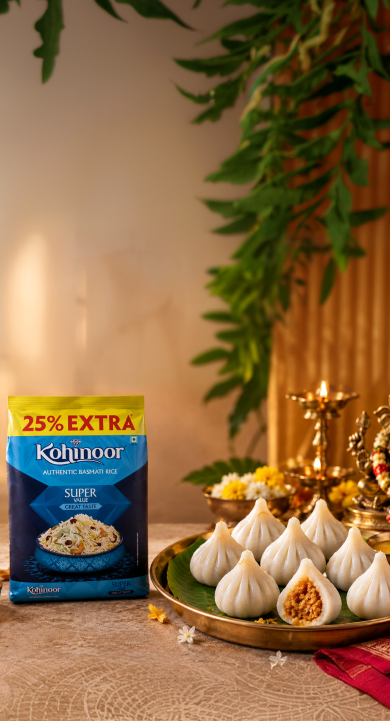
Ukadiche modak is one of the most loved sweets prepared during Ganesh Chaturthi, especially as an offering to Lord Ganesha. Made with a soft rice-flour covering and a fragrant filling of fresh coconut and jaggery, these steamed modaks are delicate, mildly sweet, and full of traditional flavour. Unlike fried modaks, the ukadiche version is steamed until the outer layer becomes soft, smooth, and slightly translucent.

This modak recipe explains how to make traditional ukadiche modak at home, from preparing the coconut-jaggery filling and making a smooth rice-flour dough to shaping the modaks and steaming them perfectly. The key is to get the texture right at every stage: the filling should be moist but not watery, while the rice-flour dough should remain soft and pliable enough to shape without cracking.

Ingredients You Need

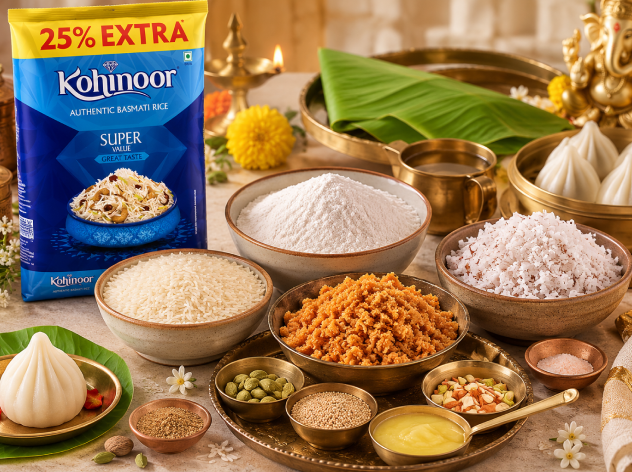
The ingredients for ukadiche modak are simple, but using fresh coconut, good-quality jaggery, and fine rice flour makes a noticeable difference to the final texture and flavour.

For the Modak Filling

  • 1 cup fresh grated coconut
  • ¾ cup grated jaggery
  • ½ tsp cardamom powder
  • ½ tsp poppy seeds (optional)
  • 1 tsp ghee
  • A small pinch of nutmeg powder
  • 1–2 tbsp chopped nuts, optional

For the Rice-Flour Dough

  • 1 cup fine Kohinoor Basmati rice flour
  • 1 cup water
  • 1 tsp ghee
  • A pinch of salt
  • ½ tsp sugar, optional

For Steaming

  • Water as required
  • A few drops of ghee for greasing
  • Banana leaf or parchment paper, optional
Ukadiche Modak Recipe: The Rice-Flour Sweet Every Ganpati Bhakt Makes

How to Prepare the Coconut and Jaggery Filling

The filling is the heart of an authentic ukadiche modak recipe. It should be rich, fragrant, and moist without becoming runny, because excess moisture can make the Kohinoor rice-flour covering difficult to handle.

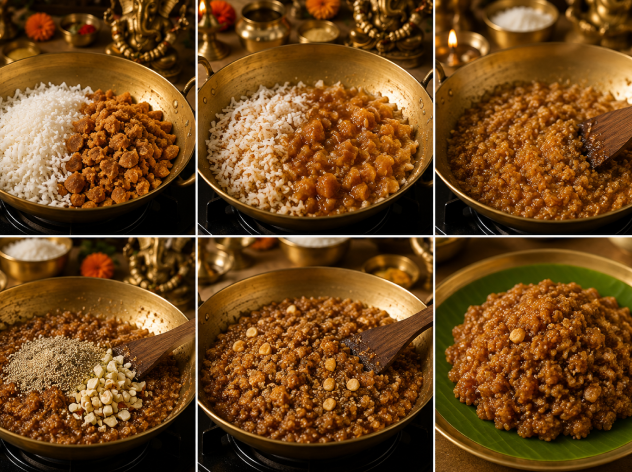
  • Cook the coconut and jaggery gently: Heat a pan and add the grated coconut and jaggery. Cook over low to medium heat while stirring continuously.
  • Let the jaggery melt: As the jaggery melts, it will combine with the coconut and create a moist mixture. Keep stirring so that it does not stick to the bottom.
  • Add the flavourings: Add cardamom powder, nutmeg, poppy seeds, and chopped nuts if using.
  • Cook until thick: Continue cooking until the mixture thickens and begins to leave the sides of the pan. Do not cook it for too long, as an overly dry filling can make the modak less soft.
  • Cool completely: Transfer the filling to a plate and allow it to cool before shaping the modaks.

Common Filling Mistakes to Avoid

Using watery or very soft jaggery

Overcooking the coconut and making the filling dry

Leaving the filling too runny

Using too much jaggery, which can overpower the coconut

Shaping the modaks while the filling is still hot

A good filling should hold together when pressed between your fingers but should still feel soft and moist.

Making the Rice-Flour Dough

The rice-flour covering is what gives ukadiche modak its characteristic soft and delicate texture. The dough needs to be cooked properly before shaping so that it does not crack or break.

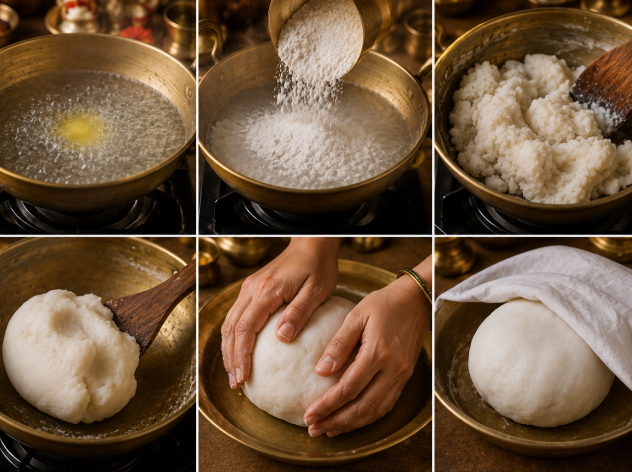
  • Boil the water: Add water, salt, sugar, and ghee to a heavy-bottomed pan and bring it to a gentle boil.
  • Add the rice flour: Lower the heat and add the Kohinoor basmati rice flour gradually. Stir quickly so that lumps do not form.
  • Cover and cook: Mix until the flour absorbs most of the water. Cover the pan and cook on low heat for about 2–3 minutes.
  • Knead while warm: Transfer the mixture to a plate while it is still warm. Wet your hands with a little water and ghee, then knead until you have a smooth, soft dough.
  • Keep it covered: Cover the dough with a damp cloth while you prepare the modaks. Rice-flour dough dries quickly, which can cause cracks during shaping.

Chef's Tip

Do not let the dough cool completely before kneading. Warm dough is much easier to smooth out and shape. If it feels dry or starts cracking, sprinkle a little warm water and knead again until it becomes pliable.

Ukadiche Modak Recipe: The Rice-Flour Sweet Every Ganpati Bhakt Makes

Making the Ukadiche Modak — Step by Step

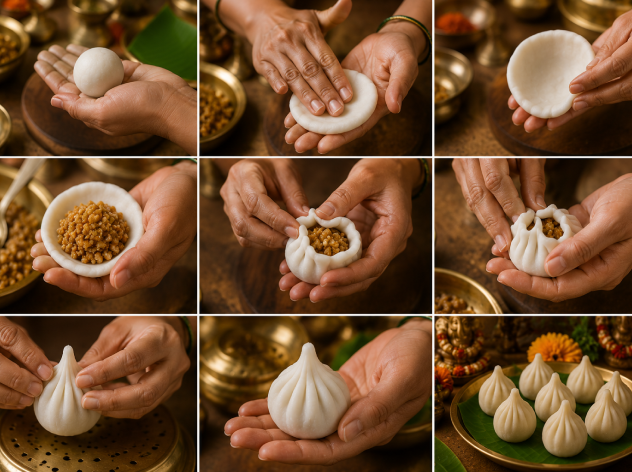
Once the filling and dough are ready, it is time to shape the modaks. You can use a traditional mould for uniform shapes, but hand-shaped modaks have a beautiful homemade appearance.

  1. Divide the dough: Take a small portion of the warm dough and roll it into a smooth ball.
  2. Flatten the dough: Place it between your palms and gently flatten it into a small disc. Keep the centre slightly thicker while thinning the edges.
  3. Create the pleats: Using your fingers, make small pleats around the edge of the rice-flour disc. Try to keep the pleats evenly spaced.
  4. Add the filling: Place about 1–1½ tablespoons of the cooled coconut-jaggery filling in the centre.
  5. Bring the pleats together: Carefully bring the pleated edges towards the top and pinch them together to create the traditional pointed shape.
  6. Smooth the edges: Check the modak for cracks and gently smooth them with damp fingers.
  7. Repeat: Continue until all the dough and filling have been used.

How to Steam Modaks Perfectly

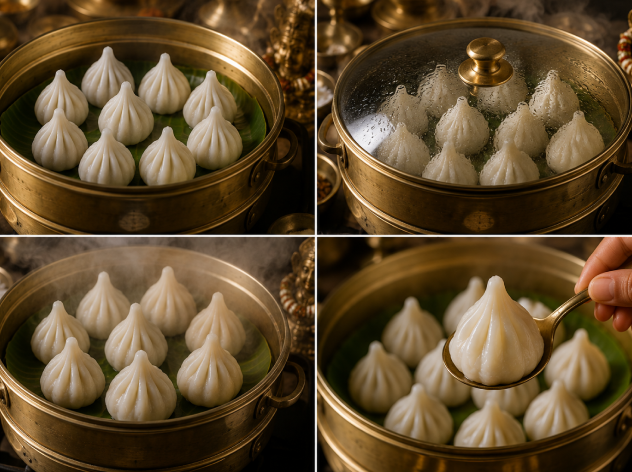
Steaming is what transforms the rice-flour dough into the soft, tender covering that makes ukadiche modak special.

  1. Prepare a steamer by bringing enough water to a gentle boil.
  2. Grease a steaming plate or line it with banana leaf or parchment paper.
  3. Place the modaks with a little space between them so that steam can circulate properly.
  4. Steam the modaks over medium heat for around 10–15 minutes. The outer covering should become firm, smooth, and slightly glossy when cooked.
  5. Once done, switch off the heat and let the modaksrest for a few minutes before carefully removing them.

A simple test: If the Kohinoor traditional authentic basmati rice-flour covering still looks opaque and feels sticky, steam for a few more minutes. Avoid over-steaming, as this can make the outer layer dry and chewy.

Ukadiche Modak Recipe: The Rice-Flour Sweet Every Ganpati Bhakt Makes

Finishing and Serving the Ukadiche Modak

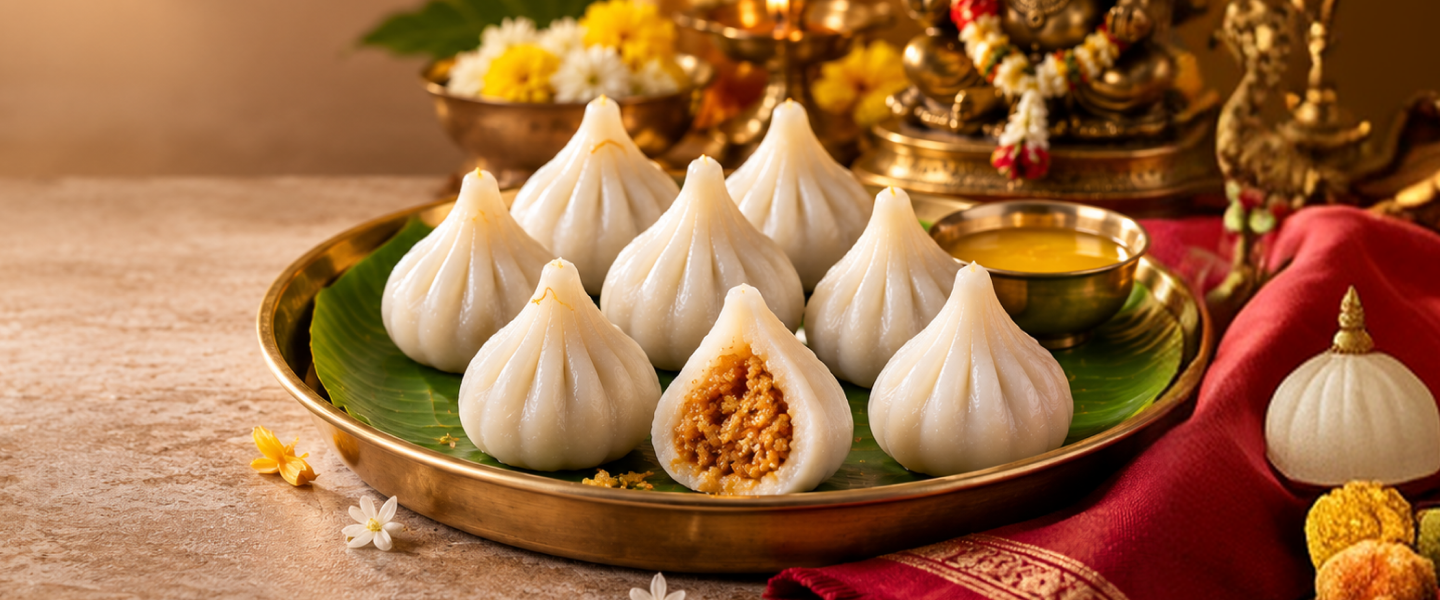
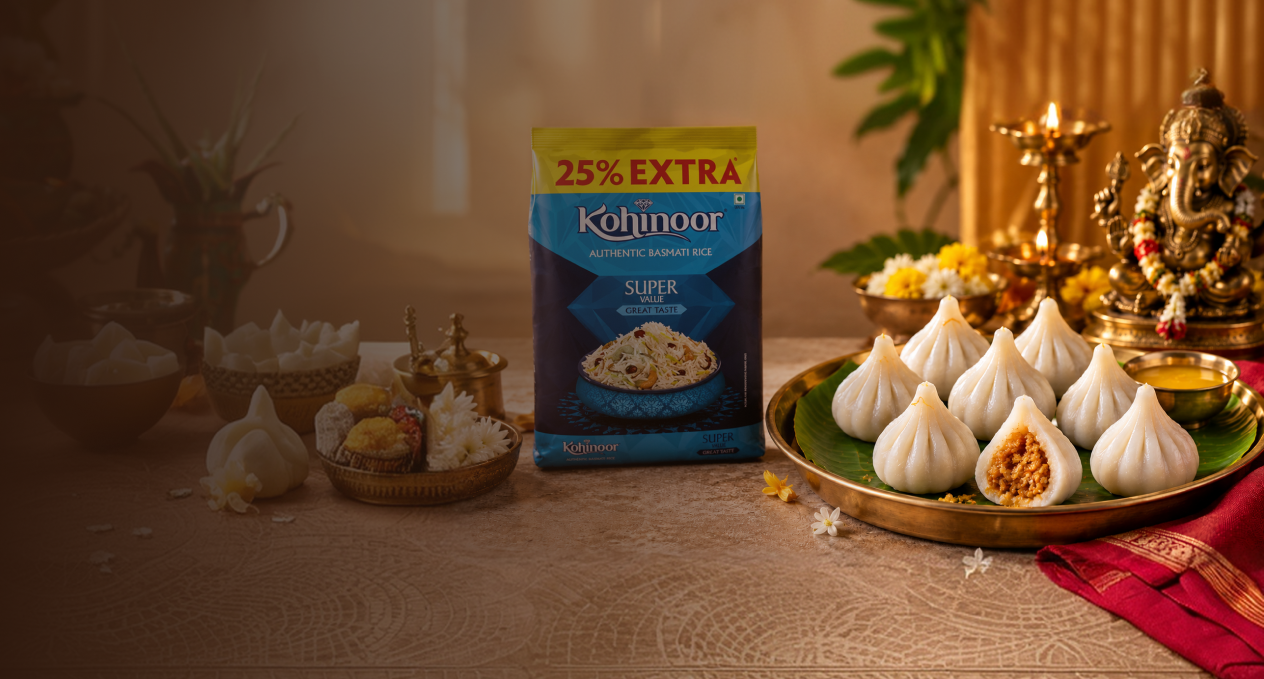
Freshly steamed modak are best served warm, when the rice-flour covering is soft and the coconut-jaggery filling is fragrant. Brush the tops with a little ghee before serving. Traditionally, ukadiche modak is offered to Lord Ganesha as naivedya during Ganesh Chaturthi and then shared with family and guests. For an especially rich finish, serve warm modaks with a small spoonful of ghee. The combination of soft Kohinoor rice flour, fragrant coconut, caramel-like jaggery, and ghee makes every bite comforting and festive.

Serving and Common Mistakes to Avoid

Serve ukadiche modaks warm on the day they are prepared. They can also be stored in an airtight container and gently reheated before serving. The most common problems with this modak recipe come from dry dough, an overly wet filling, or incorrect steaming. If the dough cracks while shaping, it usually needs a little more moisture and kneading. If the filling leaks out, it may be too loose, or the covering may be too thin. If the modaks turn hard after steaming, the dough may have been too dry, or the modaks may have been over-steamed. For soft, traditional modaks, keep the dough covered, cool the filling before using it, and steam over medium heat rather than high heat.
Ukadiche Modak Recipe: The Rice-Flour Sweet Every Ganpati Bhakt Makes

Explore Our Product

Discover the Finest Range of Kohinoor Basmati Rice Products

Frequently Asked Questions

What is ukadiche modak made of?

Ukadiche modak is made with a rice-flour covering and a sweet filling of fresh grated coconut, jaggery, cardamom, and other traditional flavourings such as nutmeg and poppy seeds. The modaks are shaped by hand and steamed.

Why does my modak dough crack while shaping?

Cracking usually means the rice-flour dough is too dry or has cooled too much. Knead it while warm and add a little warm water if required. Keeping the dough covered with a damp cloth also prevents it from drying out.

How do I stop the modak filling from becoming watery?

Cook the coconut and jaggery mixture over medium-low heat until it thickens and starts leaving the sides of the pan. Avoid adding excess liquid, and allow the filling to cool completely before using it.

How long should ukadiche modak be steamed?

Most homemade ukadiche modaks take around 10-15 minutes to steam over medium heat. The covering should look cooked, smooth, and slightly glossy when they are ready.

Can I make ukadiche modak without a mould?

Yes. Traditional ukadiche modaks can be shaped entirely by hand. Flatten a portion of dough, create small pleats around the edges, add the filling, and bring the pleats together at the top to form the pointed shape.

CLOSE

ENQUIRE FORM