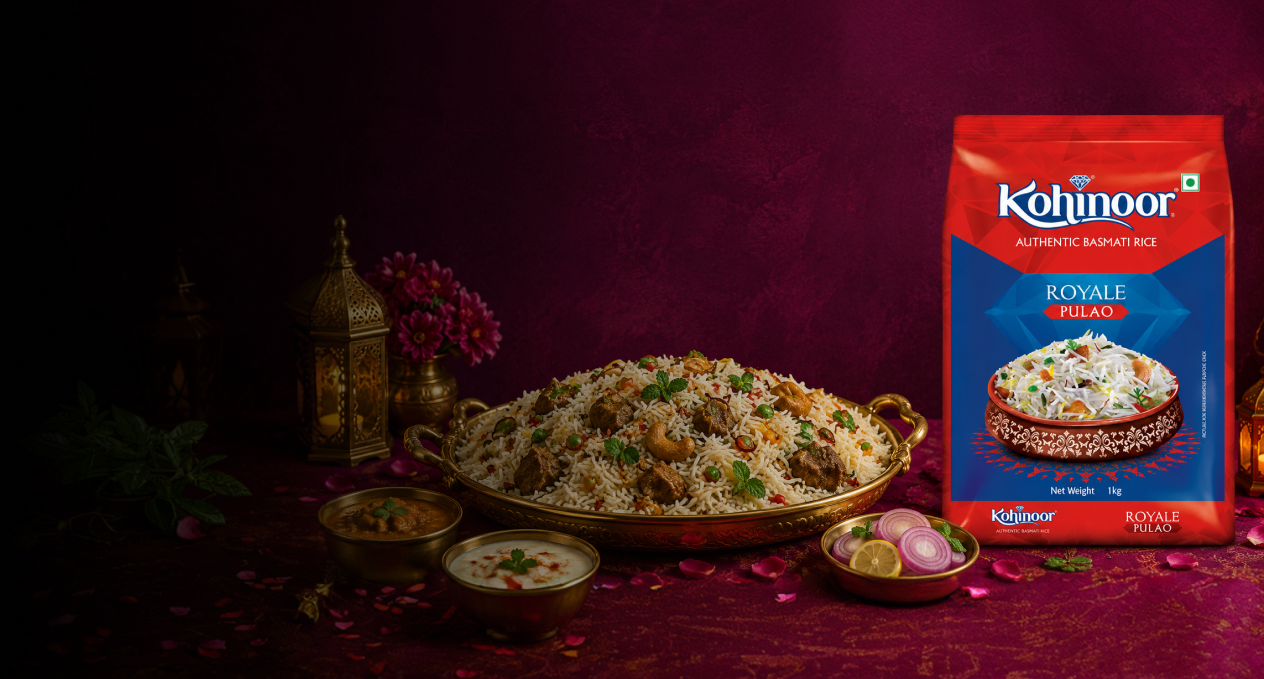
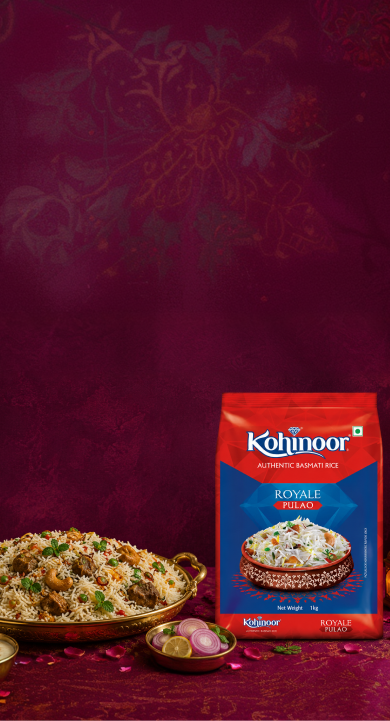
Royale Pulao Basmati Rice
Product Used
Royale Pulao Basmati Rice

No Indian wedding feast feels complete without a great pulao, and yakhni pulao is the most elegant of them all. Where biryani is bold and layered, yakhni pulao is gentle and aromatic, with long grains of rice cooked in a slow-simmered, spiced meat stock, each grain carrying the flavour from the inside out.

This guide walks you through yakhni pulao the way it is made for grand occasions. It covers how to build a deep, fragrant yakhni, brown the aromatics, measure the stock, and cook the rice to perfect, separate grains. Follow each step, and you can bring a true wedding-feast classic to your own table.

Ingredients You Need

A feast-worthy pulao starts with feast-worthy ingredients. Each one shapes the depth and aroma of the final dish.

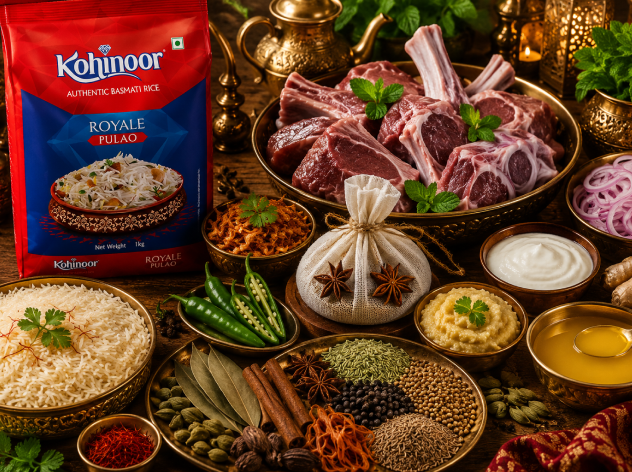
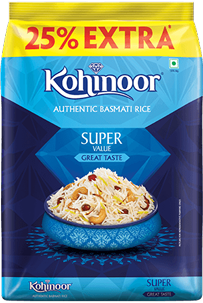
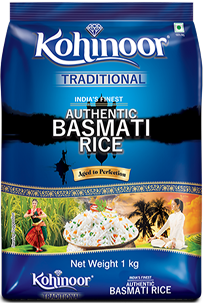
  • 3 cups long grain basmati rice (Kohinoor Royale Pulao rice works well)
  • 750 g mutton or chicken (bone-in, for a richer stock)
  • 3 large onions (2 sliced, 1 roughly chopped for the stock)
  • 2 tbsp ginger-garlic paste
  • ½ cup thick yoghurt (whisked)
  • 4 tbsp ghee
  • 2–3 green chillies (slit)
  • Fried onions and fresh mint, to garnish
  • For the yakhni potli: coriander seeds, cumin, fennel, black peppercorns
  • Whole spices: bay leaf, cloves, green & black cardamom, cinnamon, mace
  • 1 tsp shahi jeera (caraway)
  • Salt as required
Yakhni Pulao
Yakhni Pulao

Making the Yakhni — The Soul of the Pulao

The stock decides everything. A well-built yakhni is what sets this dish apart from an ordinary pulao.

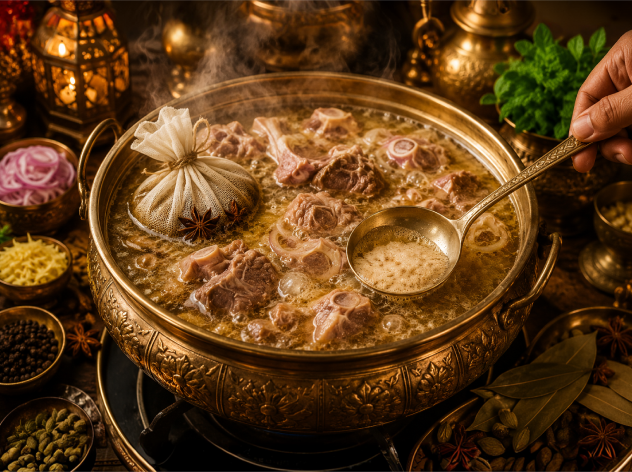
  • Tie the whole spices in a muslin cloth (potli) so the stock stays clear.
  • Simmer the meat with the potli, chopped onion, ginger, and garlic until tender.
  • Skim the surface now and then to keep the yakhni clean and fragrant.
  • Strain the stock and reserve it carefully — this measured liquid cooks the rice.
  • Keep the cooked meat aside to fold back in later, away from heat.

While the yakhni rests, ready the rice. Wash it gently two or three times and soak for 30 minutes so the grains lengthen and cook evenly. Drain it well before cooking; excess water dilutes the stock and softens the grains too soon.

The golden rule of any pulao is the ratio. Yakhni pulao is cooked by absorption, so the rice drinks up the flavoured stock entirely. For most long-grain basmati, roughly one part soaked rice to one-and-a-half parts yakhni gives separate, fragrant grains. Measure it once, and you remove all the guesswork.

Common Mistakes to Avoid

Rushing the stock    Loose, untied spices    Not measuring the yakhni    Under-seasoning the stock

A slow, well-strained yakhni is what gives this wedding-feast pulao its rich aroma and clean, golden grains.

Cooking the Pulao — Step by Step

With the yakhni ready, the pulao comes together quickly. Follow the order carefully.

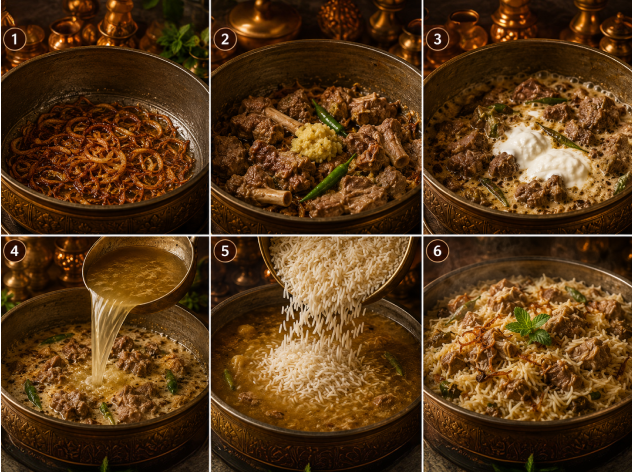
  • Heat ghee and fry the sliced onions until deep golden; set some aside to garnish.
  • Add ginger-garlic paste, green chillies, and the cooked meat; sauté briefly.
  • Stir in the whisked yoghurt and shahi jeera, cooking until the fat separates.
  • Pour in the measured yakhni, add the drained rice, and adjust the salt.
  • Bring to a boil, then cover and cook on low until the stock is absorbed.

Once the liquid is almost gone, lower the heat to its faintest setting, seal the lid, and let the pulao finish on gentle dum for 10–12 minutes. This final rest steams the grains tender without breaking them. Do not stir during this stage, let the steam do the work. This is the key to a feast-worthy, separate-grained yakhni pulao.

Yakhni Pulao
Yakhni Pulao

Finishing and Presentation

For a wedding table, presentation matters as much as flavour. The finish is where the dish earns its place.

  • Rest the pulao, covered, for 10 minutes before opening the lid.
  • Fluff gently with a fork, lifting from the base so the grains stay whole.
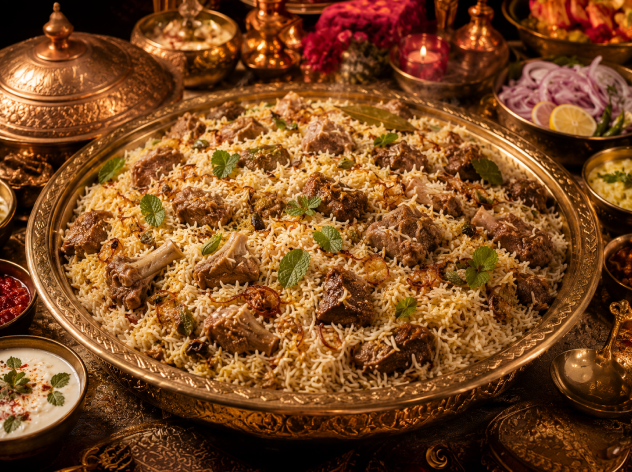
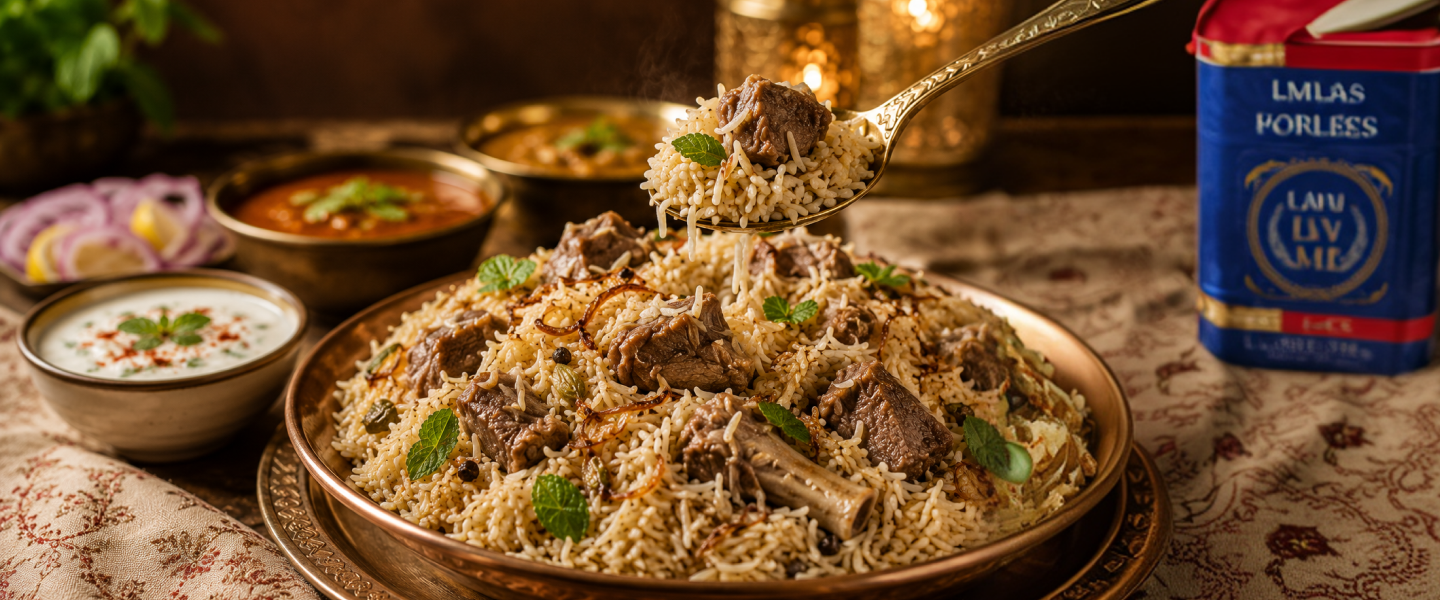
  • Crown with fried onions, fresh mint, and a few tender pieces of meat on top.
  • Serve in a wide platter so the long grains and aroma show at their best.

You will know the pulao is right by its look and scent, pale golden grains, each one separate, carrying the deep aroma of the yakhni. Do not over-mix when serving, as it dulls both the look and the texture. Let it rest for a few minutes so the flavours settle into the rice. This graceful finish is what makes yakhni pulao the centrepiece of a classic Indian wedding feast.

Serving and Common Mistakes to Avoid

Serve yakhni pulao hot, with a cooling raita, a tangy salan, and sliced onions with lemon. Lift gently from the side to keep the grains intact, and resist over-mixing. Done right, every spoonful carries both tender meat and fragrant, golden rice.

Yakhni Pulao

Explore Our Product

Discover the Finest Range of Kohinoor Basmati Rice Products

Frequently Asked Questions

What are classic Indian wedding rice recipes to try at home?

Popular wedding dishes include vegetable biryani, jeera rice, zarda pulao, yakhni pulao, and lemon rice, all best made with premium Kohinoor Basmati for rich flavour and festive appeal.

What does

Yakhni is a fragrant, spiced meat stock. The Kohinoor Basmati is cooked in that strained stock by absorption, so each grain carries the flavour from within.

Why use a spice potli (muslin bag)?

Tying the whole spices in muslin lets them flavour the stock without floating loose through the rice, keeping the yakhni clear and the pulao clean to eat.

What is the right rice-to-stock ratio?

For most long-grain Kohinoor Basmati, roughly one part soaked rice to one and a half parts yakhni gives separate, fragrant grains. Measuring once removes the guesswork.

How can I make restaurant-style pulao for a feast?

Use premium basmati like Kohinoor Royale Pulav, soak it well, build a deep yakhni, and finish on a gentle dum. This gives the long grains and rich aroma a wedding feast deserves.

CLOSE

ENQUIRE FORM