How to cook the Perfect Fried Rice
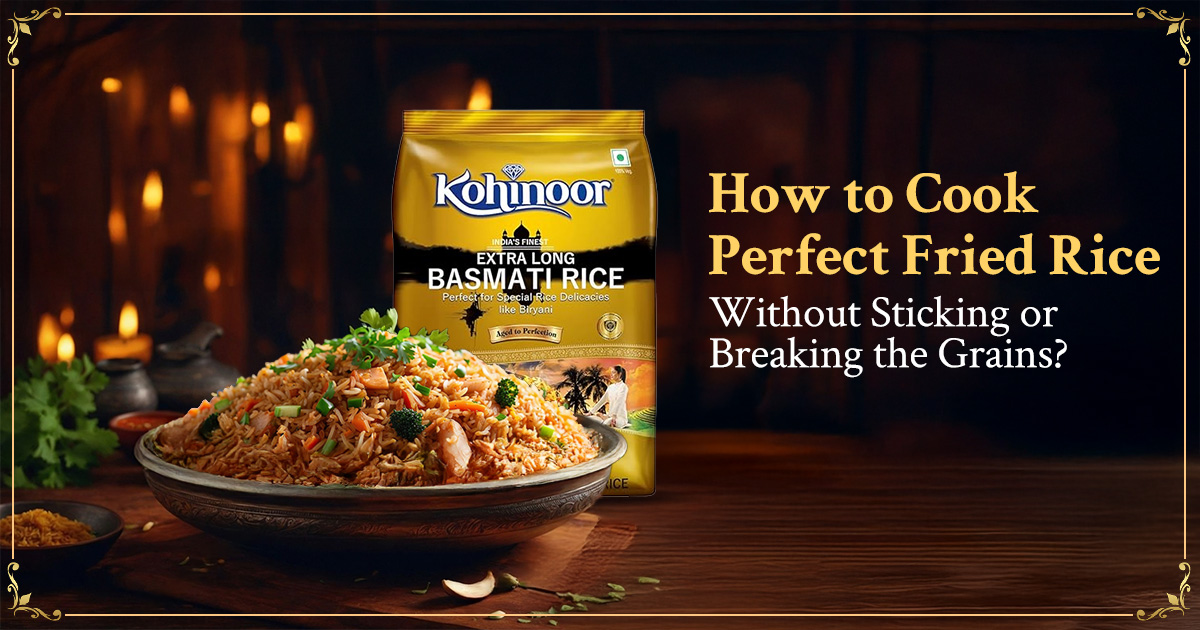
Fried rice is one of the most cooked dishes in the world, and one of the most misunderstood. It looks like it should be easy. Cook some rice, throw in vegetables, add sauce, toss. Yet the plate that comes out at home is often soft, clumpy and a little sad, while the same dish at a restaurant arrives light, dry and separate, with every grain sitting on its own.
The gap between the two is not skill and it is not equipment. It comes down to what happens to rice when heat and moisture meet, and a few decisions made long before the pan is switched on. Here is what is actually going on, and how to work with it.
Fried rice started as a way to use up food rather than a dish anyone set out to invent. Cooked rice left from an earlier meal was tossed on high heat with whatever was around, which made it warm, safe to eat and a lot more interesting. That origin is the reason the dish works best with rice that is already cooked and cooled, and the reason almost every fried rice recipe across Asia repeats the same instruction about using day old rice.
In India the dish took its own turn. Vegetable fried rice, egg fried rice, schezwan fried rice and paneer fried rice are now standard on almost every menu, and most homes have their own version. The fillings change, the technique does not.
Rice is mostly starch, and starch comes in two forms. One of them dissolves easily and makes grains cling to each other. The other stays firmer and helps the grain hold its shape. The balance between the two is different in every variety of rice, and that balance is what decides whether your dish turns out fluffy or gluey.
Short and medium grain rice has more of the sticky kind of starch. That is exactly what you want in a risotto or a bowl of curd rice, where the grains are meant to hold together. It works against you in fried rice recipe, where the whole point is that they should not.
Heat and water make it worse. When rice is freshly cooked, the outside of each grain is soft and coated in a thin layer of moisture and loose starch. Put that in a hot pan and the grains glue themselves together before they have any chance to fry. This is the single most common reason homemade fried rice fails.
Long grain rice is the answer, and basmati is the most dependable long grain rice for the job. It holds less of the sticky starch, it cooks up dry rather than soft, and it is firm enough to be tossed around a hot pan without falling apart.
The longer and firmer the grain, the more obvious the separation on the plate, which is why an extra long grain basmati rice gives the cleanest result. Kohinoor Gold India’s Finest Extra Long Authentic Basmati Rice suits this well. The grains are long, properly aged and hold their shape under heat.
Ageing is worth understanding too. Aged basmati rice has been stored for a period before it reaches the kitchen, which lowers its moisture content. It drinks up less water while boiling and stays firmer afterwards, which is precisely the behaviour you want from rice that is going to be cooked twice. That same firmness is useful across everyday rice recipes, so a good premium basmati rice earns its place as the regular rice in the house rather than something bought only for one dish.
Rice kept in the fridge overnight goes through a small change. As it cools, some of the starch that softened during cooking firms up again, and the surface loses moisture. The grains become drier, harder and far less willing to stick to each other. That is the whole reason leftover rice fries so well, and it is not something you can fake with more oil or a hotter flame.
There is also a practical side. Cold rice can be broken up by hand into loose grains before it goes anywhere near the pan, which is almost impossible with warm rice without crushing it.
Cook the rice with a little less water than usual so it stays on the firmer side, drain it properly, and spread it in a thin layer across a wide plate or tray. Leave it under a fan for twenty to thirty minutes, or in the fridge for about fifteen. Once the grains feel dry to the touch and come apart easily, they will behave much like day old rice.
Whichever route you take, loosen the lumps gently with your fingers or a fork first. Press lightly. You are separating the grains, not mashing them.
Fried rice is cooked fast on high heat, and there is a reason for that. A properly hot pan drives moisture off the surface of the rice almost instantly, so the grains fry and pick up a little colour. A lukewarm pan does the opposite. The moisture hangs around, the rice steams in it, and you end up with something soft rather than fried.
Crowding the pan causes the same problem. Too much rice at once drops the temperature and traps steam underneath, so the layer at the bottom goes soggy while the top stays cold. If you are cooking for more than three or four people, it is worth doing it in two batches.
Sequence matters as much as heat, and it follows a simple logic. Everything that needs time goes in early, everything that needs almost none goes in late.
Salt deserves a special mention. Added early, it pulls moisture out of the vegetables and straight into the rice. Added at the end, it seasons without doing any damage.
Cooked rice should not be left sitting at room temperature for long. Cool it quickly, spread out rather than piled in a bowl, and get it into the fridge within an hour or so. Stored properly it keeps for about a day, which fits neatly with using it the next day.
Fried rice itself is at its best straight out of the pan and loses texture as it sits. If you are reheating it, sprinkle over a spoon of water and warm it on high heat in a pan rather than letting it go round and round in a microwave, which tends to make it rubbery.
One cup of uncooked basmati gives roughly three cups once cooked, which is enough for two to three servings. A useful habit is to cook a little extra whenever you make plain rice, so the base for the next day is already sitting in the fridge.
Fried rice recipe rewards preparation more than technique. Cold rice, a hot pan, a light hand and a good quality basmati to begin with. Get those right and the dish more or less takes care of itself.
Long grain basmati. It holds less of the starch that makes grains stick, it cooks up dry rather than soft, and it is firm enough to survive being tossed on high heat. An extra long grain basmati rice such as Kohinoor Gold gives the clearest separation between grains.
Almost always because the rice was too wet or too warm going into the pan. Freshly cooked rice carries a layer of moisture and loose starch on the surface, which glues the grains together the moment they hit heat. Low flame and early seasoning make it worse. Use cooled rice, keep the heat high, and season at the end.
Yes, as long as you dry it first. Cook it with slightly less water than usual, spread it thin across a wide tray, and leave it twenty to thirty minutes under a fan or about fifteen in the fridge. Once the grains feel dry and come apart easily, they will fry properly.
It can be, and most of it depends on how it is made. A home cooked plate with plenty of vegetables, a couple of spoons of oil and light seasoning is a reasonably balanced meal. Restaurant versions usually carry far more oil and salt. Loading up on vegetables, keeping the oil low and going easy on the soy sauce makes a clear difference.
The perfect way to stay up-to-date with all the latest news and offers. By signing up, you'll receive regular updates about new product launches, exclusive promotions, and delicious recipe ideas to try at home. Our newsletter is a great way to get inspired in the kitchen. So why not sign up today and join the Kohinoor community?
We look forward to sharing our passion for rice and biryani with you!
