Mirchi ka Salan and Raita: The Two Sides That Make Every Biryani Better
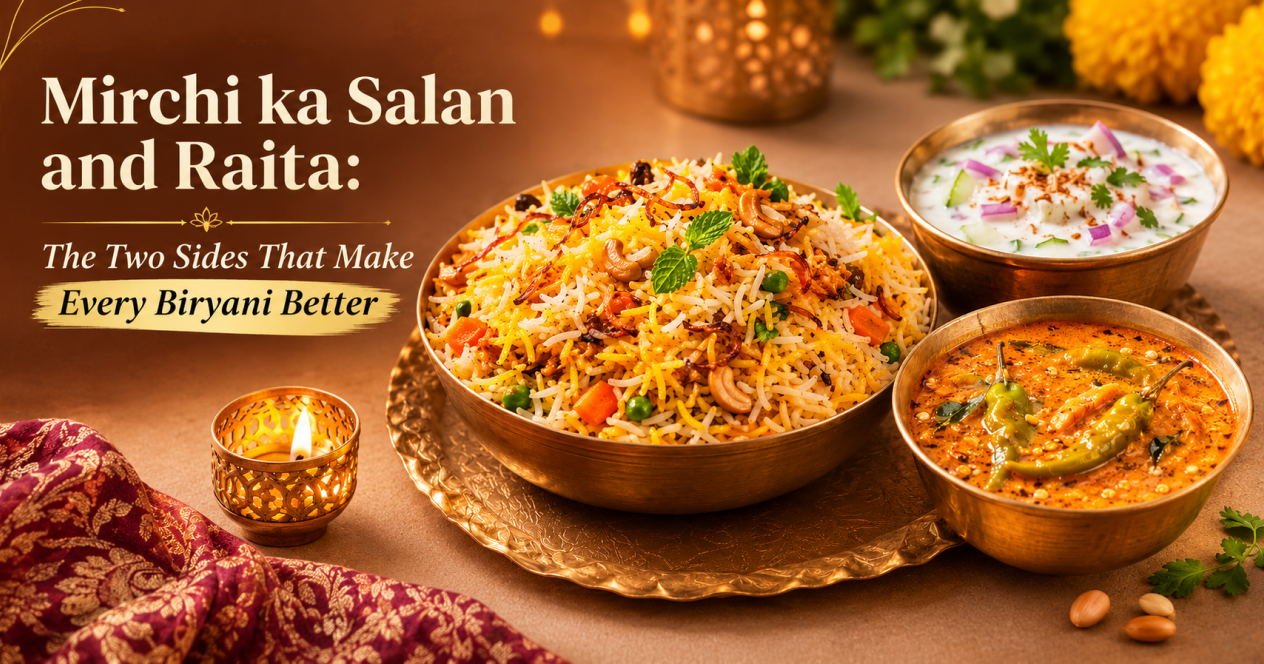
A plate of biryani is always inviting but add a spoonful of warm salan and a bowl of chilled raita, and the meal becomes something special. From Diwali gatherings to weekend family lunches, these accompaniments bring balance to every bite. This guide explores what mirchi ka salan is, how to prepare it at home, which raita pairs with different biryanis and what else belongs on your festive plate. Kohinoor brings the same attention to quality through its aromatic, long-grain aged basmati rice, helping every grain stay separate and fluffy beneath the delicious accompaniments.
The best accompaniments to biryani are salan and raita because they balance different flavours. Salan brings moisture, tanginess and nutty richness, while raita provides a cooling contrast to the spices. Together, they make every spoonful more enjoyable without overpowering the biryani. Mirchi ka salan is a traditional Hyderabadi biryani side, often served at weddings, family celebrations and festive meals. Whether you are preparing vegetable or paneer biryani, these two accompaniments deserve a place on the table. A fragrant rice preparation paired with warm salan and chilled raita makes a lovely Diwali spread.
Mirchi ka salan is a traditional Hyderabadi curry made with long green chillies cooked in a rich gravy of peanuts, sesame seeds, coconut and tamarind. Mirchi means chilli, while salan means curry. The result is a mildly spicy, tangy and nutty accompaniment traditionally served with biryani. The gravy has a slightly creamy consistency, with a gentle sourness from tamarind. Long, thick green chillies work best. Keep their seeds for extra heat or remove them for a milder taste. Similar in its nut-based gravy, bagara baingan uses brinjals instead of chillies. Salan also tastes wonderful with plain rice, pulao and roti. For an everyday meal, try serving salan with Kohinoor Jeera Rice.
A traditional mirchi ka salan recipe uses roasted peanuts, sesame, coconut and tamarind to create its distinctive gravy. The chillies are lightly fried before simmering in the prepared masala, allowing them to absorb the tangy, nutty flavours.
Ingredients:
Method:
The gravy thickens as it cools, so add a little hot water if needed. Remove chilli seeds for a milder version.
Kitchen note: Peanuts and sesame are allergens, so clearly communicate their presence when serving guests. Salan can be prepared a day ahead and refrigerated promptly in an airtight container. Reheat thoroughly before serving. For Diwali, pair the salan with a fragrant pot of Kohinoor Classic Gold biryani for a complete festive plate.
The best raita for biryani depends on its spice level and flavour. Onion and boondi raita suit milder preparations, while cucumber and mint offer a refreshing contrast to spicier rice dishes. Burani raita brings a distinctive Hyderabadi touch to traditional dum biryani.
| Raita | What is in it | Biryani it suits |
|---|---|---|
| Onion raita | Sliced onion and fresh curd | Classic vegetable biryani |
| Onion tomato cucumber | Chopped vegetables and curd | Mild vegetable pulao |
| Boondi raita | Boondi, curd and roasted cumin | Vegetable biryani and pulao |
| Burani raita | Curd, garlic and spices | Hyderabadi dum biryani |
| Cucumber mint | Cucumber, mint and curd | Spicy vegetable biryani |
Onion raita is the simplest option. Soak sliced onion in cold water for around 30 minutes to soften its sharpness. Boondi raita adds a pleasant texture, while burani raita brings a gentle garlic flavour. Cucumber and mint raita is especially refreshing.
Thick, creamy raita starts with fresh curd that has been whisked until smooth. If the curd is too thin, hang it in a muslin cloth for 15–20 minutes to remove excess water. Add the vegetables and seasoning carefully to keep it consistent.
Serve chilled for the best contrast with warm biryani and salan. Raita also pairs beautifully with a simple bowl of Kohinoor Khichdi.
A biryani plate needs only a few thoughtful accompaniments. Along with salan and raita, add one crunchy or fresh side to complete the meal without overcrowding the plate.
Two or three sides are enough. Try the biryani plain first, add raita to the next bite and then enjoy a little salan. For Diwali celebrations, pair your favourite Kohinoor biryani with these traditional accompaniments.
Vegetable dum biryani, paneer biryani and vegetable pulao each pair well with different accompaniments. Choose tangy salan for added depth, creamy raita for balance and refreshing cucumber-based options when the rice is more heavily spiced.
| Biryani | Salan pairing | Raita pairing |
|---|---|---|
| Vegetable dum biryani | Mirchi ka salan | Burani or boondi raita |
| Paneer biryani | Tangy mirchi ka salan | Cucumber mint raita |
| Vegetable pulao | Mild salan | Onion raita |
Kohinoor Classic Gold helps keep grains long and separate, making it a great choice for festive biryani.
The best rice for biryani is aged, long-grain basmati that holds its shape after cooking. Since salan and raita both add moisture to the plate, the biryani rice needs to remain fluffy and separate rather than becoming mushy. Par-cooking the rice before dum preparation is important. Overcooked or broken grains can clump together when layered with masala. Long grain basmati absorbs flavours while retaining its characteristic texture. Kohinoor Classic Gold is a suitable choice for festive cooking.
Serve mirchi ka salan hot and raita cold to enjoy their contrasting flavours. Salan can be prepared a day ahead, refrigerated promptly, and reheated thoroughly. Raita is best prepared fresh on the day. A small bowl of each for every two or three people is generally sufficient. For your Diwali table, remember: salan for depth, raita for coolness and rice that keeps its shape under both. Kohinoor Classic Gold makes festive biryani special, while Feast Rozana is a convenient choice for everyday rice meals.
Mirchi ka salan is made with long green chillies, roasted peanuts, sesame seeds, desiccated coconut, tamarind, onion and spices. These ingredients create a thick, tangy and nutty gravy. It is a traditional Hyderabadi accompaniment commonly served with biryani, pulao and plain rice.
Cucumber mint raita is excellent for spicy biryani because it offers a refreshing, cooling contrast. Onion raita suits simpler preparations, while boondi raita adds texture. Burani raita is a traditional Hyderabadi choice for dum biryani.
Yes, mirchi ka salan pairs wonderfully with veg biryani. Its tangy, nutty gravy complements aromatic basmati rice, vegetables and spices. Serve it warm alongside chilled cucumber raita for a balanced meal that works beautifully for Diwali celebrations and family gatherings.
Yes, you can prepare mirchi ka salan without peanuts by adjusting the gravy with additional sesame seeds and coconut. However, the flavour and consistency will change. Check for other allergens before serving, especially if preparing the dish for guests with food allergies.
Serve biryani with mirchi ka salan, a bowl of chilled raita and one crunchy side such as papad or fresh kachumber salad. This combination balances the richness, spices and texture of the rice without making the plate feel overcrowded.
The perfect way to stay up-to-date with all the latest news and offers. By signing up, you'll receive regular updates about new product launches, exclusive promotions, and delicious recipe ideas to try at home. Our newsletter is a great way to get inspired in the kitchen. So why not sign up today and join the Kohinoor community?
We look forward to sharing our passion for rice and biryani with you!
