Choosing the Right Rice for Everyday Meals
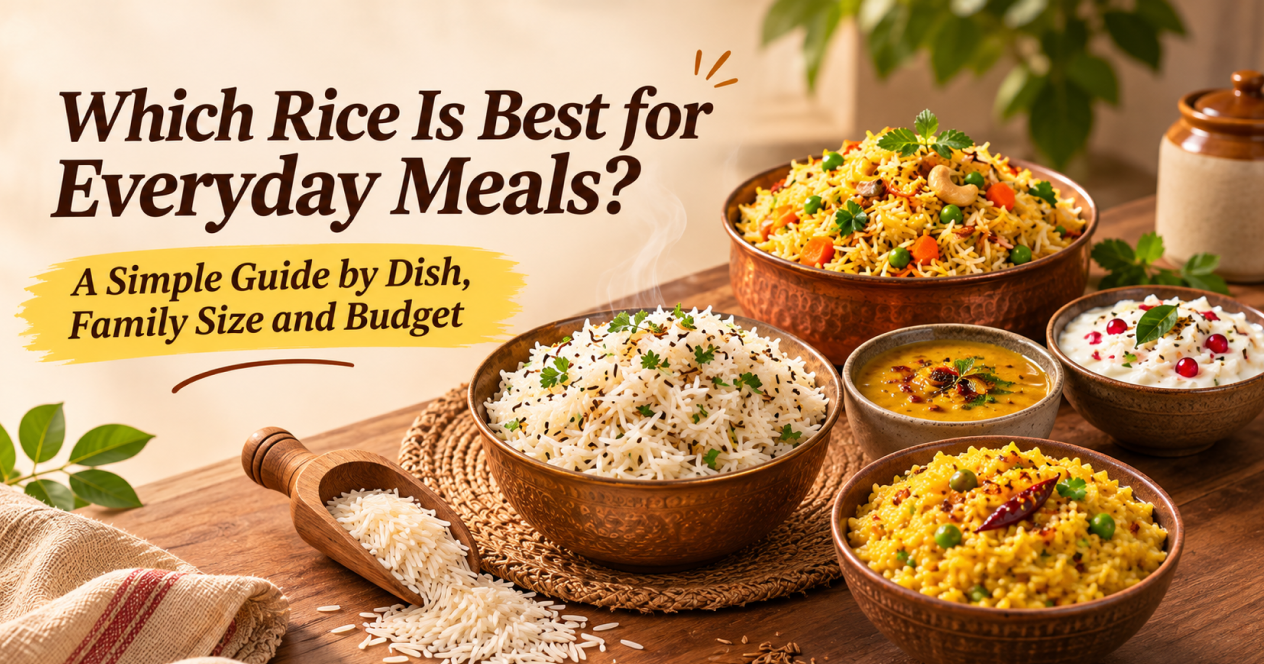
Every grocery trip brings the same question: which pack of rice will work for dal chawal, khichdi, curd rice and the occasional pulao? This guide explores the best rice for everyday meals by dish, rice type, family size and budget, along with simple cooking and storage tips. Kohinoor, one of India's trusted food brands, offers a range of basmati and brown rice for everyday cooking and festive occasions. Whether you are preparing a weekday lunch or a Diwali feast, the right grain makes every meal feel special.
The best rice for everyday meals depends on the texture each dish needs. Basmati suits fluffy jeera rice, pulao and biryani, while softer varieties work beautifully with dal, khichdi and curd rice. Choose rice that complements your regular cooking rather than buying one variety for every recipe.
| Dish | What the grain needs to do | Rice that suits it |
|---|---|---|
| Dal chawal | Soft, comforting texture | Everyday basmati or Kolam |
| Khichdi | Blend easily with dal | Everyday basmati or short-grain rice |
| Curd rice | Soft and slightly sticky | Sona Masoori or Kolam |
| Jeera rice | Stay fluffy and separate | Basmati |
| Veg pulao | Absorb spices without clumping | Long-grain basmati |
| Lunchbox rice | Hold texture after cooling | Everyday basmati |
| Weekend biryani | Elongate and stay separate | Premium basmati |
For the best rice for daily use, match the grain to your regular menu. If you wonder which rice is best for daily use across different dishes, keeping two varieties can be a sensible option. Kohinoor's Feast Rozana suits dal chawal and khichdi, Royale Pulao suits vegetable pulao, and Classic Gold is a lovely choice for jeera rice and festive biryani. Super Value is worth considering for larger households.
A good everyday rice cooks conveniently, delivers the texture your family enjoys and offers enough servings for your budget. Cooking time, grain separation, leftover quality and pack quantity all matter. There is no universal winner; the right choice depends on your kitchen routine and the dishes you prepare most often.
Some families prefer soft, comforting rice, while others enjoy fluffy, separate grains. Everyday basmati rice generally cooks faster and costs less than premium grades while retaining its characteristic grain length.
Basmati, non-basmati, parboiled and brown rice differ in grain shape, aroma, processing and cooking texture. Basmati is aromatic and slender, non-basmati varieties are often softer, parboiled rice stays firmer, and brown rice retains its bran layer. Each has a place in an Indian kitchen.
Yes, basmati rice can be a practical everyday choice when you select a grade designed for regular cooking. Everyday varieties offer the familiar aroma and grain separation of basmati without requiring the longer cooking time or higher budget associated with premium grades.
The right rice pack depends on how many people eat at home and how frequently you cook rice. Smaller households can choose smaller packs to maintain freshness, while larger families should compare servings per pack. Looking beyond the basmati rice price helps you understand the actual value.
Brown rice suits meals where you prefer whole grains and a firmer texture. It retains the bran layer, giving it a nuttier taste and more fibre than polished white rice. Brown rice needs a longer soak and more water, so allow extra preparation time. You can include healthy rice options such as brown basmati on some days and regular rice on others. So, which rice is healthiest? It depends on individual nutritional needs, dietary preferences and the overall meal. There is no single answer for everyone. Kohinoor Brown Basmati Rice is an option worth exploring.
To cook basmati rice with separate, fluffy grains, rinse it until the water runs mostly clear and soak it for 20–30 minutes. Use measured water, cook gently and let the rice rest before fluffing. These simple steps help maintain the grain's natural texture and aroma.
For open-pot cooking:
For pressure-cooker cooking:
Remember these simple hacks:
Store rice in an airtight container in a cool, dry place, away from moisture, direct sunlight and strong smells. Good storage helps protect the grains and maintain their quality. Avoid mixing old and new rice, and choose a pack size that your household can finish within a few weeks. Smaller packs suit one or two people, while larger packs are practical for busy family kitchens.
Choosing rice for everyday meals becomes easier when you consider your regular dishes, household size, budget and preferred texture. Think about what you cook most often before picking a pack. The best choice should fit your routine, offer consistent cooking results and make everyday meals enjoyable.
Ask yourself four questions:
A few simple recommendations:
For those exploring the best basmati rice or comparing the best rice brand, look for consistent quality, suitable grain characteristics and hygienic packaging. Kohinoor offers Feast Rozana for everyday meals and Classic Gold for festive cooking. Whether it is a simple weekday lunch or a Diwali family gathering, the right rice brings everyone to the table.
Everyday basmati is a versatile choice for households that regularly prepare dal chawal, jeera rice and vegetable pulao. If you prefer softer rice for curd rice or khichdi, non-basmati varieties such as Kolam and Sona Masoori are also suitable.
Yes, basmati rice is suitable for daily use. Everyday grades offer aromatic, separate grains and convenient cooking times without the higher cost of premium varieties. Choose a grade that suits your regular dishes, preferred texture and household budget.
Everyday basmati and non-basmati varieties such as Kolam both work well for dal chawal. Basmati offers a fluffy, separate texture, while Kolam gives a softer bite that blends comfortably with warm dal, ghee and a simple vegetable accompaniment.
Khichdi and curd rice generally taste best with rice that cooks soft and absorbs moisture well. Kolam and Sona Masoori are popular choices. Everyday basmati can also work for khichdi when cooked with sufficient water to achieve a softer consistency.
Basmati rice is known for its slender, aromatic grains that elongate and remain separate after cooking. Non-basmati varieties, including Kolam and Sona Masoori, generally have a softer, slightly clingy texture. Both are useful, depending on the dish and personal preference.
The perfect way to stay up-to-date with all the latest news and offers. By signing up, you'll receive regular updates about new product launches, exclusive promotions, and delicious recipe ideas to try at home. Our newsletter is a great way to get inspired in the kitchen. So why not sign up today and join the Kohinoor community?
We look forward to sharing our passion for rice and biryani with you!
