Sona Masoori vs Basmati Rice: Which One Should You Actually Buy?
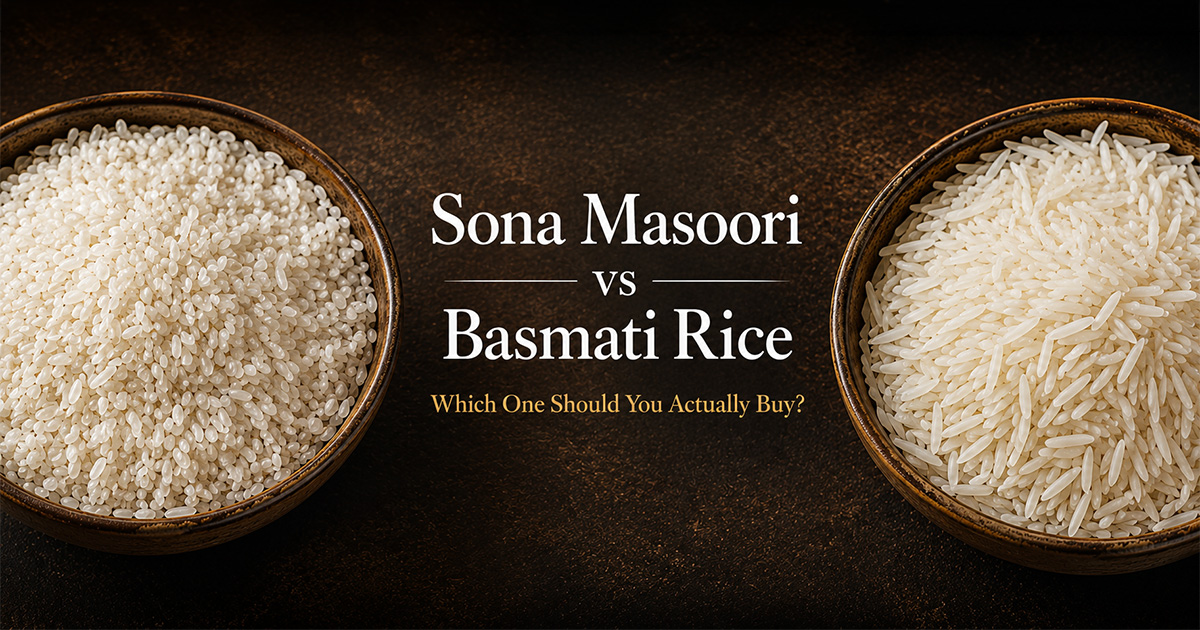
Walk into most Indian kitchens and you'll find rice sitting at the centre of daily life, yet not every grain plays the same role. Sona Masoori Rice and Basmati Rice are two of the country's best-loved varieties, but they're built for different meals entirely. Sona Masoori rice, light and quick to cook, powers everyday South Indian plates, while Basmati, with its extra-long rice and heady aroma, takes centre stage at festive North Indian tables.
This guide compares sona masoori rice vs long basmati rice across grain length, aroma, texture, cooking time and price, answers what sona masoori rice is, checks whether sona masoori rice is good for daily meals, and helps you decide which grain earns a permanent spot in your kitchen.
| Key Features | Sona Masoori | Basmati |
|---|---|---|
| Grain length | Short to medium | Extra-long |
| Aroma | Mild, neutral | Rich, distinctly nutty |
| Texture | Soft, slightly sticky | Fluffy, separate grains |
| Cooking time | 15-18 minutes | 12-15 minutes (after soaking) |
| Price band | Budget-friendly | Premium |
| Best dishes | Curd rice, khichdi, daily meals | Biryani, pulao, festive dishes |
Sona Masoori Rice chawal is grown chiefly across Andhra Pradesh, Telangana and Karnataka, where the climate suits its short-grain nature. It's a short to medium-grain rice, lighter in starch than most staple varieties, which is exactly why it turns up in South Indian homes several times a week. The benefits of sona masoori rice show up most in everyday cooking: it cooks fast, sits gently on the stomach, and pairs naturally with sambar, rasam, and curd. Where it struggles is festive cooking. Its shorter grain doesn't elongate when cooked and has little natural aroma, so it rarely makes its way into a biryani pot.
Basmati's character comes largely from ageing. Grains are matured for months, sometimes over a year, which reduces moisture and firms up the starch structure. This is what allows each grain to stretch to nearly double its length once cooked, without breaking. Ageing also deepens the rice's natural aroma, giving it that unmistakable fragrance long before the lid comes off the pot. Low surface starch keeps grains separate rather than clumping, which is precisely what a good pulao or biryani rice needs. This entire process, from selection to prolonged ageing, is why Basmati sits in a higher price band when you compare basmati rice vs normal rice varieties.
Biryani and pulao demand Basmati. The grain's structure and aroma carry the layered spices without turning mushy. Everyday dal chawal and rajma chawal, on the other hand, work beautifully with Sona Masoori since its lighter body doesn't compete with the gravy. Curd rice and daily South Indian meals lean on Sona Masoori's softness, while khichdi and other light, easily digestible meals also favour its quicker cook time.
| Dish | Recommended Rice |
|---|---|
| Biryani | Basmati |
| Pulao | Basmati |
| Dal Chawal | Sona Masoori |
| Rajma Chawal | Sona Masoori or Basmati |
| Curd Rice | Sona Masoori |
| Khichdi | Sona Masoori |
Both varieties are carbohydrate-dense staples, and portion size matters more than the variety itself. When people search for sona masoori rice glycemic index, the general observation is that its smaller grain and starch structure tend to place it slightly higher on the GI scale than aged Basmati, though this varies with cooking method, water ratio, and how much the rice is polished. Basmati's fluffier, expanded grains can also feel more filling per serving. This section offers general information only, not dietary advice. Anyone managing blood sugar or specific health conditions should speak with a doctor or nutritionist before changing their rice intake.
Sona Masoori dominates South Indian kitchens because rice appears on the plate multiple times a day, often as a base for wet curries, rasam or curd. A lighter, quicker-cooking grain simply fits that rhythm better. Basmati, meanwhile, rules North Indian festive cooking, where rice tends to appear less frequently but more dramatically, in biryanis, pulaos and wedding spreads where aroma and presentation matter. The preference isn't really about taste alone. It's shaped by cooking style. If your kitchen cooks across both cuisines, keeping both varieties on the shelf makes practical sense rather than picking a side.
A few honest questions will settle this faster than any comparison chart:
For everyday cooking, Kohinoor Feast Rozana delivers dependable, everyday grain quality without straining the monthly budget. For festive tables and special occasions, Kohinoor Traditional Authentic brings the long, aromatic grains that a proper biryani rice or pulao deserves.
Sona Masoori and Basmati aren't competing for the same job. One brings comfort to a Tuesday evening dal chawal, the other brings celebration to a wedding biryani. Keeping both in your kitchen, rather than picking a single winner, is often the most practical answer. Whatever the next meal calls for, from a quick weekday khichdi to a festive pulao, Kohinoor's rice range has a grain suited to it. Reach for Feast Rozana on an ordinary evening, or open a pack of Traditional Authentic Basmati when the table calls for something a little more special.
Sona Masoori is a short- to medium-grain rice grown mainly in Andhra Pradesh and Karnataka. It's light, low in starch and cooks quickly, making it a household favourite for everyday South Indian meals like curd rice and khichdi.
Sona Masoori is the best rice for daily use thanks to its light texture and quick cooking time. Many households also keep an everyday Basmati on hand for variety through the week.
Yes, you can eat Basmati rice daily in moderate portions as part of a balanced plate. Its aromatic, fluffy grains suit everyday dal chawal just as easily as richer festive preparations.
Yes, Sona Masoori rice is good for light, everyday meals. It's quick to cook, easy on digestion and pairs naturally with curries, sambar and curd, making it a practical daily staple in many homes.
Basmati generally cooks faster once soaked, taking around 12-15 minutes, while Sona Masoori takes closer to 15-18 minutes without soaking. Actual time depends on grain age, water ratio and cooking method.
The perfect way to stay up-to-date with all the latest news and offers. By signing up, you'll receive regular updates about new product launches, exclusive promotions, and delicious recipe ideas to try at home. Our newsletter is a great way to get inspired in the kitchen. So why not sign up today and join the Kohinoor community?
We look forward to sharing our passion for rice and biryani with you!
