Kolam Rice or Basmati Rice: Which One Belongs in Your Kitchen
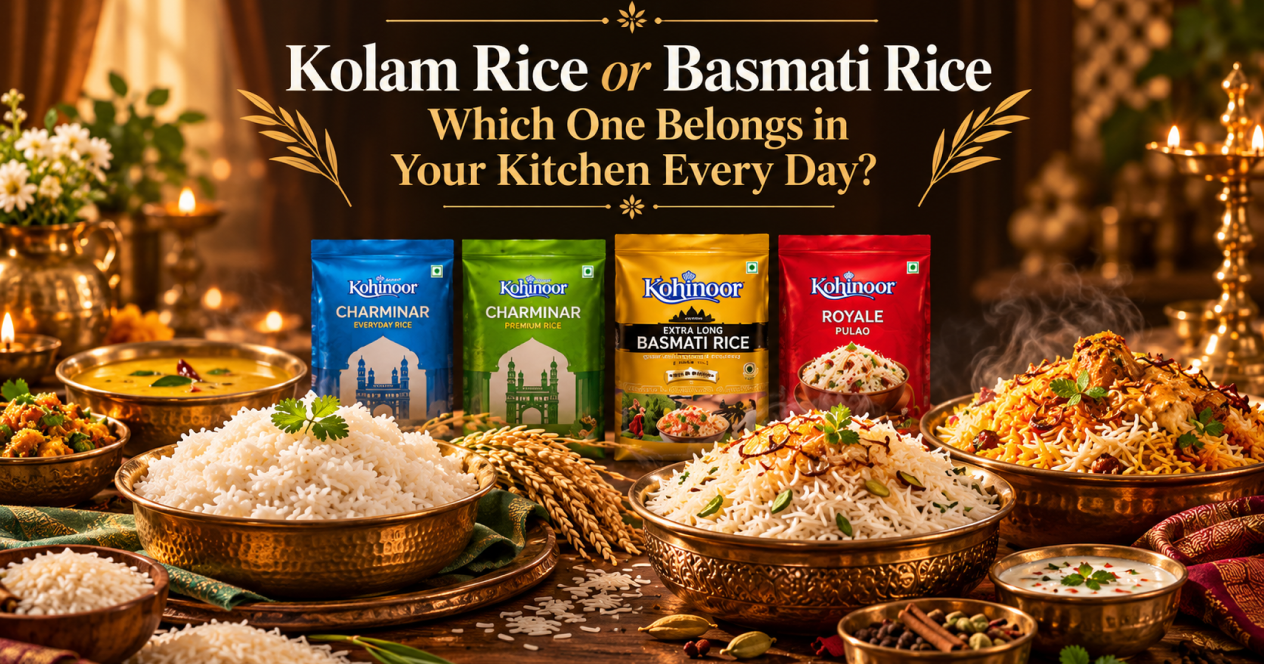
At the grocery shop, many families in Maharashtra and Gujarat face a familiar choice: should they bring home Kolam rice for everyday meals or choose Basmati? Both have a place in an Indian kitchen, but they cook differently and suit different dishes. Kolam is loved for its soft texture and mild taste, while Basmati brings long grains and a distinctive aroma to the plate. The choice also depends on cooking time, budget and family preferences. With Kohinoor's everyday Basmati options, aromatic rice is no longer reserved for special occasions. This guide compares their grains, taste, nutrition, cooking methods, prices and best uses to help you choose.
Kolam rice is a short- to medium-grain, non-Basmati variety popular in Maharashtra and Gujarat. It cooks soft, slightly clingy and mildly aromatic, allowing varan, amti and kadhi to shine. Families often choose it because it is economical, cooks quickly and suits familiar daily meals.
Which Kolam rice is best depends on the dish. Wada or HMT Kolam rice can suit daily varan bhaat, while softer-cooking Kolam works well for curd rice and khichdi. Check the grain and cooking instructions, as results vary by product.
Basmati is a long, slender, aromatic rice grown in the Himalayan foothills. Its distinctive qualities are recognised under India's Geographical Indication (GI) framework. Ageing means storing harvested rice under controlled conditions before milling or packing, helping the grains become firmer and allowing their aroma to develop. During cooking, Basmati grains lengthen and remain separate when prepared properly.
Here's a quick comparison of Kolam rice and Basmati rice:
| Feature | Kolam Rice | Basmati Rice |
|---|---|---|
| Grain Size | Short to medium | Long and slender |
| Cooked Texture | Soft, slightly clingy | Fluffy, separate |
| Aroma | Mild | Distinctive, fragrant |
| Cooking Time | Usually quicker | Varies by grade |
| Best Dishes | Dal, curd rice, khichdi | Pulao, jeera rice, biryani |
| Price Range | Everyday | Everyday to premium |
Kolam absorbs the flavours of dal, kadhi and curd, making it a natural fit for meals eaten by hand. Basmati feels lighter on the plate and holds its shape beneath gravies and spices. For fried rice, chilled Basmati is a useful choice because separate grains are easier to toss without crushing.
Properly stored leftover rice can also work well for tomato or lemon rice. Aged Basmati generally reheats with its grain structure intact when handled gently.
The glycemic index (GI) measures how quickly a carbohydrate-containing food raises blood glucose compared with a reference food. Rice values vary with the variety, processing, cooking method and serving temperature.
For a fair comparison, use the nutrition label for the specific pack rather than assuming every rice variety has the same nutritional profile. Cooked white rice generally provides around 130 calories, 28 g carbohydrate, 2.7 g protein and 0.4 g fibre per 100 g, according to USDA FoodData Central's generic cooked white rice entry. These are reference figures, not verified values for every Kolam or Basmati product.
There is no single reliable GI value that applies to all Kolam rice. Basmati results also vary by variety and preparation, so a blanket claim that one is always lower-GI would be misleading. For blood sugar management, watch portion sizes and pair rice with dal, vegetables and protein. Anyone managing diabetes or another health condition should seek individual advice from a healthcare professional.
For more fibre, consider Kohinoor Brown Basmati Rice.
Give both varieties a quick rinse to remove excess surface starch. Soak Basmati for around 15 to 20 minutes if the pack instructions recommend it. For open-pot cooking, start with roughly 1 part rice to 2 parts water for Kolam and around 1 part Basmati to 1.5 to 2 parts water, adjusting for the variety and method.
Pressure-cooker water needs can differ, so follow the pack guidance rather than relying on a fixed whistle count. Basmati can turn mushy if overwatered or cooked for too long. Let cooked rice rest, covered, for five minutes, then fluff gently with a fork.
Both varieties work with dal chawal, varan bhaat and amti. Kolam gives these meals a softer texture, while Basmati offers a lighter, more separate bite.
Kohinoor Classic Gold suits biryani, Royale Pulao suits pulao, and Charminar Everyday can be considered for softer everyday dishes.
Yes, everyday Basmati rice is made for daily meals. These options can be more affordable and quicker to cook than premium extra-long grades, making them practical for weekday dal, vegetables and curry. If you are wondering which rice is best for daily use, consider your preferred texture, budget and cooking routine.
Buying a larger pack may offer better value for a busy household. Keep it in a clean, dry, airtight container away from moisture and strong smells.
Kohinoor Feast Rozana Basmati Rice is an option for everyday cooking.
Kolam rice price is usually less because it is a widely used non-Basmati variety and does not carry the same premium associated with many aged, aromatic Basmati grades. Basmati pricing reflects factors such as ageing, grain length, aroma, grade and cooking performance.
Compare Basmati rice price alongside pack size and the number of meals it can provide. Kohinoor Super Value is worth considering for larger families.
If your family prefers soft rice with varan, curd or kadhi, Kolam may suit everyday meals best. If you enjoy fragrant, separate grains, Basmati can work throughout the week, not just at celebrations. Many households keep both varieties for different dishes and occasions.
Kolam brings comfort to everyday plates, while Basmati adds fragrance and length to pulao, biryani and daily meals alike. Try Kohinoor Feast Rozana for weekdays and Classic Gold for festive cooking, choosing the grain that best suits your family's table.
Yes. Kolam rice can be part of everyday meals. Keep portions suited to your needs and pair rice with dal, vegetables and other protein sources for a more balanced meal.
You can, but Kolam's softer texture may cause grains to clump during dum cooking. Long-grain Basmati is generally better when you want the distinct, separate grains associated with biryani.
Neither is automatically healthier in every situation. Nutrition depends on the variety, processing, portion size and meal composition. Compare pack labels and pair rice with vegetables and protein.
No. Kolam is a non-Basmati rice variety, while Basmati is known for its long grains and distinctive aroma. They have different cooking characteristics and suit different dishes.
Kolam does not have one universally established GI value. Results can vary with the specific variety and cooking method. Anyone monitoring blood glucose should consider portions and seek personalised dietary advice.
The best rice depends on your household's preferences, budget and recipes. Kolam suits soft daily meals, while everyday Basmati offers fragrance and separate grains for a wider range of dishes.
The perfect way to stay up-to-date with all the latest news and offers. By signing up, you'll receive regular updates about new product launches, exclusive promotions, and delicious recipe ideas to try at home. Our newsletter is a great way to get inspired in the kitchen. So why not sign up today and join the Kohinoor community?
We look forward to sharing our passion for rice and biryani with you!
