Red Rice, Brown Rice and Black Rice: Which One Should You Pick?
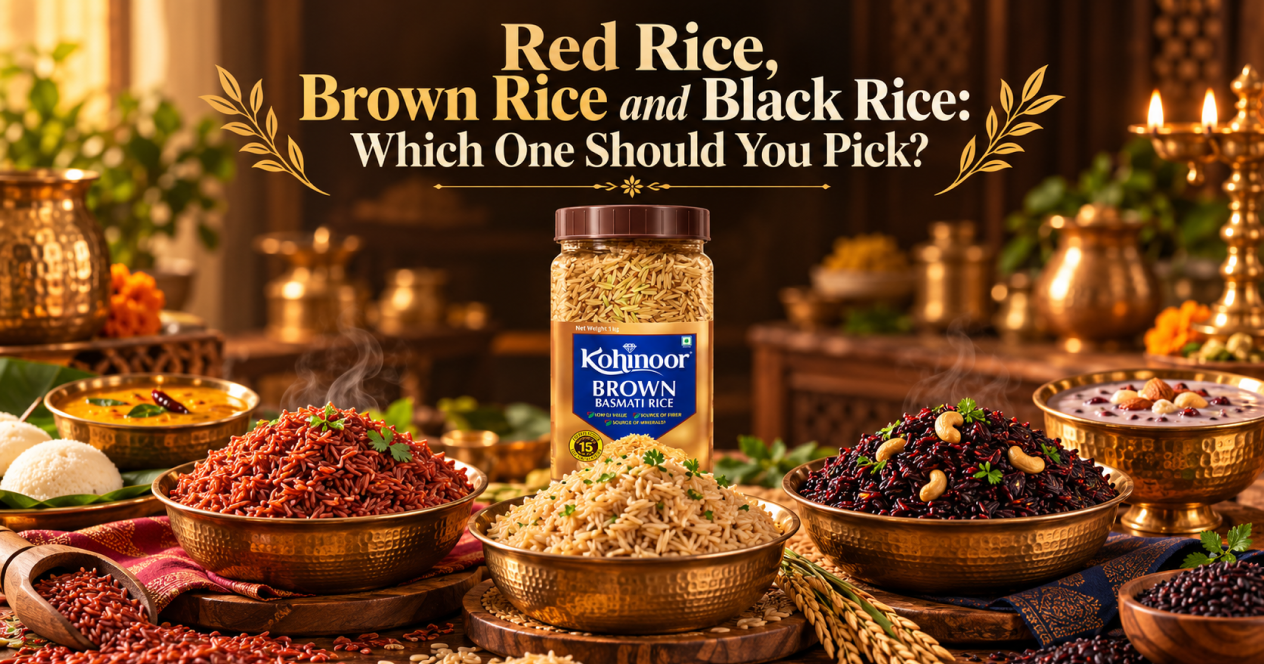
Walk down any rice aisle today, and the shelf looks different from the one your parents shopped. Beside the white rice now sit packets of red, black and brown. More Indian homes are moving from polished white rice to coloured rice, and seeing all three side by side makes the choice hard.
For an easy start, Kohinoor Brown Basmati Rice brings whole-grain goodness and familiar Basmati aroma to everyday meals. This blog explains what each rice is, how they compare on taste and nutrition, and which one suits which goal.
Red, black and brown rice are generally sold as unpolished rice, meaning the outer husk is removed while the bran layer remains. Natural pigments in this layer give red and black rice their colour, while the bran also contains fibre and minerals. White rice is milled further to remove much of this layer. Brown Basmati retains its bran while keeping the characteristic aroma of Basmati.
Red rice gets its colour from natural pigments in the bran, mainly anthocyanins. The best-known Indian types are Kerala Matta rice, Himalayan red rice and Mappillai Samba from Tamil Nadu. It tastes earthy and has a firm, chewy bite. Down To Earth reports that red rice contains more iron and zinc than white, black or brown rice. It suits Kerala meals with sambar and thoran, and it works well in idli and dosa. Plan ahead, because it needs a longer soak and more cooking time than white rice.
Black rice has a deep purple-black colour because its bran contains anthocyanins, the same broad group of pigments found in foods such as blueberries. It was once called forbidden rice because it was said to be reserved for emperors. In India, look for Chak-hao from Manipur and Karuppu Kavuni rice from Tamil Nadu. The grain is nutty, slightly sweet and sticky when cooked. It makes a lovely black rice kheer, and it also suits salads and porridge.
Brown rice is rice with its husk removed but its bran and germ retained. It tastes mild and slightly nutty, with a firmer bite than white rice. Its versatility makes it a practical choice for households introducing whole grains into familiar meals. Brown Basmati combines this whole-grain structure with the long grain and characteristic aroma associated with Basmati. Kohinoor Brown Basmati Rice and Charminar Brown Rice are options for everyday cooking.
Here's a quick comparison of red, black and brown rice:
| Feature | Red Rice | Black Rice | Brown Rice (Kohinoor Brown Basmati Rice) |
|---|---|---|---|
| Taste | Earthy | Nutty, slightly sweet | Mild, nutty |
| Texture | Firm, chewy | Soft, sticky | Firm bite |
| Cooking Time | Longest | Long | Moderate |
| Best Dishes | Idli, dosa, sambar meals | Kheer, salads, porridge | Dal chawal, pulao, khichdi |
| Availability | Fairly easy | Hardest | Easiest |
Brown rice has roughly double the fibre of white rice, according to Down To Earth. A study of 70 Philippine varieties found unpolished red and black rice close to each other on fibre and protein, at about 6 to 11 per cent protein. Red rice usually stands out for iron and zinc, as the same Down To Earth report notes. Black rice usually stands out for antioxidants, as the 316-paper review found. Calories per cooked serving are close for all three, so check the pack label.
Red rice is earthy and firm, so it belongs with South Indian meals and fermented batters. Black rice is nutty and sweet, which suits kheer, salads and breakfast bowls. Brown rice is mild and versatile, and it works in dal chawal, pulao, khichdi and rice bowls. Children and older family members usually settle into brown rice fastest, as it tastes and cooks closest to white rice.
For everyday family meals, brown rice is often the easiest starting point because its mild flavour works with familiar recipes. If you are managing blood sugar, the answer to questions such as is brown rice good for diabetes or is red rice good for diabetes depends on the variety, portion size, preparation and the rest of the meal. Whole-grain rice can provide more fibre than polished white rice, but it still contains carbohydrates and can raise blood glucose.
Red rice supplies fibre and minerals, including iron in some varieties, while black rice is notable for its anthocyanins. Neither should be treated as a guaranteed solution for low energy, diabetes or other health concerns. Black rice may also be harder to find and more expensive, while brown rice is generally easier to buy. If you have diabetes or another health condition, consult a qualified healthcare professional before making significant dietary changes.
Whole-grain rice often needs soaking because its bran layer slows water absorption. As a starting point, soak red rice for 30 to 60 minutes, black rice for 30 minutes and brown rice for 20 to 30 minutes, checking the packet instructions for the variety.
For open-pot cooking, begin with roughly 1 part rice to 2.5 to 3 parts water for red rice, 1 part to 2 to 2.5 parts for black rice, and 1 part to 2 parts for brown rice. Adjust as needed. Pressure-cooker ratios are different, so start with the manufacturer's or pack's directions rather than relying on a universal whistle count.
If the centre remains hard, add a little hot water and continue cooking. If the grains become mushy, reduce the water or cooking time next time. Rest the rice, covered, for five to ten minutes before fluffing.
Start with dishes where the change is easy to like, such as pulao, khichdi and jeera rice. If your family is new to whole grains, mix brown and white basmati at first and increase the brown over a few weeks.
In short, red rice suits iron-minded South Indian meals, black rice suits antioxidant-rich desserts and bowls, and brown rice suits everyday cooking. Kohinoor Brown Basmati Rice is the everyday whole grain that keeps its basmati aroma.
No single colour wins on everything. Black rice usually leads on antioxidants, red on iron and zinc, and brown on everyday practicality. All three are healthier choices than polished white rice when eaten as part of a balanced diet.
Most healthy adults can eat red rice daily as part of varied meals. It is firm and filling, so start with smaller portions. If you have a health condition, ask your doctor first.
No. Both are unpolished, but red rice is a distinct variety with a red bran, an earthier taste and a firmer bite. Brown rice is any variety with the bran left on, so it is milder.
Research on black rice and blood sugar is limited, so no firm claim can be made. Brown rice has stronger evidence behind it. Anyone managing diabetes should check with their doctor before changing their rice.
Red rice is filling thanks to its bran, but no rice causes weight loss by itself. Portion size and overall meals matter more. Calories per cooked serving are similar across rice types.
It depends on your goal. Black rice usually has more antioxidants, while red rice usually has more iron and zinc. Choose by taste, cooking style and budget.
The perfect way to stay up-to-date with all the latest news and offers. By signing up, you'll receive regular updates about new product launches, exclusive promotions, and delicious recipe ideas to try at home. Our newsletter is a great way to get inspired in the kitchen. So why not sign up today and join the Kohinoor community?
We look forward to sharing our passion for rice and biryani with you!
