Basmati Rice Price in 2026: A Simple Guide to the Kohinoor Range
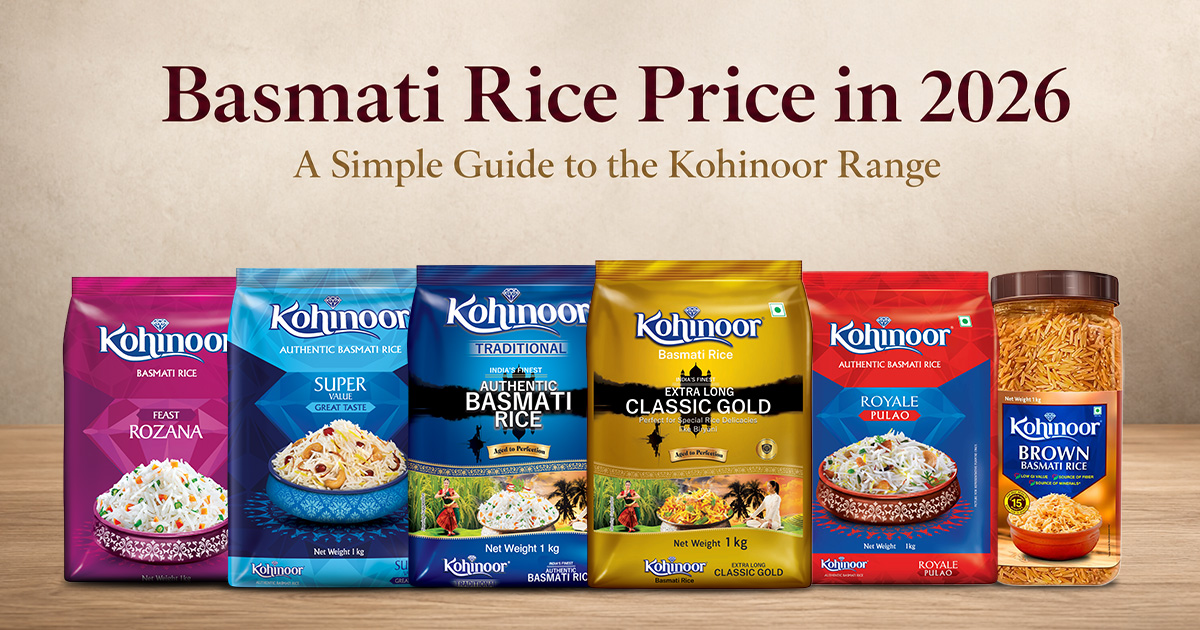
Ever wondered why one packet of basmati rice costs noticeably more than another, even when both promise long, fragrant grains? The difference isn't just the brand name. Grain length, ageing, harvest quality, variety and pack size can all influence what you pay. This guide walks through what decides basmati rice price in India for 2026, where each variant in the Kohinoor range sits, and how 1kg, 5kg and 10kg packs compare on a per kg basis. It also breaks down biryani kit pricing against cooking from scratch, explains why aged basmati costs more than regular rice, and helps you work out which pack actually suits your kitchen.
Grain length and grade top the list. Longer, uniformly sorted grains take more effort to sort and clean, and that shows up in the price, while shorter or broken grains cost less. Ageing period matters as much. Fresh harvest rice is the cheapest, rice aged a year costs more, and two-year-aged grain, the kind used in premium biryani rice, sits higher still because of the storage time involved.
Harvest year and crop quality also play a role: a strong monsoon usually means a healthier crop and a steadier 1121 basmati rice price the following season, while a poor harvest tightens supply and pushes rates up. Pack size and format round off the list, since smaller packs carry a higher basmati rice price per kg, as packaging and handling costs are spread over less rice.
This is also why rice price today can look different from seller to seller for the same pack. Margins, local demand, festive offers and freight all factor in, even when the rice itself hasn't changed at all.
| Variant | Pack Sizes | Price band |
|---|---|---|
| Classic Gold | 1kg, 5kg | Premium |
| Traditional Authentic | 1kg, 5kg | Mid-to-premium |
| Super Value Authentic (+25%) | 1kg, 5kg | Mid |
| Brown Basmati | 1kg | Mid-to-premium |
| Feast Rozana | 1kg, 5kg | Value |
| Royale Pulao | 1kg | Mid |
A 10 kg basmati rice pack usually costs less per kg than a 1 kg basmati rice pack. Compare per kg, not per pack, to judge a 5 kg basmati rice price fairly.
Confirm the live pack list with the brand team before publishing. Prices vary by seller and offer period; treat these as bands, not fixed MRP.
Kohinoor's biryani kits pack pre-measured basmati rice, spice blends, special biryani marinade and burani raita masala into one box.
All three sit in a similar mid-range band. Cooking biryani from scratch means buying rice, spices, saffron, ghee and meat separately, and wastage often pushes the cost per serving above a kit.
Find the full lineup on Kohinoor's Biryani Kit range page.
Two-year ageing changes the grain from within. Moisture drops, starches firm up, and the rice develops the elongation and fluffy texture that make it some of the best basmati rice for celebration cooking. Ageing also improves grading, since aged grains sort more consistently by length, and aroma settles rather than fading. The real reason aged basmati earns its price is yield. It expands more when cooked, so you need less raw rice per serving, and that is where the gap with regular rice narrows.
Household size is the natural starting point. A family of four to six that eats rice regularly can work through a 5kg or 10kg pack efficiently. In comparison, a smaller household may find a 1kg pack easier to manage without waste. How often you cook matters too. Everyday meals suit a Feast Rozana-type pack, while festive cooking, weddings and celebrations are where Classic Gold's aroma and grain length earn their keep. Storage space and shelf life matter too: basmati keeps well in a cool, dry, airtight container, but it's only worth buying what you can store properly. And bulk only pays off under the right conditions: a 10kg pack makes sense if you'll use it within a few months, while a 5kg pack, refilled more often, tends to keep rice recipes tasting fresher through the year.
Basmati rice price comes down to grain quality, ageing, harvest conditions and pack size, not the number on a shelf tag. Compare cost per serving instead of cost per kilo, and the value of a well-aged, extra-long grain basmati becomes clear, whether it's a daily bowl of rice or a festive biryani. Kohinoor's range, from Feast Rozana Basmati Rice to Classic Gold Basmati Rice, is built for different kitchens. Explore the range and find the pack that fits your cooking style.
It varies by grain grade, ageing and pack size. Everyday variants sit in a value band, while aged rice like Classic Gold sits higher.
1121 is a basmati variety known for its unusually long grain, widely used in premium basmati blends and biryani-style packs.
Tibar is triple sorted, longer and pricier. Dubar is double-sorted and more affordable. Both are basmati; the difference is grading.
Roughly six to eight people, depending on portion size and whether it's a side dish or the main part of a biryani.
Ageing takes time and handling, improving aroma, texture and elongation. Since aged rice yields more per serving, the price reflects efficiency as much as quality.
The perfect way to stay up-to-date with all the latest news and offers. By signing up, you'll receive regular updates about new product launches, exclusive promotions, and delicious recipe ideas to try at home. Our newsletter is a great way to get inspired in the kitchen. So why not sign up today and join the Kohinoor community?
We look forward to sharing our passion for rice and biryani with you!
