Kolkata Biryani: The Famous Potato Biryani Story and Recipe
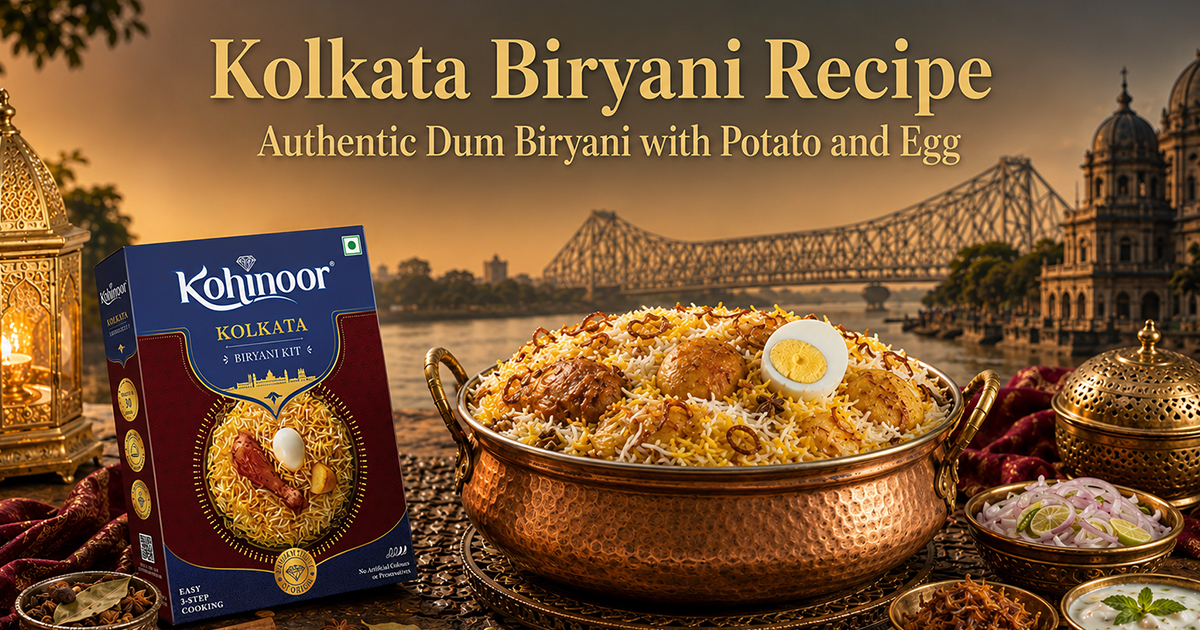
Imagine a royal kitchen in 19th-century Calcutta. A nawab in exile, hundreds of mouths to feed, and a cook facing an impossible problem: not enough meat for a feast. What happened next gave Bengal, and eventually the rest of India, a Kolkata biryani unlike anything that came before it. A potato found its way into a fragrant dum pot, and over time, it became one of the dish's most iconic components.
The story begins with Nawab Wajid Ali Shah, who was exiled from Lucknow to Calcutta in 1856. Along with him came royal khansamas who carried the rich Awadhi biryani tradition into Bengal. But Calcutta slowly reshaped that royal recipe. The spices softened, the aroma became more floral, and the biryani developed a personality of its own. Kewra water, saffron, boiled eggs, and perfectly cooked potatoes became signatures of the city's food culture. This biryani carries over 150 years of Kolkata biryani history in every layer.
Even today, Kolkata biryani is not about overpowering spice. It is about balance, fragrance, and patience. And if you have ever wanted to recreate that slow-cooked, dum-style magic at home, the recipe below is where the journey begins.
Understanding where Kolkata biryani came from changes the way you cook and experience it. Every layer carries a story of royal Awadhi kitchens, Bengali influence, and generations of dum cooking traditions. It stops feeling like a simple recipe and becomes a dish built on history, patience, aroma, and the emotional connection people have shared with it for decades.
In 1856, the British exiled Nawab Wajid Ali Shah from Lucknow to Calcutta. He arrived with his entire household, including his royal cooks who had mastered the Awadhi biryani tradition. Over the decades, those cooks adapted the Lucknowi pukki dum style to Bengali tastes and local ingredients. The Awadhi biryani lineage is unmistakable—the pre-cooked meat, the layering technique, the restrained spice—but what emerged in Calcutta was quieter, more fragrant, and entirely Bengali.
This is the part every Kolkata food conversation eventually reaches. Two theories explain the potato in biryani. The first: the nawab's household was large, meat was expensive, and a halved potato stretched each serving further. The second: the potato was considered a luxury ingredient at the time, something new and prestigious that the royal kitchen used to signal abundance.
If you've had biryani in Hyderabad or Delhi and are coming to Kolkata biryani for the first time, the mildness will surprise you. There's no competition with chilli here. The flavour comes from kewra water, rose water, whole garam masala, and saffron, all of them working together to create something floral and deeply layered. Bengali households have always favoured this restraint in their cooking, and biryani is no different.
The difference lies in both technique and character.
| Feature | Kolkata Biryani | Hyderabadi Biryani | Lucknowi (Awadhi) Biryani |
|---|---|---|---|
| Cooking Method | Pukki dum method | Kacchi dum method | Pukki dum method |
| Meat Preparation | Meat is pre-cooked before layering | Raw meat cooks with rice | Meat is pre-cooked before layering |
| Spice Level | Mild and aromatic | Bold and heavily spiced | Delicate and balanced |
| Signature Ingredients | Potato, boiled egg, kewra water | Strong masala, saffron, smoked flavour | Saffron, rose water, subtle spices |
| Flavour Profile | Fragrant, soft, slightly sweet | Smoky, fiery, intense | Refined, royal, aromatic |
| Texture & Character | Light yet flavourful | Rich and robust | Elegant and delicate |
| Cultural Identity | Bengali adaptation of Awadhi biryani | South Indian royal biryani style | Traditional royal Lucknowi cuisine |
Walk through Rajabazar, Nakhoda Masjid, or Park Circus on a Friday afternoon, and the smell of biryani is everywhere. What was once royal food is now available at every neighbourhood biryani-er dokan (shop), served on steel plates with a side of chaap. The Kolkata biryani, which started in a nawab's kitchen, now belongs to the whole city.
Getting the ingredients right is the first step to a proper Kolkata biryani recipe. These quantities serve four people.
This Kolkata biryani recipe is written the way it's cooked in Bengali homes.
STEP 1: MARINATE THE MEAT
Mix mutton with yoghurt, ginger-garlic paste, red chilli powder, turmeric, and salt. Coat evenly and refrigerate for 4 hours or overnight. Allows the spices to deeply flavour and tenderise the meat.
STEP 2: SOAK & PAR-COOK THE RICE
Rinse Kohinoor Basmati until the water runs clear, then soak for 30 minutes. Boil rice with whole spices and salt until 70% done, then drain and cool. Rice finishes cooking during dum process.
STEP 3: COOK THE MEAT
Heat ghee in a heavy-bottomed pan. Add fried onions and marinated mutton. Cook until meat is 80–85% done so the masala thickens and releases aroma.
STEP 4: PREPARE POTATOES & EGGS
Rub potatoes with turmeric and salt, then fry until golden and firm. Lightly fry boiled eggs until slightly golden. Adds texture and deeper flavour during dum.
STEP 5: LAYER THE BIRYANI
Spread cooked meat and masala at the base of the pot. Arrange potatoes and eggs around the meat. Add half the rice layer, then drizzle saffron milk, kewra water, rose water, and ghee. Repeat with remaining rice and aromatics, finishing with fried onions and ghee.
STEP 6: DUM COOKING
Seal the pot tightly with lid, foil, or atta dough. Place on tawa over very low flame and cook undisturbed for 25–30 minutes. Steam blends all layers and flavours together—AUTHENTIC KOLKATA BIRYANI READY!!
These are the things Bengali home cooks don't always write down but always know.
Mutton is a tough meat. Yoghurt and spices need real time to work through it. In most Kolkata households, mutton is marinated overnight for Sunday lunch. By morning, the colour has deepened, the texture has softened, and the flavours have fully set. A short marinade produces biryani in which the meat tastes like it was added at the last minute, because, effectively, it was.
Fry the potatoes until the outsides are firm and golden, then add them to the pot. A raw or lightly boiled potato will fall apart during the dum and dissolve into the rice; you lose the texture that makes the potato in biryani worth having. A well-fried potato holds its shape, slowly absorbs the spiced steam, and comes out soft inside with a slightly firm skin. That contrast is the whole point.
Meat always goes at the base, rice always goes on top. The masala and meat juices at the bottom need direct heat to continue cooking and generating steam. The rice sits on top and steams gently rather than frying. Reversing the layers or mixing everything produces something closer to khichuri than to biryani.
The most common home-cooking mistake is cooking dumplings on too high a flame. The base burns, the rice dries out, and the bottom layer tastes scorched. The flame should be the lowest your stove allows, almost off, not quite. If your stove runs hot, a tawa under the pot is essential, not optional.
Press gently on the sealed lid after 25 minutes. If steam is still pushing up from inside, give it a few more minutes. After 30 minutes, lean close to the pot and inhale. If you can clearly smell the kewra and saffron coming through the sealed lid, the biryani is ready. The fragrance escaping is your signal; it means the steam has fully cycled through the layers, and the dum is complete.
Kolkata biryani is one of those dishes that doesn't need to be announced. Long-grain, aged basmati that holds its shape through the full dum process, absorbs every note of ghee and spice without turning soft, and comes out of the pot with each grain separate. That's what this recipe demands. Kohinoor Basmati, the best basmati rice brand in India, is built exactly for this. It honours the patience that goes into a proper Kolkata biryani, and it shows in every plate.
The potato entered Kolkata biryani through the kitchen of Nawab Wajid Ali Shah's household in 19th-century Calcutta. One theory links it to cost-cutting during meat shortages; another suggests the potato was a prestigious new ingredient used to enrich the dish.
Kolkata biryani is cooked using the pukki method, the meat is pre-cooked before being layered with rice, and has a mild, kewra-forward flavour profile. Hyderabadi biryani uses the kacchi method, where raw meat and rice cook together, resulting in a far spicier, more intense dish.
The history of Kolkata biryani begins with Nawab Wajid Ali Shah, who was exiled from Lucknow to Calcutta in 1856. His royal cooks brought the Awadhi biryani tradition with them. They gradually adapted it to local Bengali tastes and ingredients, giving birth to the distinctly mild, aromatic, potato-inclusive style that defines the dish today.
No, Kolkata biryani is one of the mildest biryanis in India. Its flavour profile is built on aromatic ingredients like kewra water, rose water, saffron, and whole garam masala rather than red chilli heat.
The perfect way to stay up-to-date with all the latest news and offers. By signing up, you'll receive regular updates about new product launches, exclusive promotions, and delicious recipe ideas to try at home. Our newsletter is a great way to get inspired in the kitchen. So why not sign up today and join the Kohinoor community?
We look forward to sharing our passion for rice and biryani with you!
