Samak Rice Made Easy: What It Is and Why It Is Perfect for Vrat
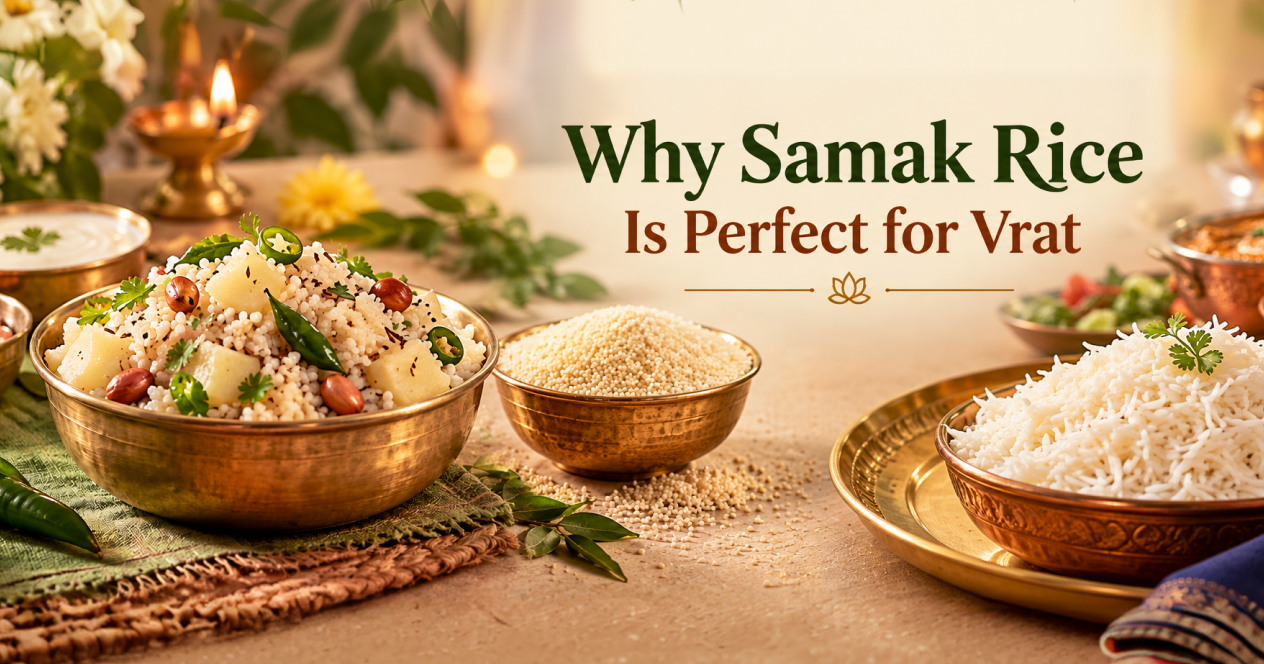
Many families call samak rice vrat ke chawal, and most people assume it is a kind of rice. But, it is a small millet that is cooked and eaten the way rice is, which is why it carries the name. This guide explains what samak rice is and why so many families eat it during a vrat. It also covers how to cook it so the grains stay light, three easy dishes you can make with it, and how to buy and store it at home. As a rice brand, Kohinoor wants to give you an honest guide to the grain that takes the place of rice on fasting days.
The simple answer to what samak rice is - it's barnyard millet, a small seed from the grass family, which are tiny, round, cream-colored, and much smaller than rice. Samak rice in English is barnyard millet, and it is known as sama ke chawal and sama rice in North India, samvat or vari in some homes, varai and bhagar in Maharashtra, moraiyo in Gujarat, and jhangora in Uttarakhand.
Most fasting traditions in India keep cereal grains such as rice and wheat off the plate. Samak is a millet, so many families count it as a fasting food and use it in place of rice during Navratri, Ekadashi, and other vrats. Samak is also easy to cook. It is ready in a few minutes, keeps you full, and goes well with vrat ingredients such as sendha namak, potato, peanuts, and curd. Many people ask whether we can eat rice in Navratri fast. In most fasting traditions, regular rice, including basmati, is not eaten during the vrat, and samak is used instead. Rules differ between families and regions, so follow the practice your home follows. For family members who are not fasting, our guide to no onion no garlic recipes shares five satvik rice dishes made with Kohinoor basmati.
Follow these steps to get light and fluffy samak rice without making it mushy:
Each samak rice recipe below is kept short to show how simple these dishes are:
For non-fasting family members, make a veg pulao with Kohinoor Royale Pulao, a khichdi with Kohinoor Feast Rozana, and our Kohinoor rice kheer for dessert.
Good samak has clean grains with no dust, stones, or musty smell. Here is how to handle and store it:
The same airtight storage keeps Kohinoor basmati fresh at home through the festive season.
Samak is naturally gluten-free, as noted in a 2023 review of millets in the Journal of Drug Research in Ayurvedic Sciences. It is usually eaten as a whole grain, and an analytical study in Current Research in Nutrition and Food Science found about 14.2 g of dietary fibre per 100 g in unpolished barnyard millet and 8.5 g in polished barnyard millet. This fibre is one reason samak feels filling on fasting days.
Samak rice makes fasting days easier because it is quick to cook and fits well with vrat ingredients. When the fast ends, the family meal with fragrant basmati rice is there to enjoy in the days that follow. Whatever you cook during the festival, follow the fasting rules your family follows. When it is time to plan the Dussehra meal, explore the Kohinoor rice range and choose the basmati that suits your celebration.
Samak rice in English is called barnyard millet. It is also known as sama ke chawal, vari, varai, bhagar, moraiyo and jhangora, and all these names refer to the same millet.
No, samak rice is not rice. It is barnyard millet, a small seed from the grass family, and it is called chawal because it is cooked and eaten in the same way as rice.
Most fasting traditions do not allow cereal grains such as rice and wheat. Samak is a millet, so many families count it as a fasting food. It also cooks quickly and keeps you full.
Rinse it well, soak it for only 10 to 15 minutes and use 2 cups of water per cup. Cook it covered on a low flame without stirring, then rest it and fluff it with a fork.
A short soak of 10 to 15 minutes helps samak cook evenly. A longer soak makes the grains absorb too much water, so they become mushy and sticky when cooked.
Yes, samak rice can be eaten on any day. It works well as a pulao, khichdi or kheer and adds variety to regular meals, though most families cook it more often during fasts.
The perfect way to stay up-to-date with all the latest news and offers. By signing up, you'll receive regular updates about new product launches, exclusive promotions, and delicious recipe ideas to try at home. Our newsletter is a great way to get inspired in the kitchen. So why not sign up today and join the Kohinoor community?
We look forward to sharing our passion for rice and biryani with you!
