Kesar Pulao for Raksha Bandhan - A Royal Recipe
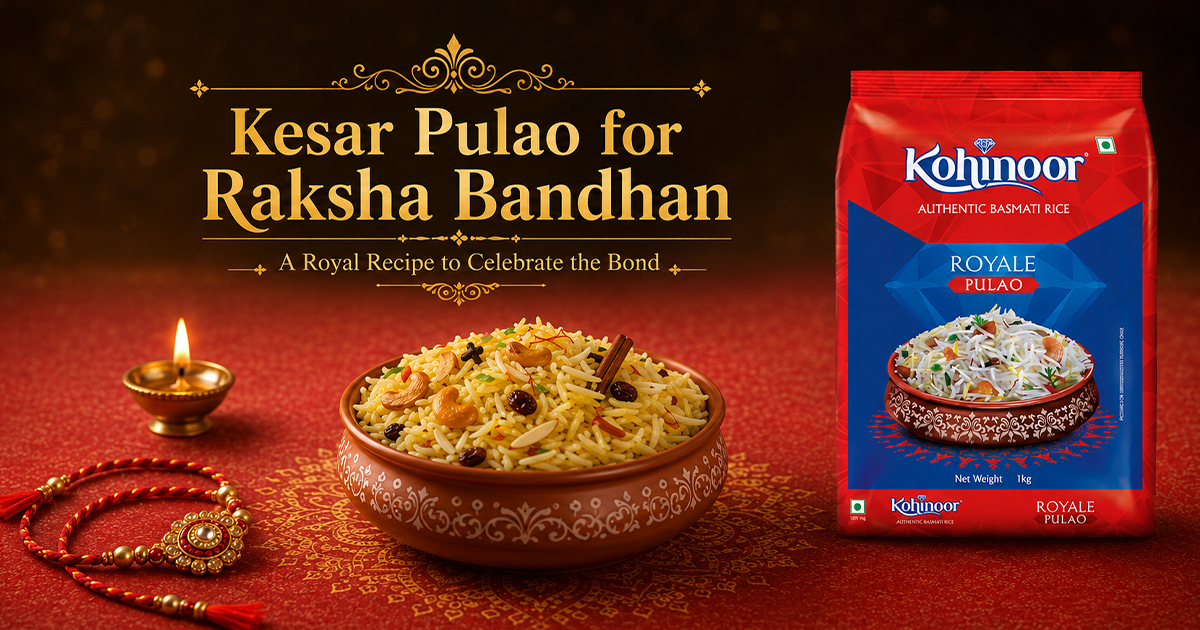
Raksha Bandhan has a way of pulling siblings back to one table, sometimes after months of missed calls and busy schedules. What you serve that day carries its own kind of meaning, and a dish of golden, saffron-scented rice does more heavy lifting than most people realise. This piece walks through what kesar pulao actually is and how it differs from its sweeter cousins, the exact ingredients and method behind a good saffron rice recipe, how to tell real saffron from the adulterated kind sitting on half the shelves out there, why the rice variety you choose changes the final texture more than any spice will, and finally, how to plate and serve it so your Rakhi thali looks as good as it tastes.
Walk into any Indian home on a festival morning and rice is almost always somewhere on the stove. Rice has long stood for abundance and prosperity in Indian households, offered first at poojas, served first at feasts, and treated as the dish that anchors everything else on the plate. Most festive thalis are built around one central rice preparation, with the curries, breads and sides arranged to complement it rather than compete with it.
Saffron is usually the ingredient that signals a rice dish has moved from everyday to celebratory. It carries a fragrance that fills the kitchen long before the dish reaches the table, which is precisely why it belongs on a Raksha Bandhan menu. What follows is less a formal rice recipe and more a walk through how that dish comes together, and why certain choices along the way matter more than they seem to.
Kesar pulao is, at its core, a saffron rice dish. Depending on which region or household you're in, it leans mildly sweet or stays closer to savoury, but saffron is always the hero ingredient. This sets it apart from zarda pulao, a dish from the same rice family that goes heavier on sugar.
Kesar pulao rice takes a lighter route. A little sugar if you want it, ghee, whole spices and saffron do most of the work, letting the natural aroma of the rice come through rather than burying it under sweetness. If the sweeter, syrup-based version interests you, our zarda pulao blog covers that style in depth. For a Rakhi thali specifically, the lightly sweetened or savoury version of kesar pulao tends to work better. It sits comfortably next to curries, doesn't compete with other dishes on the plate, and suits a meal that families will eat together at a family table.
Genuine saffron threads carry a deep red colour with a slightly orange tip, feel brittle rather than waxy when you rub them between your fingers, and release a sharp, almost honeyed aroma the moment the jar opens. Adulterated saffron tends to look suspiciously uniform in colour and often smells faintly of hay or dried grass instead.
You need far less than most people assume. A pinch, around 15-20 strands, is enough to flavour a dish serving four to six people generously. Store it in an airtight container, away from direct light and moisture, tucked into a cool cupboard rather than the refrigerator.
The rice variety you choose decides whether your kesar pulao ends up looking restaurant-worthy or turns into a soft, clumpy mass. Extra-long grains hold their individual shape through the cooking process, which means the saffron colour sits visibly along each strand instead of blending into a starchy blur.
Longer grains also retain aroma better as they cook, and they resist snapping while you fluff the rice at the end, something shorter or lower-grade grains struggle with. This is where a pulao-specific rice like Kohinoor Royale Pulao rice earns its place in the kitchen, built for dishes exactly like this one, where separation, length and fragrance all need to hold together at once.
If you're putting together a Rakshabandhan recipe spread this year, kesar pulao makes an easy centrepiece for the thali. Plate the pulao rice on a wide, shallow dish rather than a deep bowl, so the grains spread out and the colour shows. Scatter fried cashews and raisins across the top, add a few extra saffron strands for visual richness, and let the dish sit for a minute before serving so the aroma settles into the room.
It pairs naturally with paneer-based curries, a cooling raita, and a crisp papad on the side. If you're preparing this as a Rakshabandhan rice recipe, you can cook the rice a few hours in advance and reheat it gently with a splash of water and a spoon of ghee to bring the moisture back. For a family of five to six people, two cups of raw rice is usually the right amount, with a little extra worth keeping aside for second helpings, because this is one dish people tend to go back for.
A good kesar pulao doesn't ask for a long list of ingredients or complicated technique. It asks for decent rice, real saffron, and a little patience while it rests before serving. Get those three things right, and the dish does the rest of the work on its own, turning a simple family lunch into something people remember well after the plates are cleared. If you're planning your Rakshabandhan menu this year, start with rice that's built for the job, and let the saffron do the talking—you've got a Rakshabandhan rice recipe worth bringing to the table.
Extra-long grain basmati rice works best for kesar pulao. Its length and aroma hold up well through cooking, letting the saffron colour and fragrance come through clearly in every grain.
Yes, soaking basmati rice for 25-30 minutes before cooking helps the grains cook evenly and elongate fully, giving your pulao that classic long, separate-grain texture instead of a sticky finish.
A pinch, around 15-20 strands, is enough for a pulao serving four to six people. Blooming the strands in warm milk beforehand draws out maximum colour and aroma before they go into the rice.
Grains usually break from overcooking, rough stirring, or using rice with a weaker grain structure. Gentle handling, the correct water ratio, and good-quality long grain rice all help keep the pulao intact.
Yes, kesar pulao can be cooked a few hours ahead and reheated with a splash of water and a little ghee. This makes it a practical choice for busy Raksha Bandhan mornings when time is tight.
The perfect way to stay up-to-date with all the latest news and offers. By signing up, you'll receive regular updates about new product launches, exclusive promotions, and delicious recipe ideas to try at home. Our newsletter is a great way to get inspired in the kitchen. So why not sign up today and join the Kohinoor community?
We look forward to sharing our passion for rice and biryani with you!
