Rice in Indian Weddings: From Sacred Ritual Offerings to the Grand Feast
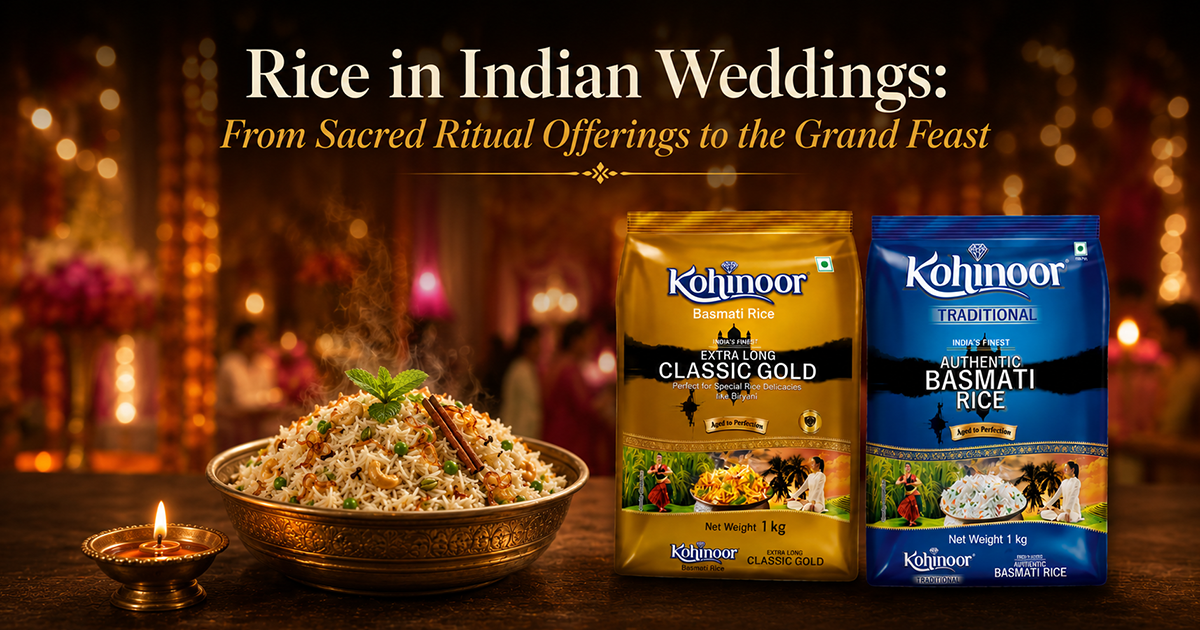
Rice has been part of Indian life for thousands of years, not just as food, but as something far more meaningful. It shows up in Vedic texts, in temple offerings, and at every major life event from birth to marriage. To understand why rice matters so much at Indian weddings, it helps to understand what it means to Indians first.
In Hindu scripture, rice is not ordinary food. The Atharvaveda describes it as the "sons of heaven who never die." The Shatapatha Brahmana connects its origins to Indra, the king of the gods. Rice is called Dev Anna, food of the gods, and is counted among the Navadanya, the nine sacred grains used in Vedic ritual. It sits at the intersection of the human and the divine, which is why no important life event in India happens without it.
In Hindu tradition, rice stands for prosperity and continuity. During weddings, Akshata, rice grains smeared with turmeric and vermilion, are showered over the couple as a blessing for a full and abundant life. The Sanskrit word for rice, Dhanya, also means wealth. Every grain scattered at a wedding is, in a quiet way, a prayer.
Rice in Indian weddings is not limited to the Hindu tradition. In Sikh weddings (Anand Karaj), grain plays a role in rituals tied to nourishment and wholeness. Across Muslim communities in South Asia, Zarda, sweet saffron rice, is a fixture at wedding celebrations. It is a symbol of joy and generous hospitality. Buddhist and Jain wedding customs in various regions also use rice as an offering at auspicious moments.
In Tamil Nadu, rice is worshipped as Ponni Amman, a goddess. In the north-east, rice cultivation rituals are central to community life. In Bengal, weddings call for Atap Chal, Unboiled rice, as a customary offering. In Karnataka and Kerala, rice marks the passage from one life stage to another. Each region has its own relationship with this grain, and all of them find expression at a wedding.
A Hindu wedding is built around a series of rituals. Each one carries a specific meaning, each one is addressed to something larger than the individuals involved. Rice is present in several of the most important ones. These are not decorative gestures. They are ancient, named rituals with a clear purpose that have been carried through generations.
| Ritual | Significance & Practice |
|---|---|
| Laja Homa | The bride's brothers pour puffed rice (Laja) into her cupped hands to offer into the sacred fire while circling the mandap, praying for prosperity and long life. |
| Akshata | Dry, unbroken rice grains smeared with vermilion or turmeric showered by elders as blessings representing completeness and a whole life. |
| Griha Pravesh | The bride gently tips over a pot of rice at her new home's threshold with her right foot, inviting Goddess Lakshmi and bringing wealth into the household. |
During the Laja Homa, the bride's brothers pour puffed rice (Laja) into her cupped hands. She then offers this rice into the sacred fire as the couple circles the mandap, usually three or four times, depending on regional practice. It is a moment of quiet power. The bride is praying for her husband's long life. Together, the couple is offering their wishes to the fire and letting go.
Akshata are dry, unbroken rice grains smeared with vermilion or turmeric. Elders use them to bless the couple during the Pheras, the seven sacred vows. The choice of unbroken grain is deliberate. It represents completeness. A life, it says, that will remain whole. Guests are often given Akshata to offer at key moments too, so that everyone present becomes part of the blessing.
When the bride arrives at her new home for the first time, she tips over a small pot of rice with her right foot, scattering the grains across the threshold. This is the Griha Pravesh rice ritual, an invitation for Lakshmi, the goddess of abundance, to enter the household. In many communities, the bride walks in with rice-stained feet, leaving footprints that mark her arrival as the one who brings prosperity home.
Once the rituals are done, rice moves from the mandap to the kitchen. It becomes just as central to the feast as it was to the ceremony. Every region in India has its own way of cooking and serving rice at a wedding, and each tradition says something distinct about local culture, hospitality, and identity.
At a North Indian wedding, the feast is big, fragrant, and unapologetic. Large pots of Dum Biryani slow-cooked over coal are the centrepiece of the daawat. Pulao arrives at the table with whole spices and soft caramelised onions. In this setting, rice quality is everything. Kohinoor Basmati, with its aged extra-long grains and clean aroma, is the natural choice for families who want every dish to reflect the occasion.
In South Indian weddings, rice is the meal. The Saadhya is a traditional feast served on a banana leaf. It includes several rice preparations served in sequence: plain rice with rasam and sambar, a helping of pongal, and finally curd rice to round things off. Rice here is not just food. It is the structure around which the entire meal is built.
Bengali weddings have their own rice customs that carry right through to the table. The Mukhe Bhat tradition, where rice is offered to the couple, is observed with great care. The wedding menu usually features Mishti pulao or Basanti Pulao, a lightly sweetened, golden rice dish made with turmeric and ghee. For many Bengalis, this dish is the smell of a wedding.
In Rajasthan and Uttar Pradesh, Zarda, sweet saffron rice with dry fruits, cardamom, and rose water, is both a festive dish and an auspicious one. Jeera rice, simply cooked with cumin and ghee, holds its own alongside rich curries and dal baati. In Lucknow, especially, rice cookery is taken seriously. Pulaos and biryanis here are cooked to a standard that guests talk about long after the band has packed up.
In Hyderabad, biryani is the wedding. The Hyderabadi Dum Biryani is sealed in a deg and slow-cooked over wood fire. The rice needs to be long-grained, properly aged, and able to take on deep, layered flavour without falling apart. It is a dish that has no room for shortcuts.
Walk into an Indian wedding, and the food announces itself before you even reach the table. Each dish has its own story, its own regional roots, and its own devoted following. Rice is at the centre of nearly all of them. Here are the dishes that have earned a permanent place on the Indian wedding menu.
Dum Biryani is the main event. Layers of parboiled Basmati rice and marinated meat or vegetables are sealed into a heavy pot and slow-cooked until each grain has absorbed the flavour of saffron, whole spices, and fried onions. With a premium Basmati like Kohinoor, the grains stay long, separate, and full of flavour, exactly what a wedding biryani should be. No other dish on the menu draws a crowd quite like this one.
Kashmiri Pulao is rice dressed for a celebration. Saffron, warm milk, whole spices, and a generous hand with dry fruits give it a richness and colour that feels at home on a wedding spread. The fragrant, aged grains of Kohinoor Basmati carry this dish beautifully, soaking up the saffron and holding their shape through the cooking process.
Zarda is sweet, golden, and deeply festive. Made with Basmati rice, sugar, saffron, cardamom, and dry fruits, it is the dish that bridges the savoury and the celebratory. At North Indian weddings, it is often the last rice dish served as a sweet send-off to a meal that was built to be remembered.
Jeera rice and saffron rice do not seek attention, but they earn it. Jeera rice tempered with cumin in ghee is the trusted companion to heavy gravies and curries. Saffron rice brings colour and fragrance to the spread without overpowering it. Both rely on good-quality Basmati to deliver the clean, fluffy, separate grains that make them work.
Curd rice (Thayir Sadam) is how South Indian weddings say goodbye. Soft rice folded into cool, tempered yoghurt with mustard seeds, curry leaves, and green chillies. It is calm and comforting after a long and rich meal. It is a staple in the South Indian wedding tradition, the dish that quietly tells you the feast is complete.
The wedding menu gets a lot of attention, but the rice choice often does not. Rice is the base of your biryani, the soul of your pulao, and the dish most guests will remember. Getting it right, especially when cooking for hundreds, takes a bit of planning.
Cooking for a large wedding is unforgiving. Grains that break, rice that goes mushy in the Dum, or uneven lengths that affect how the biryani layers—these problems are much harder to hide when you are serving 300 people. Well-aged, good-quality Basmati holds its structure, cooks evenly, and absorbs flavour without losing its shape. At this scale, rice quality is not optional.
Plan for approximately 80–100g of uncooked rice per person for a main course serving of biryani or pulao. For a wedding where multiple rice dishes are served alongside, 60–70g per dish per person is a safe estimate. Always factor in a 10–15% buffer just in case.
Kohinoor Basmati has been trusted in Indian kitchens since 1976, and at weddings specifically, its advantages are clear. The extra-long aged grains elongate on cooking to nearly double their dry length, delivering the visual splendour a wedding biryani demands. The natural aroma, consistent grain quality, and ability to hold shape under dum cooking make it the preferred rice for wedding caterers and home cooks alike. When the feast must be perfect the first time, without the luxury of a trial run, Kohinoor is the grain families reach for. Kohinoor Classic Gold and Traditional Authentic Basmati Rice are the go-to for wedding biryanis, while Kohinoor Royale Pulao Basmati Rice is ideal for the pulao and Zarda courses on your menu.
Large-batch rice cooking rewards preparation and discipline. Follow these steps to ensure every grain on your wedding spread is perfect:
Rice is present at every stage of an Indian wedding, from the fire and blessings to the feast on the table. It connects ritual with celebration and brings together the sacred and the everyday. When planning a wedding feast, the rice you choose matters more than it may seem. It forms the base of your biryani, the heart of your pulao, and a quiet thread that ties the entire celebration together. Make it count by making it Kohinoor.
Rice is considered Dev Anna, or food of the gods, and symbolises fertility, wealth, and abundance. It appears in important rituals like Laja Homa and Akshat, while also playing a central role in wedding feasts across India.
Laja Homa is a sacred fire ritual where the bride’s brothers place puffed rice in her hands. She then offers it into the holy fire as the couple circles the mandap. The ritual represents prayers for a long married life and blessings for the couple’s future together.
Showering the couple with akshat, or rice grains mixed with turmeric or vermilion, is a traditional blessing for prosperity, happiness, and fertility. Whole rice grains are used because they symbolise completeness and abundance in married life.
Dum Biryani remains one of the most loved wedding dishes across India. North Indian weddings often include Kashmiri Pulao, Zarda, Jeera Rice, and Saffron Rice. South Indian celebrations commonly end with comforting curd rice served as part of the final meal.
The perfect way to stay up-to-date with all the latest news and offers. By signing up, you'll receive regular updates about new product launches, exclusive promotions, and delicious recipe ideas to try at home. Our newsletter is a great way to get inspired in the kitchen. So why not sign up today and join the Kohinoor community?
We look forward to sharing our passion for rice and biryani with you!
