Which Modak Belongs on Your Thali This Ganesh Chaturthi?
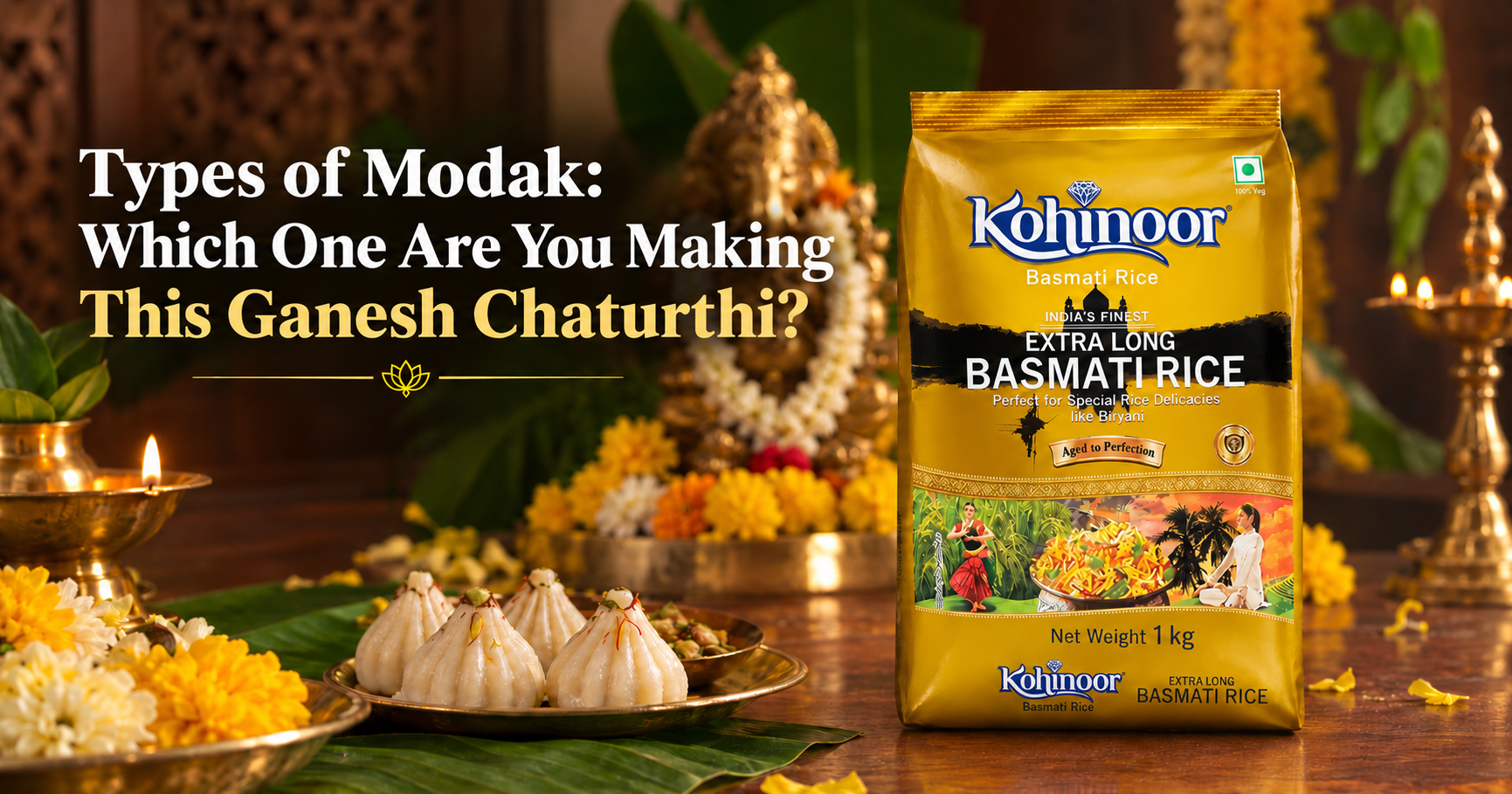
The kitchen is warm long before the puja begins. The steamer is already out, a bowl of rice flour dough sits on the counter still too hot to handle, and someone is pleating the first modak while the family debates how many to make. In most homes, modak starts here, with practised hands rather than a recipe card.
Make modak for a few festivals and one thing becomes clear. The type of modak depends on the shell and the cooking method far more than the filling. This guide walks you through the classic ukadiche modak made for the naivedya thali. It also covers the rice flour that keeps shells from cracking, ten more types of modak families love, and the small mistakes worth avoiding on the big morning.
A modak is a sweet dumpling with a soft outer shell and a filling tucked inside, pleated shut by hand or shaped in a mould. That is really the whole definition. Everything else, the flour used, whether it is steamed or fried, is a variation on this one idea.
The classic filling is fresh coconut cooked down with jaggery, a touch of cardamom, and sometimes a few strands of saffron. It should taste rounded, not sugary. As for the shell, rice flour is the traditional choice for the steamed version, though wheat, khoya and even semolina show up depending on which type you are making.
So when someone asks what modak is made of, the answer is simple: a shell and a filling. Know those two, and choosing your version this year becomes easy.
Ask any Maharashtrian household which modak is the real one, and most will say ukadiche, the steamed variety made fresh on the morning of the festival. It isn't fussy so much as precise. Get the dough right and shaping becomes easy; get it wrong and every modak cracks.
The dough comes together with boiling water poured straight into rice flour, kneaded while it is still hot. That heat is what makes the dough pliable enough to pleat by hand. For the filling, cook grated coconut and jaggery together just until it binds, no longer, so it stays soft rather than turning chewy.
Shaping is where people either love or dread this modak recipe. Pleating by hand takes practice, folding thin edges around the filling and closing the top into a peak. A mould does the same job in seconds, and there is no reason to feel that is cutting corners. Once shaped, steam them for around ten minutes and serve warm, with a little ghee spooned over the top.
If your dough tears while pleating, or the modak split open the moment they hit the steamer, the flour is almost always to blame before technique is. Long aged basmati rice is bred to cook firmly and separate, exactly the opposite of what a soft, foldable shell needs.
An everyday medium grain rice works better here, one that grinds into a finer, more forgiving flour. It absorbs water more evenly and holds together without resisting when you shape it.
Making rice flour at home isn't complicated. Wash the rice well, soak it for a couple of hours, spread it out to dry in the shade rather than direct sun, then grind it fine and sieve out anything coarse. Learning how to make modak with rice flour this way is one of those small kitchen habits that makes a visible difference the moment you start shaping.
Once the steamed batch is done, the other types of modak are where the fun begins. Some keep for days, some need only a mould and a pan, and most are ready in under 30 minutes.
A tip for all mould-shaped modak: grease the mould lightly with ghee before every piece, and press the mixture in firmly. The ridges will come out crisp, and the modak will slide out without breaking.
If you're wondering how many modak to offer Ganpati, 21 is the number most households follow. It isn't a fixed rule. Plenty of families keep up to 5 or 11, and some make 101 for larger celebrations. Go with what your family has always done.
If guests are expected throughout the day, make a separate batch for them, so the naivedya stays untouched until the puja is over.
Modak rarely sits alone on the naivedya thali. Varan bhaat, plain rice served with dal and a spoon of ghee, is usually the first thing offered. Masale bhat, rice cooked with festival spices and vegetables, often follows, and depending on the family's roots, you might also see sakhar bhat or a sweet pongal.
Long grain basmati rice suits these dishes particularly well because the grains stay separate under ghee rather than turning sticky, which matters when a thali is meant to look and taste light. Kohinoor basmati rice has long been a dependable choice for festival cooking in kitchens across India, precisely for that reason.
Most of these are timing issues rather than skill issues, and they are easy to fix once you know what to watch for.
There isn't really a single right answer. Ukadiche for the thali, fried if you want something that keeps, chocolate or mawa when the morning is short on time. Most homes end up making one traditional version and one easy one, and that is a perfectly ordinary way to celebrate.
Whichever you choose, it starts with good rice and a bit of patience. Explore Kohinoor's range of rice and try shaping a batch this Ganesh Chaturthi.
A modak has two parts, a soft outer shell and a sweet filling inside. The classic shell is rice flour, steamed until soft, while the filling is usually coconut cooked with jaggery and a touch of cardamom.
Most households offer 21 modak, though 5, 11 or 101 are also common depending on family tradition. There is no fixed number; what matters is the offering itself, not the count.
There are well over a dozen popular variations, including steamed ukadiche, fried talniche, chocolate, mawa, dry fruit, rava and coconut modak, each differing mainly in the shell and cooking method.
Cracking usually happens when the dough cools before shaping, or when cold water was used instead of boiling water. Keeping the dough warm and kneading it while hot keeps it pliable enough to pleat.
The perfect way to stay up-to-date with all the latest news and offers. By signing up, you'll receive regular updates about new product launches, exclusive promotions, and delicious recipe ideas to try at home. Our newsletter is a great way to get inspired in the kitchen. So why not sign up today and join the Kohinoor community?
We look forward to sharing our passion for rice and biryani with you!
