Kofta Pulao Recipe: A Royal Mughal Dish You Can Make at Home
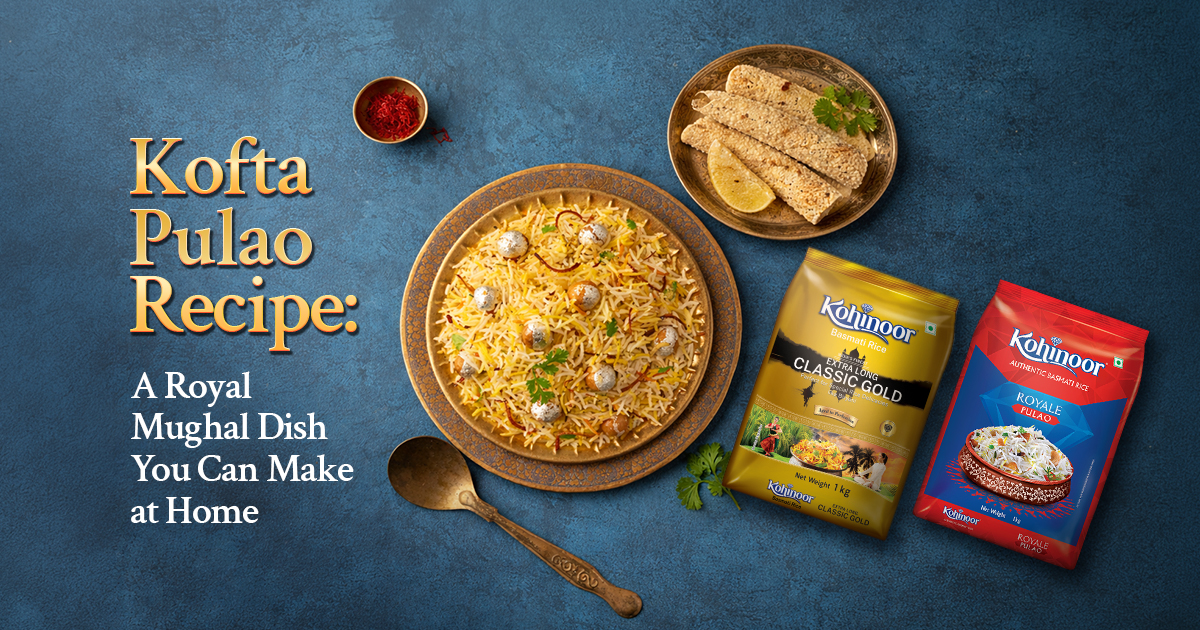
The Mughal emperors did not just conquer territories, they conquered taste. And few dishes capture the refinement of their royal kitchens quite like this Kofta Pulao recipe. Delicately spiced meatballs, impossibly tender, nestled in fragrant rice cooked in aromatic stock, this is indulgence reduced to its most elegant form. It was never an everyday dish. It was the dish that announced a celebration, honoured a guest, or marked a victory. Today, the Qisse Kuchh Khaas series by Kohinoor brings this royal recipe to your dining table.
The word ‘kofta’ comes from the Persian ‘kufta’, meaning pounded or ground meat. Brought to India through the spice and trade routes that fed the Mughal empire, kofta was refined by royal khansamas into something extraordinary. Paired with pulao, the more delicate, more perfumed rice preparation preferred by Mughal courts over the heavier biryani, the result was a dish that expressed both power and restraint. Lucknow’s Nawabs carried it forward, and the Kayastha and Mughal-influenced households of North India kept it alive in their kitchens long after the empire ended.
Mix well, roll into smooth balls, refrigerate for 20 minutes, and shallow fry until golden.
Where biryani is bold and assertive; separate cooking, layered assembly, intense spice; pulao is the opposite. In Kofta Pulao, the rice and koftas cook together in the same fragrant stock, building one unified flavour profile that is more subtle, more perfumed, and more delicate. The Mughal court preferred pulao precisely because of this restraint. It showed mastery without shouting.Kohinoor’s Royale Pulao Basmati Rice, known for its extra-long delicate grain, absorbs the stock without breaking, stays fluffy and separate, and carries the fragrance of saffron and kewra through every bite. Shop Kohinoor Royale Pulao Basmati Rice at Kohinoor
Kofta Pulao is a classic Mughal dish where delicately spiced minced meat balls (koftas) are cooked together with fragrant basmati rice in aromatic stock one-pot royal indulgence.
In pulao, rice and koftas cook together in stock as one unified dish. Biryani involves separate cooking and then layering, making pulao more subtle and biryani more intense.
Yes. Chicken mince works well for a lighter version. Replace the mutton stock with chicken stock to maintain flavour consistency throughout the dish.
Kohinoor Royale Pulao Basmati Rice is ideal for its extra-long grain and delicate aroma which absorbs the stock without breaking, giving the dish an elegant, royal finish.
Yes. Kofta traces back to Persian and Central Asian origins brought to India by the Mughals. Royal khansamas refined it into the celebrated dish we know today.
The perfect way to stay up-to-date with all the latest news and offers. By signing up, you'll receive regular updates about new product launches, exclusive promotions, and delicious recipe ideas to try at home. Our newsletter is a great way to get inspired in the kitchen. So why not sign up today and join the Kohinoor community?
We look forward to sharing our passion for rice and biryani with you!
