Rice Kheer Bhog for Janmashtami
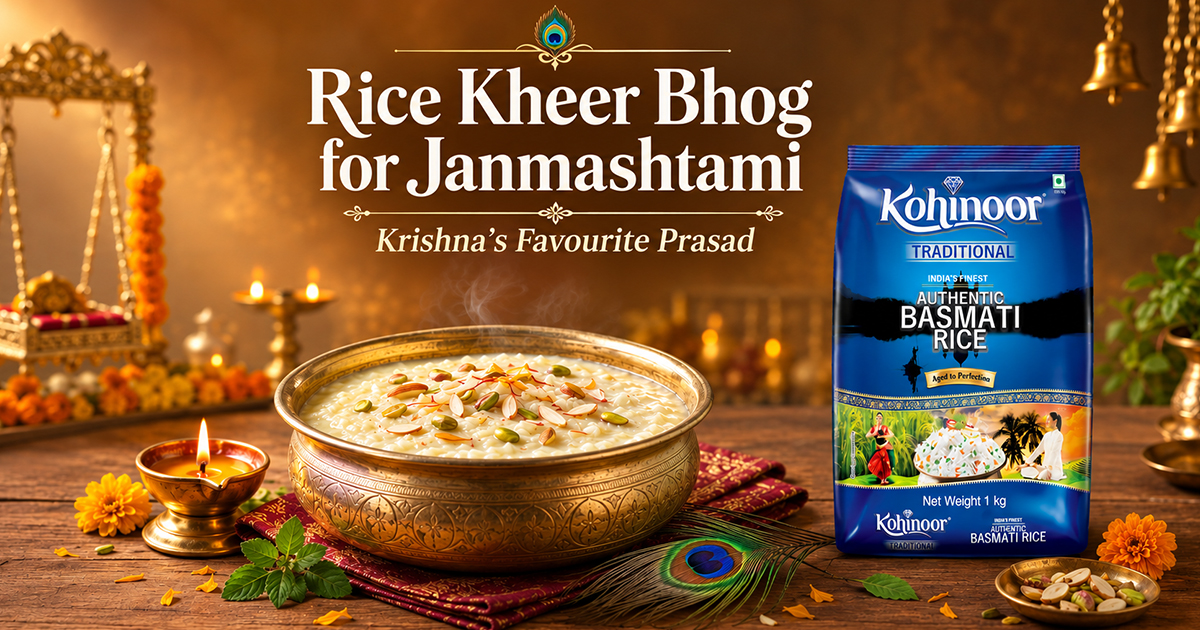
There's a particular kind of quiet that settles over a kitchen on Janmashtami evening. The lights are dim, a diya flicker near the mandir corner, and somewhere on the stove, milk simmers patiently, the way grandmothers always insisted it should. Outside, the house hums with preparation, jhulas being decorated, little bells tied to cradles, but inside the kitchen, time seems to slow down on purpose.
This is the hour kheer is made, not for taste alone, but as an offering, a small act of love placed before Krishna before anyone else touches a spoon. There's a tenderness in that waiting, in watching milk reduce grain by grain, that no shortcut rice kheer recipe can replicate. Legend has it that little Bal Gopal could never resist milk and butter, sneaking handfuls when no one was watching, leaving a trail of mischief through Vrindavan's homes. Perhaps that's why kheer, rich with milk and rice, feels like the most natural bhog of all.
Milk holds a special place in Krishna's story, from his childhood love of butter to the pastoral world he was raised in. Rice kheer brings milk and grain together in one dish, which is likely why it became such a natural choice for Janmashtami bhog. Alongside kheer, thalis often include makhan mishri and panjiri, both linked to Krishna's youth in Vrindavan. Kheer sits comfortably among them, sweet, unhurried, and made without onion or garlic to keep it fit for offering. Regional households vary the bhog spread, but rice kheer appears almost everywhere, from Bengal to Gujarat to the south. It's one of the few dishes that crosses every regional Janmashtami table.
Traditionally, short or broken grains are favoured for kheer because they release starch quickly, giving the milk that creamy, slightly thick body without needing much reduction time. This is the best rice for kheer by classic standards. That said, aroma matters just as much as texture, especially for a dish meant as an offering. A long, aromatic grain like Kohinoor Traditional Authentic Basmati Rice holds up beautifully in a slow milk simmer, releasing a gentle fragrance as it cooks rather than breaking down completely. If you prefer the traditional short-grain kheer basmati rice style, that works too, and either approach is genuinely valid depending on the texture you want. What you should avoid is a low-quality or overly starchy grain that turns gluey rather than silky. That's usually what goes wrong when people wonder why their kheer never tastes quite right.
For a proper bhog, keep it sattvic. No onion, no garlic, and use fresh, hygienically packed ingredients throughout. For a family batch of rice kheer recipe, you'll need:
Every region adjusts the milk, sweetener and rice slightly, but the spirit of rice kheer recipe stays the same.
Kheer can be offered warm, though many households prefer it chilled once the bhog ritual is done. Alongside it, thalis typically include makhan mishri, fruits, and a few dry sattvic dishes. For a gathering of six to eight, the quantities above should give generous portions. Kheer keeps well in the fridge for a couple of days, though it thickens as it sits, so loosen it with a little milk before serving again.
Good kheer recipe isn't rushed, and that's rather the point on Janmashtami. The slow simmer, the stirring, the offering before the first taste—it's a small ritual that connects generations. Whether you reach for a short grain or a fragrant basmati like Kohinoor Traditional Authentic, what matters is the care you put into the pot. This year, let your bhog thali carry that same warmth, one spoonful at a time.
Short grain rice releases starch quickly for a creamy texture, while an aromatic basmati like Kohinoor Traditional Authentic adds fragrance during a slow simmer. Both work well; the choice comes down to whether you want richness or aroma to lead.
Yes, soaking for about 20 minutes softens the grain and helps it cook evenly in milk, reducing the overall simmering time needed for a smooth, well-set kheer.
Kheer is often translated as rice pudding, though the Indian version is milk-based and simmered rather than baked, giving it a distinct texture and flavour.
It usually means the milk hasn't reduced enough before the rice was considered done. Simmering longer on low heat, with regular stirring, thickens it properly.
Refrigerated in an airtight container, rice kheer stays fresh for about two days. It will thicken as it cools, so add a little warm milk before serving again.
The perfect way to stay up-to-date with all the latest news and offers. By signing up, you'll receive regular updates about new product launches, exclusive promotions, and delicious recipe ideas to try at home. Our newsletter is a great way to get inspired in the kitchen. So why not sign up today and join the Kohinoor community?
We look forward to sharing our passion for rice and biryani with you!
