Lucknowi Biryani vs Hyderabadi Biryani: What Is the Difference
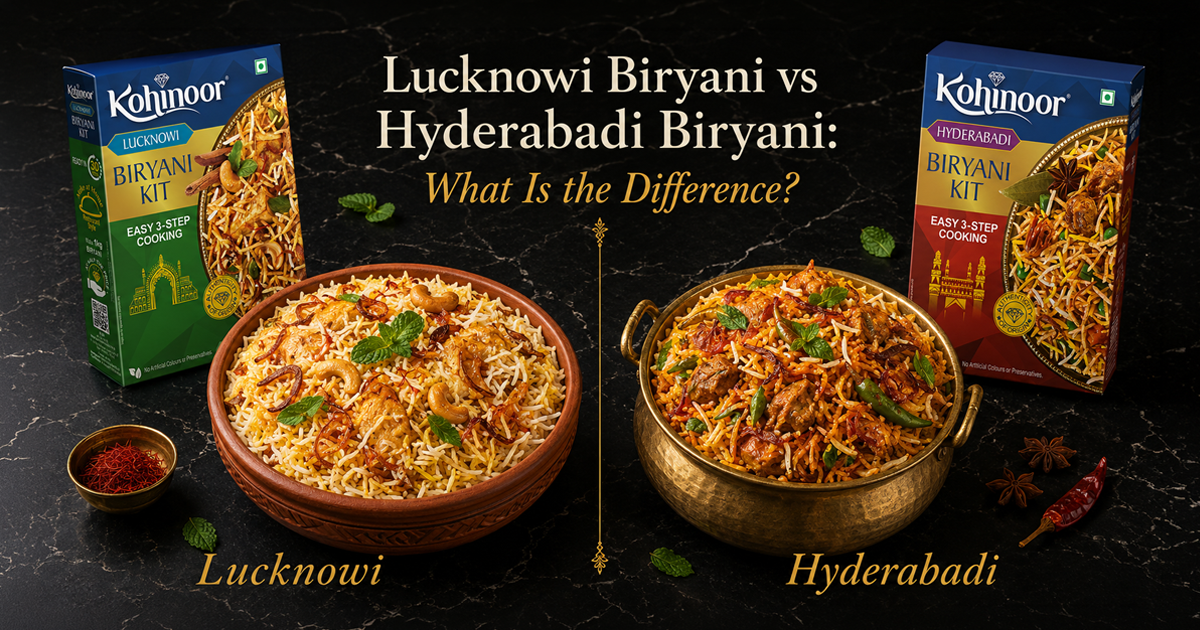
Two biryanis. Both royal. Both are slow-cooked on dum. Both are built on saffron and long-grain Basmati. And yet, the moment you lift the lid, you know you are looking at something completely different. The Lucknowi school says biryani is about restraint—fragrant, light, and precise. The Hyderabadi school says it is about depth—bold, spiced, and unapologetic. This is not a competition. It is a philosophy, and it is one worth understanding properly.
Both biryanis share the same ancestor: the Mughal court. But the cities they grew up in were very different places, with very different ideas about food.
Lucknow in the 18th and 19th centuries was the seat of the Nawabs of Awadh. This was a court that valued refinement above everything. Art, music, poetry, and food were all treated with the same seriousness. The Nawabs did not want food that hit hard; they wanted food that lingered. Their kitchens developed what became known as Dum Pukht cooking—a slow and sealed method of cooking where steam does the work. Lucknowi biryani, also called Awadhi biryani, was born out of this philosophy: subtle, aromatic, and deliberately light on the palate.
Hyderabad told a different story. The Nizams presided over a court that was wealthy, cosmopolitan, and deeply influenced by both South Indian and Persian culinary traditions. Their food was richer, spicier, and more intense. The Hyderabadi biryani that emerged from their kitchens reflected all of this—a bolder, more complex dish where meat and rice are cooked together, exchanging flavours in a way that Lucknowi biryani deliberately avoids.
The Mughals brought biryani to India from Persia, but as the empire weakened, its culinary legacy scattered. Awadh absorbed the Mughal tradition and refined it further by pulling back on heat and leaning into aroma. Hyderabad absorbed the same tradition but then layered it with the spice sensibility of the Deccan region and the Persian influence that came with the Nizam's marriages into Arab and Central Asian nobility. The result is two versions of the same dish that taste nothing alike.
This is the wrong question, and most serious biryani lovers will tell you so. Lucknowi biryani is not a tamer version of Hyderabadi biryani. Hyderabadi biryani is not a more exciting version of Lucknowi biryani. They are different dishes with different intentions. One is built for elegance. The other is built for impact. Both, when done correctly, are exceptional.
If there is one thing that separates these two biryanis at a fundamental level, it is the cooking method. Everything else—including the spice, the colour, and the texture—flows from this single decision.
Kacchi means raw. In Hyderabadi biryani, the meat goes into the pot completely raw. It is marinated in yoghurt, spices, and herbs, but uncooked. Partially cooked rice is then layered on top, and the whole pot is sealed with dough and placed over a low flame. As the pot heats, the meat cooks slowly in its own juices and the steam from the rice. The two cook together, exchanging fat, moisture, and flavour the entire time.
Pukki means cooked. In a Lucknowi biryani recipe, the meat is fully cooked in a rich gravy before it meets the rice. The rice is also separately parboiled with whole spices and aromatics. The two are then layered together and finished on dum. By this point, both components are essentially done. The dum here is not about cooking; it is about bringing the individual flavours together. The steam allows the aromas to mingle gently without the flavours fully merging. What you get is distinct layers—spiced meat here and fragrant rice there—which complement each other without losing their individual character.
The kacchi method produces a biryani with extraordinary depth. The rice absorbs the fat and juices from raw meat as it cooks, which gives it a richness you simply cannot achieve any other way. Every spoonful carries the full weight of the dish.
The pukki method produces a biryani with remarkable finesse. Because the meat is cooked separately in a well-seasoned gravy, it can be controlled precisely. The rice stays lighter and more aromatic because it does not absorb meat fat during cooking. Think of it as controlled layering: you taste each element clearly, working in harmony rather than unison.
Kacchi is harder, without question. Cooking raw meat and partially cooked rice together in a sealed pot requires experience and judgment. Undercook it, and the meat is not cooked through. Overdo it, and the rice turns mushy. The pukki method is more forgiving. If your meat is already cooked perfectly before layering, the worst thing the dum can do is dry things out slightly. For anyone trying a Lucknowi biryani recipe at home for the first time, the pukki method is the more reliable place to start.
Both biryanis use similar ingredients: saffron, whole spices, ghee, yoghurt, and fried onions. But they use them in very different proportions and to very different effects.
Hyderabadi biryani is not shy about spice and heat. Red chilli, both whole and ground, features prominently. So does star anise, stone flower (pathar ke phool), and kalpasi (black stone flower)—two ingredients almost exclusive to Hyderabadi cooking. Mint and fried onions are used generously and add layers of bitterness, sweetness, and fragrance. The overall profile is warm, complex, and assertive. You feel it in your mouth before you finish chewing.
The Awadhi biryani vs Hyderabadi biryani spice comparison is stark. Lucknowi biryani uses whole spices like cardamom, cloves, cinnamon, and mace. However, they are used for their aromas, not their heat. Ground chilli is minimal or absent entirely. Ittr (a traditional Awadhi perfume extract) and kewra water (screwpine essence) are used to finish the dish, giving it a floral, almost delicate quality that no other biryani has. The experience is fragrant rather than fiery.
Both biryanis use saffron, but again, differently. In Hyderabadi biryani, saffron is dissolved in warm milk and drizzled over the top layer of rice before sealing. This gives the dish its signature golden patches and a rich, honeyed warmth. In Lucknowi biryani, saffron is used more sparingly and contributes to the overall aroma of the dish rather than its visual drama. The colour in Lucknowi biryani is softer and more even.
Hyderabadi biryani hits immediately—the spice, richness, and deep savouriness of slow-cooked meat mingled with rice. It is bold and satisfying in a way that stays with you. Lucknowi biryani opens more slowly. The first impression is aromatic, then you taste the tenderness of the meat in its gravy, and then the gentle spice of the rice. It unfolds rather than announces.
Rice is equally important in biryani. However, each style brings out Basmati's flavour differently.
In a Hyderabadi biryani recipe, the rice is parboiled to around 50–60% done before layering over raw meat. It then finishes cooking in the steam from the meat, absorbing fat and spiced juices along the way. The final texture is slightly denser and more flavourful. Each grain carries the character of the whole dish.
In a Lucknowi biryani recipe, the rice is parboiled separately in spiced water—sometimes with whole spices, saffron, and a splash of rose water—to around 70–80% done. It then finishes on dum above the cooked meat. The grains stay longer, lighter, and more separate. The rice in a Lucknowi biryani is almost aromatic. You could eat it on its own, and it would still taste of something special.
Both styles depend on long-grain Basmati that can withstand the dum process without breaking down. In kacchi biryani, the rice must hold its shape while absorbing a significant amount of moisture from cooking meat. In pukki biryani, the rice must elongate beautifully and stay separate even after resting under steam.
Short-grain or medium-grain rice simply cannot do either job well. This is why aged, extra-long Basmati like Kohinoor is the consistent choice for both styles. The grains are long enough to absorb flavour without becoming mushy, and sturdy enough to survive the dum without breaking. Whether you are making a Hyderabadi or Lucknowi biryani, the rice is the one ingredient both traditions agree on.
For both styles, soak your Basmati for at least 30 minutes before cooking. This allows the grain to hydrate evenly and reduces parboiling time. When parboiling, use generously salted water. The rice should taste slightly seasoned on its own before it goes into the pot. For Hyderabadi biryani, pull the rice at 50–60% done. For Lucknowi, 70–80%—the dum does the rest.
Both biryanis deserve their reputation. But if you are deciding which to cook or order, here is a breakdown.
Hyderabadi is noticeably spicier, with visible heat from red chillies and a fuller, more aggressive spice profile. Lucknowi is mild, aromatic, and floral—even those with a low spice tolerance can enjoy it comfortably.
Lucknowi biryani is more forgiving for home cooks. The pukki method lets you control the meat and rice separately before combining. Hyderabadi biryani demands more confidence. Raw meat and rice must cook together precisely, with no room to course-correct mid-way.
Both are deeply flavourful, but in different ways. Hyderabadi biryani has intensity—bold, meaty, and spiced throughout. Lucknowi biryani is elegant, layered, aromatic, and refined. Which you prefer says something about your palate.
Hyderabadi biryani is a showstopper at large gatherings. Its bold aroma fills a room, and it feeds a crowd with confidence. Lucknowi biryani shines at smaller, more intimate dinners where the nuance of the dish can actually be appreciated.
Start with Lucknowi. The pukki method is more teachable and more forgiving. Once you understand how dum works and how to layer a biryani properly, move to Hyderabadi. You will appreciate exactly why the kacchi method is considered the harder, more impressive achievement.
Asking which biryani is best is the wrong question. Lucknowi and Hyderabadi are two completely different expressions of the same tradition. Both are worth cooking, and both demand the same foundation: long-grain, aged Basmati that holds its shape, absorbs spice, and does justice to the method. That is exactly what Kohinoor Basmati is built for. Pick your style, follow the technique, and let the rice do the rest. If you want to try making either at home, the Kohinoor Lucknowi Biryani Kit or the Hyderabadi Biryani Kit takes the guesswork out of the spice blends so that you can focus entirely on the technique.
The key difference is the cooking method. Hyderabadi biryani uses the kacchi method, where raw meat and rice are cooked together in a sealed pot. Lucknowi biryani uses the pukki method, where meat and rice are cooked separately, then layered and finished on dum.
Hyderabadi biryani is the spicier of the two. It uses red chillies, whole spices, and generous amounts of mint and fried onions. Lucknowi biryani is mild and aromatic, relying on floral finishes like kewra water and rose water rather than heat.
Yes. In the kacchi method, raw marinated meat sits at the bottom of the pot and cooks entirely within the sealed dum alongside the rice. This is what gives Hyderabadi biryani its deep, intense flavour.
Yes, both styles need extra-long, aged Basmati that holds shape under dum cooking. The only difference is parboiling time: 50–60% for Hyderabadi, 70–80% for Lucknowi. A quality rice like Kohinoor Basmati works well for both.
The perfect way to stay up-to-date with all the latest news and offers. By signing up, you'll receive regular updates about new product launches, exclusive promotions, and delicious recipe ideas to try at home. Our newsletter is a great way to get inspired in the kitchen. So why not sign up today and join the Kohinoor community?
We look forward to sharing our passion for rice and biryani with you!
