Samak Rice vs Brown Basmati Rice: Comparing Two Whole Grains
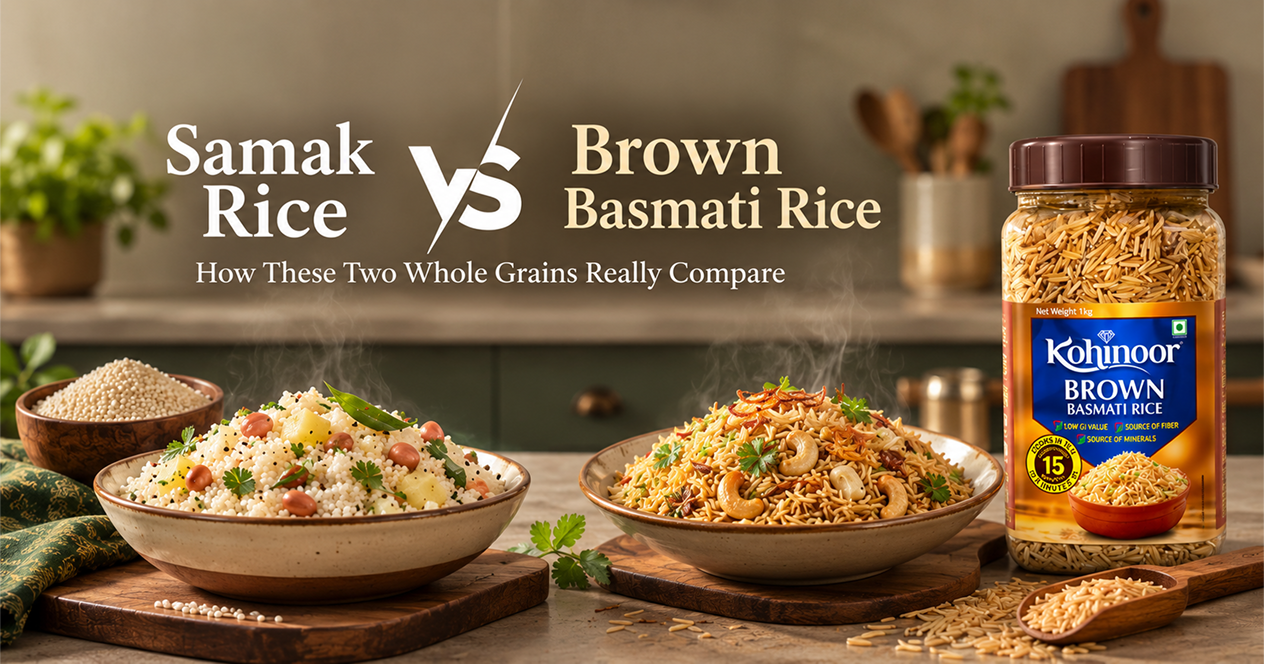
Samak rice and brown basmati rice are both seen as wholesome, healthy rice options. Both are also cooked more often in Indian homes during Navratri, when many families change what they eat for nine days. Because of this, many people want to know how the two grains compare. The two grains are often kept side by side in the kitchen, but they are quite different. They come from different plants, they cook in different ways, and they are eaten on different days. This guide explains what each grain is and how they differ in nutrition, cooking and texture. It also explains when each grain is the right choice, on fasting days and in everyday meals.
Samak is barnyard millet, usually Indian barnyard millet (Echinochloa frumentacea). It belongs to the grass family, Poaceae, like rice and wheat. It is naturally gluten free, and the seeds are tiny. When cooked, it becomes soft and looks similar to rice, which is why it is called rice. Samak rice is also known as sama ke chawal, vrat ke chawal, vari and bhagar. The main difference between the two grains is that samak is a millet, while brown basmati is a true rice grain.
Brown basmati rice is basmati rice from which only the outer husk has been removed. The bran layer remains on the grain. Because of the bran, brown basmati has a light brown colour, a firmer texture and a mild nutty taste. It still has the natural aroma of basmati rice. White basmati rice has the bran polished off, so it cooks softer and looks white. Kohinoor Brown Basmati Rice keeps the bran layer on a long basmati grain. This makes it a whole grain rice with the aroma of basmati.
The table below shows the main differences between samak rice and brown basmati rice, and between millet vs rice in general.
| Point of comparison | Samak rice | Brown basmati rice |
|---|---|---|
| What it is | Barnyard millet | Whole basmati rice |
| Grain size | Tiny, round | Extra-long, slender |
| Gluten | Gluten free | Gluten free |
| Taste | Mild, slightly sweet | Nutty, aromatic |
| Texture after cooking | Soft, slightly sticky | Firm, separate grains |
| Cooking time | 10 to 15 minutes | 35 to 45 minutes, after soaking |
| Common dishes | Vrat pulao, khichdi, kheer | Pulao, jeera rice, dal chawal |
| Everyday use | Fasting days, a change of grain | Regular meals with Kohinoor Brown Basmati |
The table below compares the nutrition of samak rice and brown rice. All values are for 100 g of raw grain.
| Nutrient (per 100 g, raw) | Samak rice (barnyard millet) | Brown rice |
|---|---|---|
| Protein | 6 to 10 g | 9.2 g |
| Dietary fibre | 10 to 12.5 g | 4.4 g |
| Carbohydrates | 65 to 69 g | 74.8 g |
| Iron | Higher; 5 mg or more | About 1 mg |
Samak rice nutrition shows higher fibre and iron than brown rice. Brown rice has slightly more protein and more carbohydrates. Most brown rice benefits come from its bran layer, which white rice does not have. Many people ask whether samak rice is healthy and whether brown rice is healthy. Both are wholesome grains, and the difference between them in an everyday meal is small. Either grain, served with dal, sabzi and curd, makes a balanced meal. The main samak rice benefits are that it adds variety to the diet and gives a filling grain for fasting days.
Knowing how to cook brown rice properly can help you get soft, fluffy grains without making them mushy. Follow these simple steps for perfectly tender and fluffy rice:
Samak rice takes less time than basmati rice. Rinse it well and soak it for 10 to 15 minutes. Cook it with 2 to 3 cups of water for every cup of samak. It becomes soft in 10 to 15 minutes. Brown basmati rice needs more time. To cook brown rice properly, soak it for 45 minutes to 1 hour first. Then cook it with 2½ cups of water for every cup of rice, on a low flame with the lid on, for 35 to 40 minutes. In a pressure cooker, use 2 cups of water and cook for three to four whistles.
Samak rice is best for vrat pulao, khichdi and kheer. Brown basmati rice is best for pulao, jeera rice and dal chawal, because its grains stay firm and separate. Do not soak samak rice for too long, as it becomes mushy. Do not cook brown rice without soaking it, as it stays hard in the centre. For the best results, follow the cooking directions on the Kohinoor Brown Basmati Rice pack.
Samak rice is a traditional vrat food. It is eaten on fasting days during Navratri, Ekadashi and other fasts, often as a simple pulao with peanuts and sendha namak. Brown rice is a cereal grain. For this reason, most fasting traditions do not include it in vrat meals, in the same way as white rice. Fasting rules differ from family to family, so follow the practice in your home. On regular days, both grains can be part of a balanced meal with dal, sabzi and curd. Kohinoor Brown Basmati Rice is meant for these regular, non-fasting meals.
Reach for samak on fasting days or when you fancy a change of grain. When you want a whole grain rice, you can choose brown basmati rice. Both grains can be kept in the same kitchen and used according to the day and the dish. When it's time for a wholesome weekday pulao or a comforting plate of dal chawal, try Kohinoor Brown Basmati Rice.
No. Samak rice is barnyard millet, a small seed from the grass family. Brown rice is a true rice grain with its bran layer intact. They look similar on a plate but differ in taste, texture and cooking time.
Neither is better for everyone. Samak rice nutrition shows more fibre and iron, while brown basmati offers slightly more protein. Both are wholesome grains, and the right choice depends on the day, the dish and your family's needs.
Yes, both are naturally gluten-free. Samak is a millet and brown basmati is rice, and neither contains gluten. If you need to avoid gluten strictly, check the pack for any cross-contamination notes.
Most fasting traditions avoid all cereal grains, including brown rice, and use samak instead. Customs vary between families and regions, so it's best to follow the rules your household observes during the fast.
Samak rice cooks much faster, usually in 10 to 15 minutes. Brown basmati rice needs 45 minutes to an hour of soaking, then 35 to 40 minutes of cooking in an open pot, or a few whistles in a pressure cooker.
Yes, you can. Samak works well in pulao and khichdi, though it cooks softer and won't give the long, separate grains of brown basmati. Use a little less water and cook it for a much shorter time.
The perfect way to stay up-to-date with all the latest news and offers. By signing up, you'll receive regular updates about new product launches, exclusive promotions, and delicious recipe ideas to try at home. Our newsletter is a great way to get inspired in the kitchen. So why not sign up today and join the Kohinoor community?
We look forward to sharing our passion for rice and biryani with you!
