Types of Biryanis in India: Complete Regional Guide
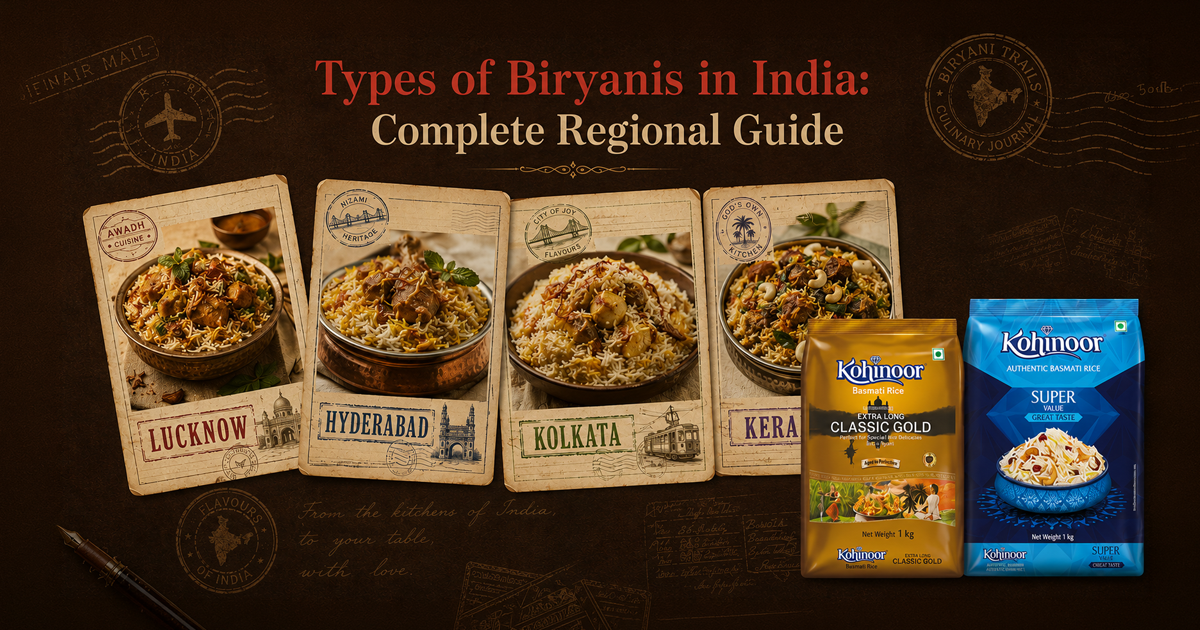
Did you know that biryani was India's most-ordered dish on Swiggy for 10 straight years, with 93 million orders in 2025 alone? But which biryani? Because the types of biryani in India are not just one dish with slight variations. There are 26+ distinct regional varieties, each shaped by a different history, spice box, and cooking tradition. From the delicate layers of an Awadhi dum pot to the bold, fiery depths of a Hyderabadi deg, every region has staked its claim.
Here is a walkthrough of all of them—North, South, East, West—so you know exactly what you're eating, cooking, or ordering next. Whether you're a food explorer chasing regional flavours or a home cook ready to try something new, this is the only biryani guide you'll need.
Biryani did not start in an Indian kitchen. It travelled here.
The word itself is Persian; "birian" means fried before cooking, and "birinj" means rice. Traders and travellers brought this one-pot concept to India centuries ago, and it found a permanent home here.
The real transformation occurred within the Mughal royal kitchens. When the empire began to decentralise, its royal cooks and their recipes spread across the subcontinent. Lucknow's nawabs developed their own refined style. Hyderabad's Nizams built a completely different tradition—two cities, two courts, two biryanis that still define how India eats today.
Every region adapted the dish using local ingredients, preferred spices, and cooking methods. The coastline brought coconut and prawn. The Deccan plateau brought bold chillies and tamarind. The North leaned into aromatic whole spices and long-grain basmati.
North Indian biryanis are built on restraint and fragrance. The spices are layered, not dumped. The rice stays long, separate, and gloriously fluffy. Here's what sets each style apart.
| Biryani Type | Cooking Style | Flavour Profile | Key Ingredients |
|---|---|---|---|
| Lucknowi (Awadhi) Biryani | Uses the “pukki” dum method where meat is pre-cooked before layering with rice | Mild, balanced, and aromatic | Saffron, kewra water, rose water |
| Delhi Biryani | Similar layered cooking style with stronger masala preparation | Bold, spicy, and more intense | Strong masala blend and whole spices |
| Kashmiri Biryani | Cooked with rich spices, dry fruits, and saffron-based preparation | Slightly sweet, creamy, and rich | Lamb, dry fruits, saffron |
| Sindhi Biryani | Layered biryani with yoghurt, chillies, and tangy ingredients | Tangy, spicy, and highly flavourful | Aloo bukhara (dried plums), yoghurt, green chillies |
Every North Indian biryani depends on long-grain basmati; its ability to absorb flavour without turning mushy is non-negotiable. The rice has to hold its shape through the dum process. Quality basmati rice delivers extra-long grains, rich aroma, and the perfect texture that North Indian biryanis demand.
In many Southern recipes, basmati steps aside for shorter, starchier local varieties like "seeraga samba" and "kaima" that suit the bolder, wetter masalas of the region.
| Biryani Type | Cooking Style | Flavour Profile | Key Ingredients | Rice Used | Regional Specialty |
|---|---|---|---|---|---|
| Hyderabadi Biryani | Uses the “kacchi” method where raw marinated meat and uncooked rice are cooked together on dum | Deep, rich, spicy, and layered | Marinated meat, saffron, fried onions, spices | Long-grain basmati rice | Famous for meat juices flavouring every grain of rice |
| Ambur Biryani (Tamil Nadu) | Meat is cooked with spices and layered with rice | Sharp, tangy, and slightly sour | Curd-marinated meat, spices, brinjal curry side | Seeraga samba rice | Traditionally served with thick brinjal curry |
| Dindigul Biryani (Tamil Nadu) | Cooked with cube-cut meat and lighter masala | Tangy, peppery, and balanced | Lemon, curd, lamb or chicken chunks | Seeraga samba rice | Heat comes from pepper rather than heavy chilli |
| Chettinad Biryani (Tamil Nadu) | Prepared with freshly ground spice mixes | Strong, spicy, and aromatic | Kalpasi, marathi mokku, star anise | Basmati or local rice varieties | Known for bold Chettinad spice flavours |
| Thalassery Biryani (Kerala) | Layered festive-style biryani | Mildly sweet, rich, and aromatic | Coconut milk, cashews, raisins, fried onions | Kaima rice | Popular at weddings and celebrations in Kerala |
| Kerala Prawn Biryani | Seafood-based layered biryani | Coastal, spicy, and creamy | Fresh prawns, coconut milk, curry leaves, green chillies | Kaima rice | Seafood flavour gives it a unique depth |
| Bhatkali Biryani (Karnataka) | Slow-cooked with onion-heavy masala | Rich, smoky, and slightly tangy | Caramelised onions, curd marinade, minimal whole spices | Basmati rice | Famous for intense onion flavour and coastal Karnataka influence |
The northeast and central India have their own quiet biryani traditions, less famous but fascinating in technique.
| Biryani Type | Cooking Style | Flavour Profile | Key Ingredients | Aroma | Spice Level | Texture & Character | Regional Influence | Common Spices Used |
|---|---|---|---|---|---|---|---|---|
| Assamese Bamboo Biryani | Cooked inside bamboo tubes over an open flame | Smoky, earthy, and mildly spiced | Rice, meat, bamboo casing | Natural smoky bamboo aroma | Mild to medium | Rustic and earthy | Assamese tribal and regional cooking traditions | Local herbs, pepper, mild whole spices |
| Kolkata Biryani | Layered dum-style biryani with potato and boiled egg | Mild, aromatic, and lightly spiced | Potato, boiled egg, kewra water | Soft floral aroma with kewra notes | Mild | Light, fragrant, and balanced | Influence of Nawab Wajid Ali Shah and Awadhi cuisine | Kewra, cardamom, saffron, cinnamon |
Western India brings city energy, community traditions, and the boldness of Rajasthani cuisine to its biryanis.
| Biryani Type | Cooking Style | Flavour Profile | Key Ingredients | Aroma | Spice Level | Texture & Character | Regional Influence | Common Spices Used |
|---|---|---|---|---|---|---|---|---|
| Mumbai (Bombay) Biryani | Layered biryani with fried potatoes and strong masala | Bold, punchy, and slightly sweet | Fried potatoes, dried fruits, kewra water | Rich and spicy aroma with floral notes | Medium to high | Vibrant and flavour-packed | Mumbai street food and Mughlai influence | Kewra, chilli, garam masala, cinnamon |
| Nagpur Biryani | Cooked using Vidarbha-style dry coconut masala | Fiery, bold, and spicy | Dry coconut masala, meat, spices | Smoky and spice-heavy aroma | High | Rustic and intensely spiced | Vidarbha and Maharashtrian cuisine | Dry coconut, red chilli, black pepper |
| Bohri Biryani (Gujarat) | Pot sealed with dough and slow-cooked for hours | Balanced sweet-spicy flavour | Rice, meat, yoghurt, mild sweet spices | Rich and warm aroma | Medium | Soft, layered, and community-style | Bohri Muslim culinary traditions | Cardamom, cinnamon, saffron |
| Memoni Biryani | Heavily spiced biryani with yoghurt-based preparation | Intense, deep, and complex | Yoghurt, meat, strong spice blend | Sharp and layered spice aroma | High | Dense and richly flavoured | Memoni Muslim cuisine | Green chilli, black pepper, garam masala |
| Jodhpuri Biryani (Rajasthan) | Yoghurt-marinated meat cooked with bold spices | Spicy, dry, and robust | Red chillies, garlic, yoghurt-marinated meat | Strong garlic and chilli aroma | High | Bold and rustic | Rajasthani cooking traditions | Red chilli, garlic, cumin, coriander |
Most biryani conversations focus on region or spice. But the real split that defines everything is technique.
In the kacchi method, the technique behind Hyderabadi biryani, raw, marinated meat and uncooked rice are combined in the pot. As everything cooks, the meat juices rise through the rice, flavouring every single grain. The result is intensely rich and deeply savoury.
The pukki method, used in Lucknowi biryani, cooks the meat separately until tender, then layers it with partially cooked rice before the final dum. Because each component is seasoned independently, the cook has far more control over the final flavour.
Kacchi gives you a unified depth; every grain of rice carries the meat's character. Pukki gives you distinct layers, bites of perfectly spiced meat alternating with fragrant rice.
Kacchi is trickier. Timing the raw meat and rice to finish cooking simultaneously takes practice. If you're cooking biryani at home for the first time, start with the pukki method; the Lucknowi biryani approach gives you more control and is far more forgiving.
Biryani is a sum of its parts. Change one element and the dish changes entirely.
Basmati is the rice of the North—long-grain, aromatic, and perfect for dum cooking. Seeraga samba and kaima (jeerakasala) are the rice of the South—shorter, more absorbent, suited to wetter masalas. Using the wrong rice in the wrong biryani is the fastest way to lose authenticity.
Northern biryanis build flavour through whole spices: star anise, bay leaf, cinnamon, and clove, which release gently during the long dum. Southern biryanis often use freshly ground masala pastes that go in earlier and cook deeper into the meat.
Lamb carries more fat and flavour than chicken, which is why slow-cooked biryanis often taste richer with mutton. Prawns and fish work brilliantly in coastal dishes because they cook quickly and absorb marinade immediately.
Dum cooking—sealing the pot with dough or foil and cooking on low heat—is the final step that brings everything together. The steam that builds inside carries flavour from the base to the top. Break the seal too early, and you lose it. Patience is the last ingredient in every good biryani.
Regardless of which regional style you're cooking, rice quality is non-negotiable. For any North Indian biryani at home, choosing the best basmati rice for biryani is the natural choice; the grain length, aroma, and cooking behavior are precisely what dum biryani demands.
Not sure where to start? Here's a simple way to navigate the different types of biryani based on what you enjoy.
Go for Lucknowi or Kolkata biryani. Both are gentle, fragrant, and deeply satisfying without overwhelming heat. The Kolkata version, with its potato and egg, is also a crowd-pleaser at the table.
Hyderabadi biryani is your starting point. If you want to push further, try Chettinad. Freshly ground spices make it one of the most complex and fiery biryanis in the country.
Look into Tahari, a vegetarian biryani made with root vegetables and whole spices, prepared using the same dum technique as meat biryanis. Kashmiri Pulao is another close cousin, fragrant and mildly sweet with dry fruits and saffron.
Start with the Lucknowi pukki method. The meat is pre-cooked, so you're in control at every stage. Layer it with long grain Basmati rice, seal the pot, and let the dum do its work. It's forgiving, deeply rewarding, and the perfect introduction to the world of home biryani.
India's biryani map is vast, varied, and endlessly fascinating. From bamboo-smoked pots in Assam to sealed Bohri degs in Gujarat, every region has contributed something irreplaceable to the story. But whether it's the delicate Awadhi dum or the fierce Hyderabadi kacchi, the one thing every great biryani has in common is this: it starts with good rice.
India has 26+ distinct regional biryani varieties, spanning North, South, East, and West. Each style reflects the local spices, rice, cooking techniques, and cultural traditions of its region.
Hyderabadi biryani consistently ranks as the most popular variety nationwide, thanks to its bold kacchi dum technique and intense flavour. Lucknowi biryani is a close second, especially popular in North India.
Hyderabadi biryani uses the kacchi method, where raw meat and uncooked rice are cooked together, allowing the meat juices to flavour the rice directly. Lucknowi biryani uses the pukki method; the meat is pre-cooked separately before being layered with rice for the final dum.
Biryani and pulao are both rice dishes, but biryani is built on layering, rice and spiced meat or vegetables are cooked in alternating layers, often using the dum technique. Pulao is a simpler one-pot dish where the rice and ingredients cook together from the start, with a lighter spice profile.
The perfect way to stay up-to-date with all the latest news and offers. By signing up, you'll receive regular updates about new product launches, exclusive promotions, and delicious recipe ideas to try at home. Our newsletter is a great way to get inspired in the kitchen. So why not sign up today and join the Kohinoor community?
We look forward to sharing our passion for rice and biryani with you!
