5 Everyday Rice Recipes Most Indian Homes Get Wrong
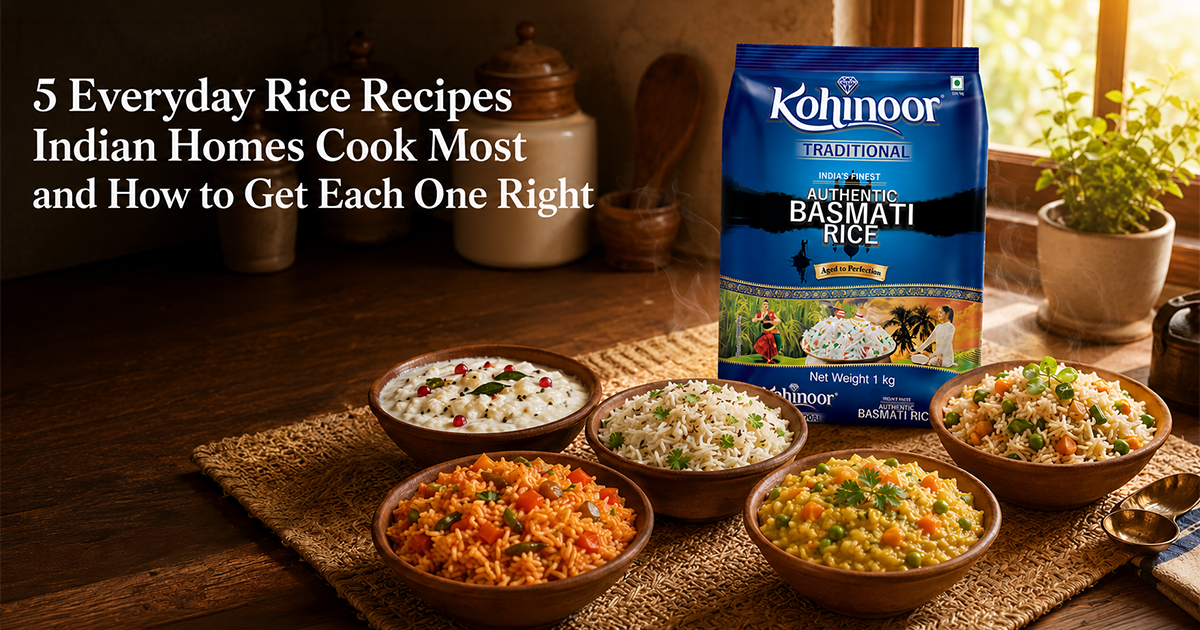
Same rice, five completely different personalities. Cook it one way and it turns into the dry, cumin-scented grains that sit beside a bowl of dal. Cook it another way, and it softens into the curd rice your grandmother swore could fix almost anything.
Ever wondered why the exact same bag of basmati rice behaves so differently depending on what's for dinner? It isn't a different rice. It's a different method, a different water ratio, and a different idea of what the grain is meant to feel like on a spoon.
This guide looks at the five rice recipes that turn up most often in Indian kitchens- curd rice, jeera rice, fried rice, Mexican rice and khichdi- and breaks down exactly what makes each one turn out right. Think of it as the reasoning behind the recipe, with the full method for each dish in its own section below.
Five different dishes, one packet of rice, five completely different results. The trick lies less in the rice itself and more in how it's cooked.
Jeera rice, fried rice and Mexican rice recipe all need grains that stay apart on the plate. Long-grain rice, cooked with just enough water and left to rest, gives that separation naturally. This is where something like Kohinoor Traditional Authentic Basmati Rice earns its place in the kitchen.
Curd rice recipe and khichdi ask for the opposite. The rice needs to soften and hold together when mixed with curd or dal. More water and a longer simmer get you there, which is why a rice such as Kohinoor Feast Rozana Basmati Rice or even Kohinoor Traditional Authentic Basmati Rice cooked soft, suits both dishes well.
The same basmati can technically work for everything. Change the water and the time on the flame, and a grain meant for jeera rice will soften into something closer to khichdi. What changes is intent, not the rice bag on the shelf.
Kohinoor basmati rice, kept as a pantry staple, moves easily between both styles of cooking through the week.
A long grain rice, once cooked, stretches out and stays separate. A shorter, rounder grain releases more starch as it cooks and turns soft, almost creamy, which works against a dish like jeera rice. This makes long grain basmati a strong contender when choosing the best rice for daily use, especially for everyday recipes where you want light, separate grains.
That starch sits mostly on the surface of the grain. Rinsing rice until the water runs clear washes off a good part of it, which is why the grains stay apart instead of clumping in the pot. Skip this step and even good rice turns sticky.
Ageing changes the grain further. Aged basmati rice loses moisture over time, and that lower moisture lets the grain elongate more as it cooks without turning gummy. It's part of why aged basmati rice is often preferred for dishes where texture matters, jeera rice included. The same aged basmati that gives jeera rice its separate grains can soften for khichdi, simply by adding more water and cooking it a little longer.
Curd rice shows up on Indian tables more often than people admit. It's what gets packed for a train journey, what appears after a stomach upset, and what many South Indian homes finish a meal with instead of dessert.
The rice for curd rice recipe is cooked softer than usual and mashed a little while still warm. Whole grains sitting stiff in curd never come together the way a slightly broken, softer rice does.
Curd alone can turn sharp and sour once it sits mixed with rice for a few hours. A splash of milk stirred in softens that sourness and keeps the dish tasting fresh well past lunchtime.
The tempering makes the dish. Mustard seeds crackling in hot oil, curry leaves for that background aroma, a green chilli for heat and a little grated ginger to cut through the richness of the curd.
Three mistakes ruin curd rice recipe most often. Curd that has already turned too sour, curd stirred into rice while it's still steaming hot (which curdles it), and too little liquid at the start (which leaves the dish dry within the hour). This curd rice recipe walks through each step in full.
Jeera rice is the rice most Indian homes reach for when a gravy needs a plain, fragrant base. Dal, rajma, chole, and most curries pair with it better than with plain steamed rice.
Thirty minutes of soaking makes a real difference here. It lets the grain absorb water evenly before it hits the heat, so it needs less time on the flame and cooks through without breaking.
Cumin seeds go into hot ghee first, before the rice, and are left to bloom until they turn a shade darker and release their aroma. Add the rice too early or the cumin too late, and the dish loses the toasted smell that makes jeera rice recipe what it is.
Once the rice is in the pot, resist the urge to stir it. Every stir knocks grains against each other, releasing starch that turns the pot sticky. A gentle fluff with a fork once it's cooked is all it needs.
Leftover jeera rice reheats best with a splash of water and a covered pan on low heat, rather than a microwave, which tends to dry it out unevenly. This jeera rice recipe has the complete method.
Fresh, warm rice and a hot wok rarely get along. The grains are still soft and moist, so the moment they hit oil, they break down into mush instead of frying into separate, slightly charred bits.
Rice that has been cooked and left to cool, ideally overnight in the fridge, loses some of that surface moisture. The grains firm up, and when they hit a hot pan, they fry rather than steam. If you don't have leftover rice on hand, spread freshly cooked rice on a wide plate and let it cool for an hour to do the same.
Good fried rice needs everything chopped, and sauces measured before the pan even goes on the flame. Once the heat is high, there's no time to dice a carrot. With minimal stirring and quick tossing, it comes together in minutes.
A vegetable fried rice recipe leans on crunchy, quick-cooking vegetables like carrot, beans and spring onion. An egg version scrambles the egg separately first, while a chicken fried rice needs the chicken cooked through before the rice joins it.
Leftover rice should be cooled quickly, refrigerated within an hour of cooking, and used within a day for this kind of frying. This fried rice recipe covers the full method, vegetarian and otherwise.
Mexican rice and Indian tomato rice look similar on the plate, both red-tinged and tomato-forward, but they're cooked quite differently. Tomato rice usually starts with tempered spices and tomato, then adds the rice and simmers it in that base. Mexican rice recipe starts the other way round.
The rice goes into hot oil first and is sautéed until the grains turn slightly opaque, almost toasted, before any liquid is added in. This step gives Mexican rice its faintly nutty base flavour, something tomato rice doesn't really have.
Add the tomato and stock together after that, usually more stock than tomato, and keep the lid firmly shut until the rice has absorbed everything and turned tender. Lifting the lid to check lets steam escape, and the rice ends up undercooked at the bottom.
For Indian family meals, you'll usually need to tone down the spice level from the traditional version, cutting back on chilli powder while keeping cumin and a touch of paprika for warmth.
It pairs well with rajma, curd-based dips, or a simple plate of grilled vegetables. This Mexican rice recipe has the full method for home kitchens.
Khichdi is what most Indian homes turn to when the body wants something plain and easy to digest, monsoon evenings, mild fevers, or simply a day when nobody wants to cook much.
The rice-to-dal ratio largely determines the texture. Equal parts rice and moong dal give a softer, more porridge-like khichdi recipe. In contrast, a higher rice ratio keeps it closer to a loose pulao.
A pressure cooker needs less water than an open pot, since little steam escapes along the way. Cooking it open and checking occasionally needs a bit more liquid to reach the same softness.
Regional versions vary widely. Moong dal khichdi stays plain and comforting, masala khichdi adds vegetables and a stronger tempering, and a Karnataka-style bisi bele bath brings in tamarind and a distinct spice mix.
The blog also has a monsoon khichdi recipe piece with more seasonal variations, and this khichdi recipe covers the base method in detail.
Rice recipes for these five dishes cooks in essentially four different ways, and knowing which method to use often makes the difference between a dish that works and one that doesn't.
The absorption method measures water precisely, so that by the time it's fully soaked up, the rice is done. Jeera rice and fried rice both rely on this, since it gives the driest, most separate grains.
The draining method, boiling rice in plenty of water and draining off the excess like pasta, still has a place where grain quality varies or confidence in the ratio is low. It's forgiving, though it washes away some starch and flavour.
Mexican rice and khichdi use the one-pot method, where the rice, liquid and everything else cook together from the start. Nothing gets drained, so whatever flavour goes in stays in the dish.
Pressure cooking speeds things up but can just as easily overcook rice into a paste if left for too many whistles. One or two whistles on medium flame, followed by letting the pressure drop on its own, usually keeps the grain intact for khichdi rather than turning it to mush.
As a rough guide:
A handful of habits show up again and again in Indian kitchens, quietly working against good rice.
Jeera rice and Mexican rice work well on busier weekdays, since both come together in under half an hour with ingredients most kitchens already have. Curd rice and khichdi suit slower days, evenings when the plan is a light meal rather than an elaborate one.
Fried rice is where planning pays off best. Cook a slightly larger batch of plain rice on a Sunday, use half for dinner, and let the rest cool overnight; Monday's fried rice is nearly done before it starts.
Heavier meals sit better midweek when appetites are larger, while curd rice and khichdi work as a gentle reset after a few indulgent meals.
For a family of four, roughly two cups of uncooked basmati rice covers most of these dishes as a main, a little less if rice is served alongside other dishes rather than as the centre of the plate.
Through all five rice recipe dishes, one bag of Kohinoor basmati rice covers the whole week's cooking, from a quick jeera rice on a Tuesday to a slow Sunday khichdi. Pick the dish, adjust the water, and let the rice do the rest.
Long-grain basmati rice that stays dry and separate, like Kohinoor Traditional Authentic Basmati Rice, works best for jeera rice. Soak it for around thirty minutes before cooking, since this helps the grains stay separate and absorb the cumin's aroma evenly.
Fried rice usually turns sticky when freshly cooked, warm rice goes straight into the pan. The extra moisture makes the grains break down instead of frying. Using rice that's been cooked and cooled, ideally a day old, keeps the grains firm and separate.
Curd rice dries out when you add too little liquid at the start or when it sits uncovered for too long. Stir in a splash of milk with the curd, and keep the dish covered until serving to keep it moist longer.
Yes, basmati rice works well for Mexican rice recipes, though you need to sauté it in oil first to build that toasted base flavour. Long grain basmati rice holds its shape through the tomato and stock, keeping the grains separate rather than mushy.
Equal parts rice and moong dal give a soft, comforting khichdi recipe that suits most homes. A higher proportion of rice, closer to two parts rice to one part dal, gives a lighter, less porridge-like texture.
Jeera rice is usually the easiest place to start. It needs only rice, cumin, ghee and a fixed water ratio, with no chopping, marinating or complex tempering involved, making it a reliable first rice dish to learn.
The perfect way to stay up-to-date with all the latest news and offers. By signing up, you'll receive regular updates about new product launches, exclusive promotions, and delicious recipe ideas to try at home. Our newsletter is a great way to get inspired in the kitchen. So why not sign up today and join the Kohinoor community?
We look forward to sharing our passion for rice and biryani with you!
