Which Kohinoor Basmati Rice Should You Buy? All 6 Compared
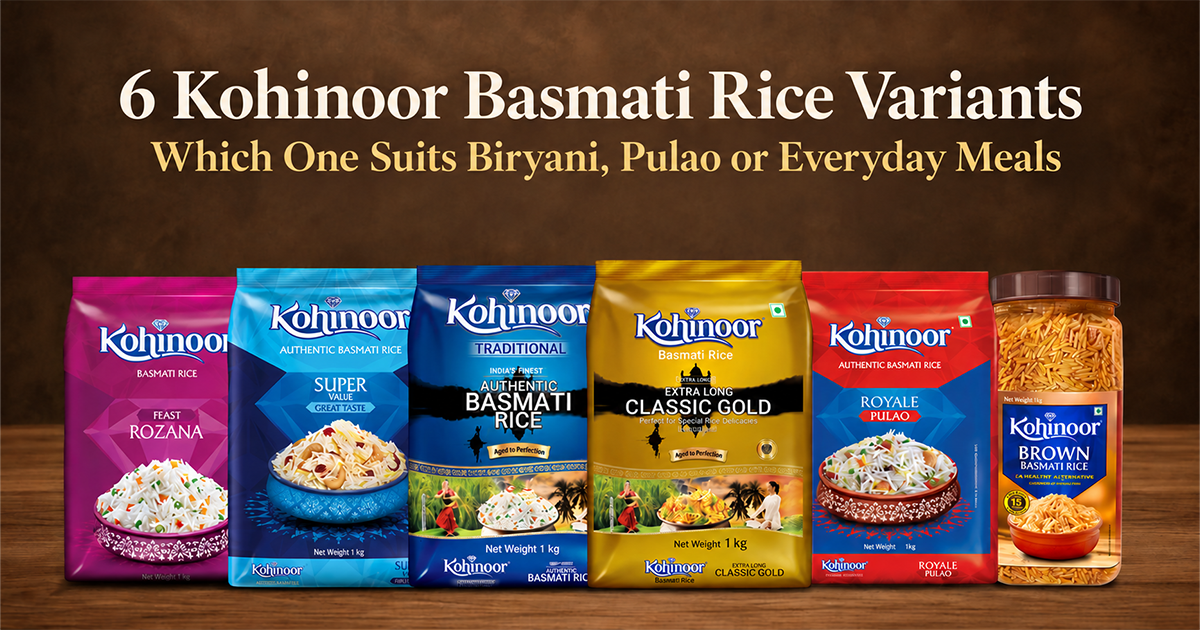
Choosing basmati rice is not just about the brand but also the variant can change the entire dish. One choice can mean fluffy grains, another a softer texture, depending on what you're cooking.
Six packs sit side by side on the same shelf. Same brand, same familiar gold lettering, and almost nothing on the front of the bag that tells you which one belongs in your trolley today. So, most people reach for whichever pack they recognise. That works often enough for the habit to go unquestioned, until the biryani turns soft in the middle, or a week of plain dal chawal quietly costs more than it needed to.
Every basmati rice variant Kohinoor makes is built around a particular kind of cooking. Grain length, ageing time, and starch level change from pack to pack, and each change affects how the rice behaves once it is in the pot. This guide covers all six: Classic Gold, Traditional Authentic, Royale Pulao, Feast Rozana, Super Value and Brown Basmati.
Before diving into them one by one, here is the full range in one view. Two premium variants for occasion cooking, two everyday variants, one value pack for larger households and one whole-grain option.
| Variant | Grain type | Best for | Pack sizes |
|---|---|---|---|
| Classic Gold | Extra-long grain, naturally aged | Festive biryani, ghee rice, guests | 1 kg, 5 kg |
| Traditional Authentic | Extra-long, extra fine, 2 years aged | Dum biryani, layered rice, occasion meals | 1 kg, 5 kg |
| Royale Pulao | Long grain, low starch | Pulao, tehri, quick one pot rice | 1 kg |
| Feast Rozana | Medium length grain | Dal chawal, khichdi, jeera rice, tahiri | 1 kg, 5 kg |
| Super Value | Long grain, naturally aged | Daily cooking in larger households | 1 kg, 5 kg |
| Brown Basmati | Whole grain, bran retained | Grain bowls, salads, everyday healthy meals | 1 kg |
Five things separate one variety from another, and once you know them, the packs stop looking interchangeable.
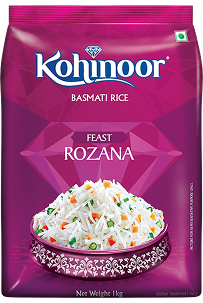
Kohinoor Feast Rozana uses a medium-length grain that cooks faster than the premium long-grain range and needs only a ten- to fifteen-minute soak on a weeknight, saving real time. The finish is softer than the occasion variants, and deliberately so. Grains hold their shape and stay separate, but they carry gravy rather than resisting it. Dal chawal, jeera rice, tahiri, and a proper one-pot khichdi all sit well here, because the grain absorbs lentil stock and spice evenly without breaking apart. Use a 1:2 ratio of rice to water. It also reheats cleanly without clumping, which matters for tiffin boxes, next-day lunches and batch-cooked rice.
If you cook rice most days and want one dependable staple in the kitchen, this is the best rice for daily use in the range. Kohinoor has held its place as a top rice brand in Indian homes for decades because of packs like this one, where the best rice for daily use doesn't mean the cheapest grain on the shelf. It is available in 1 kg and 5 kg packs.
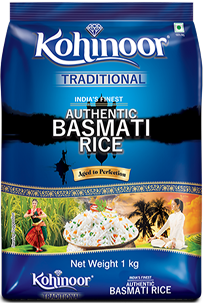
Kohinoor Traditional Authentic is naturally aged in paddy for a full two years before packing. The grain loses moisture, firms up, and can survive a long dum cook without splitting. They are also extra-long and extra fine, and their high amylose content means they don't clump. If you lift the lid at the end of a dum, you'll see the layers coming apart cleanly instead of arriving as one solid mass. It is GI certified, and the method is a 20 - 30-minute soak with a 1:1 to 1:1.5 water ratio, 15 minutes on low heat, and 5 minutes of rest.
The grain length gives you the visual separation a good biryani needs. The low starch keeps it from turning gluey under a sealed lid, and the warm, faintly floral aroma carries through a heavy spice base instead of disappearing under it. It suits Hyderabadi dum biryani, Lucknowi biryani, Kolkata biryani and everyday chicken biryani equally well. For anyone comparing the best basmati rice for biryani across a range, grain age does the heavy lifting, and it remains the best rice for biryani in the Kohinoor line for anything cooked on dum. It is also available in 1 kg and 5 kg packs.
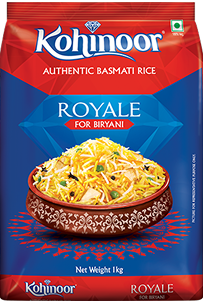
In a biryani, partly cooked rice is layered over a masala and finished with steam. In a pulao, the rice cooks directly in the spiced liquid from start to finish, absorbing everything as it goes. The grain has to take on stock, whole spices and ghee for twenty odd minutes and still come out loose. Kohinoor Royale Pulao is selected for low starch for exactly this reason, so the finished dish is fluffy rather than gummy. As a pulao rice, it works for matar pulao, chicken pulao, mushroom pulao, kabuli chana pulao, and tehri without changing the method. The floral aroma builds as the liquid reduces, so a simple basmati rice pulao made with it has a clean, strong fragrance.
Use 1 part rice to 1.5 parts stock in a heavy pan with a tight lid, or up to 2 parts in a lighter pan that loses more steam, and soak for 30 minutes first. Anyone choosing pulao basmati rice for the first time should start here, because excess water ruins more pulao than anything else. As for basmati rice for pulao, this is the most forgiving pack in the range. It is available in a 1 kg pack.
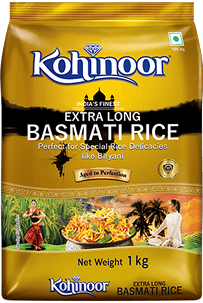
Classic Gold is the pack for when the meal matters. It comes from the Himalayan foothills, where snow-fed water and cool air produce a grain that cannot be grown the same way elsewhere, and it is naturally aged before packing, with no artificial processing. Each grain scores more than 2+ on the elongation scale. In practice, that means it stretches to more than double its raw length in the pot, which gives festive rice that long, upright look on the plate. It also sits above 7.5 mm, placing it in the extra-long grain basmati rice category rather than standard long grain.
As a premium basmati rice, it is best for meals that deserve it: a festive biryani, ghee rice for a family lunch, a saffron pulao at Diwali, or plain steamed rice served to guests where the grain itself is on show. The aged basmati rice character comes through most clearly in the aroma, which fills the kitchen within the first minute of cooking. Soak for 20 to 30 minutes and use a 1:1 to 1:1.5 water ratio. For anyone who wants long basmati rice that looks as good on the plate as it tastes, this is the one to keep at the back of the shelf for weekends and occasions. It is available in 1 kg and 5 kg packs.
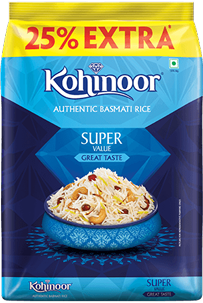
Super Value solves a specific problem: households that cook rice twice a day and finish a pack much faster than a family of two. It includes 25% extra grain in every pack at no extra cost, in both the 1 kg and 5 kg sizes. This is GI-certified, Himalayan-origin, naturally aged grain, with the same sourcing and production standard as the wider authentic range. The extra 25% is quantity, not a lower grade of rice, which is a distinction worth checking on any value pack you buy. Soak for fifteen to twenty minutes and use a 1 to 1.5 water ratio.
It helps to know what decides basmati rice price in the first place. Three things do most of the work: how long the grain has been aged, how long the grain is, and where it was grown. A two-year-aged extra-long grain from the Himalayan foothills costs more to produce than a young, shorter grain, and that gap shows up on the shelf. Pack size then changes the per-kilo figure again, which is why a 5 kg bag usually works out better for a joint family than five separate 1 kg packs.
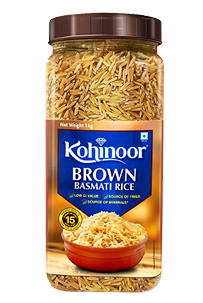
Kohinoor Brown Basmati keeps the bran layer and germ that polishing removes from white rice. That single difference is where the brown rice benefits come from: more dietary fibre, more magnesium and phosphorus, and a lower glycaemic index than white basmati. It is also naturally gluten-free and free from additives. Texture-wise, expect a firmer bite and a nutty, slightly earthy flavour underneath the familiar basmati aroma. It stands up well to strongly spiced dishes rather than getting lost beside them. Dal makhani, rajma, spiced paneer and roasted vegetables all work, as do grain bowls and cold rice salads dressed in herbs and lemon.
Brown basmati rice takes a longer soak of thirty to forty-five minutes to soften the bran, a full 1-part rice to 2 parts water ratio, and 25-30 minutes on a low simmer, followed by ten minutes resting with the lid on. Treating it like white rice is the most common reason people end up with an undercooked, chalky centre and decide brown rice is not for them. If you are still working out how to cook basmati rice reliably, start with this weekend rather than a weeknight. It is available in 1 kg.
Rinse every variant under cold running water until the water runs clear. This step removes loose surface starch and takes about 30 seconds; skipping it causes more sticky rice than any other single mistake.
| Variant | Soak Time | Water/Liquid Ratio | Cooking Instructions | Rest Time |
|---|---|---|---|---|
| Classic Gold | 20 to 30 mins | 1 : 1.5 | 15 mins on low | 5 mins |
| Traditional Authentic | 20 to 30 mins | 1 : 1.5 | 15 mins on low | 5 mins |
| Royale Pulao | 30 mins | 1 : 1.5 to 2 (stock) | 20 to 25 mins on lowest heat | 5 mins |
| Feast Rozana | 10 to 15 mins | 1 : 2 | Simmer covered until absorbed | — |
| Super Value | 15 to 20 mins | 1 : 1.5 | 15 mins on low | 5 mins |
| Brown Basmati | 30 to 45 mins | 1 : 2 | 25 to 30 mins on a low simmer | 10 mins |
The absorption method, where the rice cooks in a measured amount of water until none is left, suits all six and is the one to default to. The draining method, where rice boils in excess water and is then strained, gives you more room for timing errors and is still preferred by many cooks for biryani, where the grain is only parboiled before layering.
Pressure cooking works, but you must watch the timing closely. Reduce the water slightly against the ratios above, cut the time, and release the pressure as soon as it is done. Left sitting under pressure, even well-aged grain goes from soft to paste in a couple of minutes. The last 5 minutes decide the texture. Rest the pot off the heat with the lid on so the steam finishes the job and the moisture redistributes evenly, then fluff with a fork rather than stirring with a spoon.
The range sorts itself into three groups.
Most homes end up keeping two packs rather than one. An everyday grain that gets used four or five times a week, and a premium pack that waits for the weekend, the festival or the guests. That combination costs less over a month than buying one premium pack and using it for everything. There is no single best basmati rice, only the one that suits the dish. Browse the full Kohinoor range and pick the pack your kitchen needs.
Kohinoor Traditional Authentic is the strongest choice. Two years of natural ageing and high amylose content keep the extra-long grains separate through a long dum cook. Classic Gold works equally well for festive biryani where grain length is on display.
Feast Rozana. Its medium-length grain cooks faster than the premium range, needs only a ten- to fifteen-minute soak, and gives a softer finish that pairs well with dal. Super Value suits the same cooking in larger households.
Yes. Royale Pulao is selected for low starch so the grain stays loose while cooking directly in spiced liquid. Traditional Authentic is aged longer for layered dum cooking, where rice is parboiled first and then steamed over a masala.
Himalayan foothill sourcing, natural ageing with no artificial processing, and grains above 7.5 mm that elongate to more than double their raw length. Together, those three produce the aroma and separation that define a premium grain.
It needs a longer soak of 30-45 minutes, a 1-to-2 rice-to-water ratio, and twenty-five to thirty minutes on a low simmer, plus ten minutes resting. The bran layer takes longer to soften than polished grain.
The perfect way to stay up-to-date with all the latest news and offers. By signing up, you'll receive regular updates about new product launches, exclusive promotions, and delicious recipe ideas to try at home. Our newsletter is a great way to get inspired in the kitchen. So why not sign up today and join the Kohinoor community?
We look forward to sharing our passion for rice and biryani with you!
